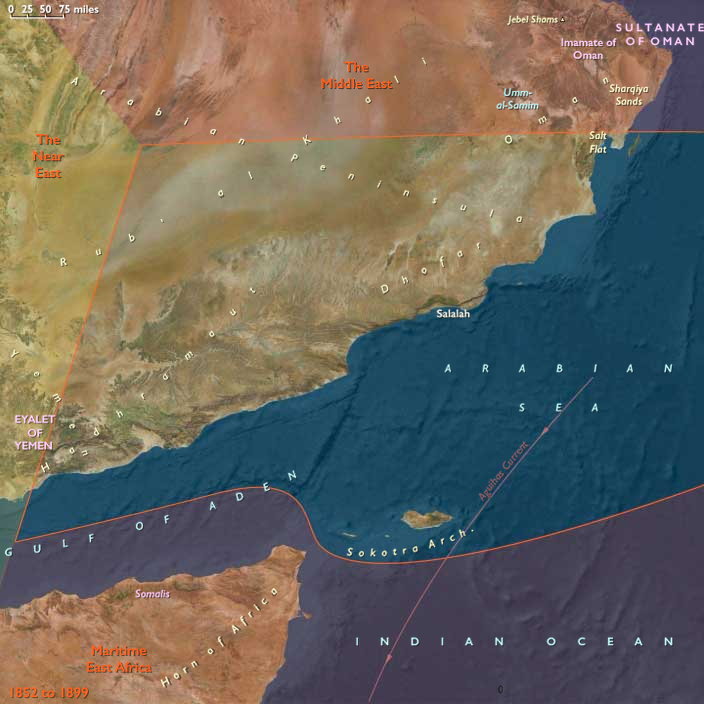
Southeast Arabia (1828–1971 CE): Protectorates, Diasporas, Frankincense…
1828 CE to 1971 CE
Southeast Arabia (1828–1971 CE): Protectorates, Diasporas, Frankincense Shores, and a Late-Stage Insurgency
Geographic & Environmental Context
The subregion of Southeast Arabia includes southern Oman (Dhofar and adjoining coasts), eastern Yemen (Hadhramawt and Mahra), and the island of Socotra. Anchors include the Dhofar frankincense belt and coastal plain around Salalah, the Hadhramawt wadis and towns of Shihr and Mukalla, the Mahra littoral eastward toward the Empty Quarter, and Socotra at the hinge of the Gulf of Aden and the Arabian Sea. Across this arc, monsoon-watered oases, incense groves, rocky promontories, and fishing coves tied caravan trails to Indian Ocean sea-lanes.
Climate & Environmental Shifts
With the waning of the Little Ice Age, variability persisted but warmed overall. The khareef (summer monsoon) continued to cloak Dhofar’s escarpment in mist, sustaining frankincense and pastures; weak khareef years cut yields. Hadhramawt’s rainfall remained erratic, making terrace upkeep and cisterns decisive. Cyclones periodically struck Socotra and the Mahra coast, scouring beaches and palms, after which resilient date gardens and fisheries underwrote recovery.
Subsistence & Settlement
-
Dhofar (southern Oman): Frankincense tapping, date gardens, sorghum plots, and goat/camel herding anchored oasis towns; coastal villages mixed line-fishing, drying racks, and small trade.
-
Hadhramawt and Mahra (eastern Yemen): Qanat-like channels and terrace fields produced dates, wheat, and sorghum; beekeeping and small stock rounded diets. Towns—especially Shihr and Mukalla—balanced valley produce with maritime commerce.
-
Socotra: Small settlements combined herding, dates, resin collection (dragon’s blood, aloes), and reef fishing; gardens clustered near springs and lee anchorages.
Declining global incense demand nudged producers toward dates, livestock, and remittances from merchant diasporas.
Technology & Material Culture
Irrigation galleries, terrace walls, and stone cisterns conserved scarce water. Dhows with lateen sails carried dates, frankincense, hides, and fish; by the late 19th century, steamers called at Arabian and Indian ports, tightening schedules. Coral-stone mosques and minarets defined coastal towns; tower-houses rose in Hadhramawt’s valleys. Endowed zawiyas copied Arabic manuscripts; merchants financed schools. On Socotra, rock-and-palm shelters, woven mats, and small sail/oared craft persisted; British survey parties added beacons and charts. In the 20th century, airstrips (e.g., Salalah) and radios incrementally entered frontier life.
Movement & Interaction Corridors
-
British treaties and protectorates: After the 1820s anti-piracy regime and the 1839 seizure of Aden, Britain’s influence spread across the Eastern Aden Protectorate via treaties with the Qu‘aiti and Kathiri sultanates (Hadhramawt) and the Mahra Sultanate of Qishn and Socotra (protectorate accords finalized in the 1880s).
-
Omani alignments: The Al Bu Sa‘id rulers in Muscat balanced ties with Britain while integrating Dhofar under the sultan’s authority; coastal convoys connected Salalah to Muscat and Gwadar.
-
Hadhrami diaspora: Traders and sayyid scholars moved between Hadhramawt and Bombay, Hyderabad, the Swahili coast (Lamu, Mombasa, Zanzibar), and Southeast Asia (Singapore, Batavia, Aceh), remitting cash and grain.
-
Socotra: Functioned as a provisioning/pilotage waypoint; British hydrographers mapped its coasts, and treaty control passed through the Mahra sultan to British advisers.
-
Late colonial air/sea lines: Steamer routes Aden–Bombay and later air links skirted the region; small coasters sustained cabotage to Shihr, Mukalla, and Salalah.
Cultural & Symbolic Expressions
Hadhramawt’s tariqa networks (sayyid lineages) anchored schooling, mawlid observances, and shrine visitations; merchant endowments sustained zawiyas at home and abroad. Frankincense rites in Dhofar honored grove sanctity and harvest cycles. Socotran oral lore mapped winds, reefs, and spirits, tying safe sailing to ethical practice. Mosque festivals, poetry in Arabic and Mahri, and hospitality codes structured social time; diaspora chronicles celebrated kin foundings of mosques and schools from Lamu to Singapore.
Environmental Adaptation & Resilience
Frankincense tappers rotated trees and enforced rest periods; date-gardeners repaired terrace walls after cloud-burst damage. Fishing and pastoral mobility cushioned drought; remittances bridged lean years. On Socotra and the Mahra coast, households stored dates and dried fish against cyclones, replanted palms, and cleared landings collaboratively. In Dhofar’s uplands, seasonal transhumance leveraged khareef pastures.
Technology & Power Shifts (Conflict Dynamics)
-
Protectorate entrenchment: British treaties framed external defense while leaving internal rule to sultanates in Hadhramawt and Mahra; on Socotra, protectorate status (1880s) consolidated anchorage dues and restricted rival powers.
-
Omani statecraft: The sultan’s authority in Dhofar waxed and waned; tribal mediation and stipends managed loyalties. Oil exploration began inland (first Omani exports in 1967), altering fiscal horizons.
-
Late-period insurgency: From 1962, the Dhofar Rebellion (inspired by regional anticolonial currents) challenged the sultan’s rule; after 1970, Qaboos bin Said’s coup introduced reforms and external assistance that shifted the conflict’s balance (suppression would complete after our span).
-
End of British rule in the east: In 1967, Britain withdrew from Aden; South Yemen (PDRY) incorporated Hadhramawt, Mahra, and Socotra, nationalizing ports and pressing land/tribal reforms.
Transition
By 1971 CE, Southeast Arabia straddled old caravan–monsoon rhythms and a new geopolitical order. Dhofar was a contested Omani frontier undergoing reform amid rebellion; Hadhramawt and Mahra had entered South Yemen, recasting sultanates into socialist administrations; Socotra followed the Aden hinterland into the same state. Frankincense valleys, date groves, and dhow harbors persisted, but remittance economies, protectorate legacies, insurgency, and nascent oil revenues had redrawn horizons—poising this incense coast and island hinge for the turbulent late-20th century.
Images

Southeast Arabia (with civilization) ©2024-24 Electric prism, Inc. All rights reserved
Groups
Commodities
Subjects
Regions
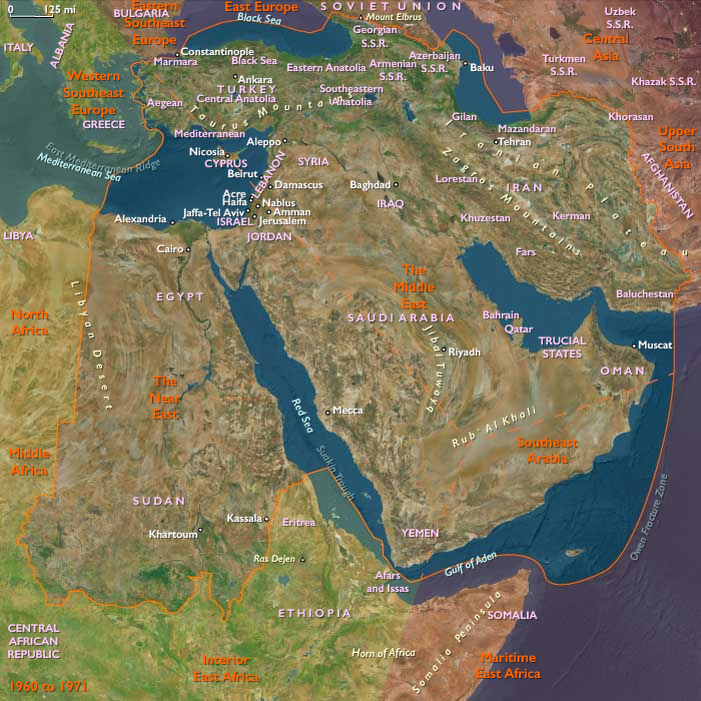
The Near and Middle East
View →Subregions