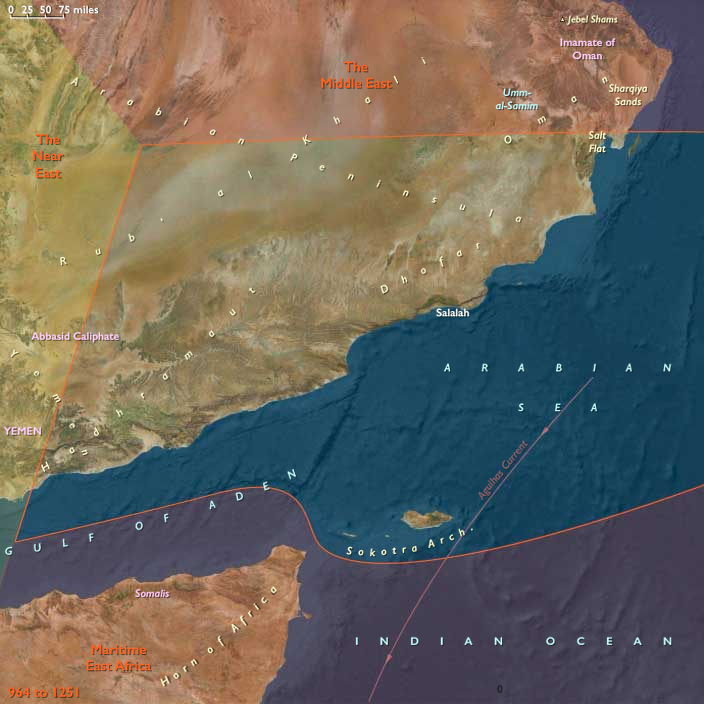
Southeast Arabia (964 – 1107 CE): Incense…
964 CE to 1107 CE
Southeast Arabia (964 – 1107 CE): Incense Wealth, Omani Overlaps, and Socotran Crossroads
Geographic and Environmental Context
Southeast Arabia includes the Empty Quarter, Hadhramaut/eastern Aden, Dhofar/al-Wusta, and Socotra.
-
The incense valleys of Dhofar remained the core.
-
Hadhramaut wadis were dotted with fortified towns and tribal estates.
-
Socotra sat on the sea lane between Aden and India.
Climate and Environmental Shifts
-
Arid stability inland; monsoon-fed groves in Dhofar supported incense production.
-
Socotra’s unique flora (dragon’s blood tree, frankincense varieties) remained part of local trade.
Societies and Political Developments
-
Hadhramaut was under the influence of shifting Yemeni dynasties (Ziyadids, Yufirids, Sulayhids) though largely autonomous at the tribal level.
-
Dhofar was loosely integrated into Omani–Yemeni rivalries but kept strong local tribal control over frankincense lands.
-
Socotra alternated between Abbasid-linked governors, Omani influence, and local clan chieftains; it remained a mixed-faith and cosmopolitan island.
-
The Empty Quarter was controlled by Bedouin confederations guiding caravans and guarding wells.
Economy and Trade
-
Frankincense exports from Dhofar and Hadhramaut peaked, moving via Aden (Near East) into Fatimid Egypt and Mediterranean markets.
-
Socotra became a prized stop for Arab, Persian, and Indian sailors; its resins, honey, and fish supplemented trade.
-
Caravans continued linking incense valleys to Najran and other Arabian nodes.
Subsistence and Technology
-
Fortified mudbrick tower-houses in Hadhramaut valleys reflected tribal wealth.
-
Resin-harvesting techniques and terrace irrigation in wadis.
-
Socotran boats and camels sustained dual sea–desert mobility.
Movement and Interaction Corridors
-
Red Sea–Aden–Socotra–India route flourished under Fatimid and Omani oversight.
-
Desert caravan networks persisted but declined in favor of sea transport.
Belief and Symbolism
-
Islam predominated across Hadhramaut and Dhofar; Sufi traditions began gaining influence in valley towns.
-
Socotra preserved a Christian minority into this period, alongside Islam and local rituals.
-
Incense retained ritual significance in both Islamic and Christian worship, tying the region’s product to global demand.
Long-Term Significance
By 1107 CE, Southeast Arabia was both a frankincense heartland and a maritime crossroad, feeding Fatimid and later Crusader-era demand for aromatics while linking Arabia, India, and East Africa through Socotra’s ports.
Images

Southeast Arabia (with civilization) ©2024-24 Electric prism, Inc. All rights reserved
Groups
Commodities
Subjects
Regions
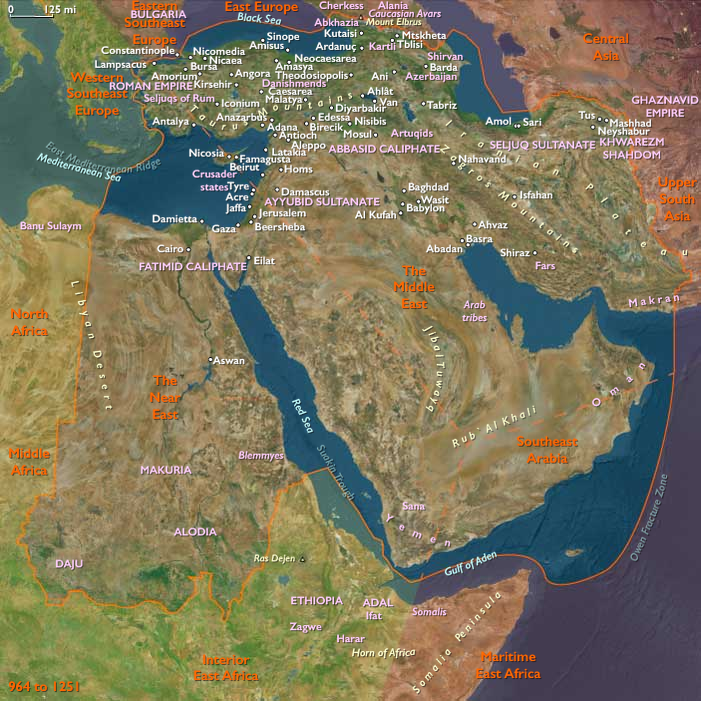
The Near and Middle East
View →Subregions