Event
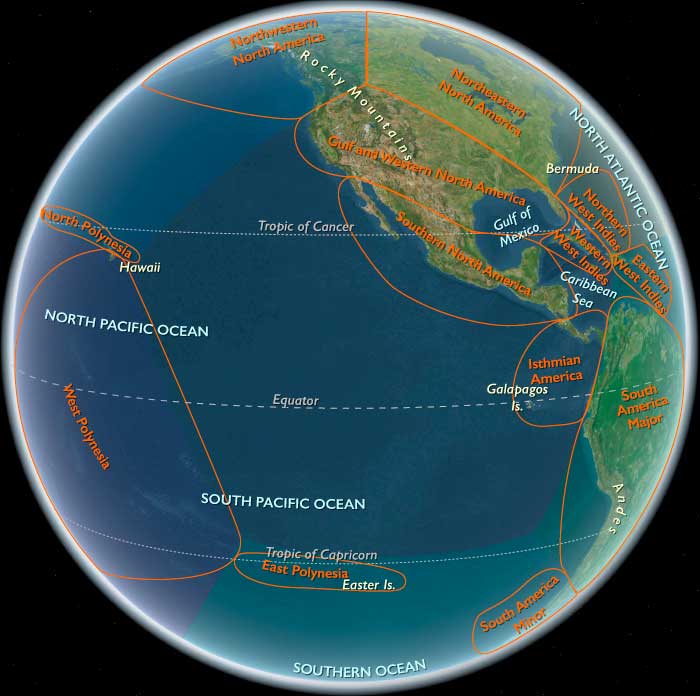
Southern North America (1828–1971 CE): Republics, Export…
Southern North America (1828–1971 CE): Republics, Export Economies, Revolution, and Industrial Transformation
Geographic and Environmental Context
The century and a half after independence transformed Southern North America more radically than any period since the sixteenth century. Railways crossed highlands and agricultural valleys, mines expanded, ports modernized, export plantations spread, cities grew, and later roads, dams, oil fields, factories, and irrigation works altered both rural and urban environments.
Older systems nonetheless survived beneath them: maize plots, Indigenous villages, communal lands, colonial streets, mule paths, household markets, ranches, and local irrigation.
Societies and Political Development
Mexico endured repeated political upheaval during the nineteenth century, including federalist-centralist struggles, war with the United States, liberal reform, French intervention, and the authoritarian modernization of the Porfirian era.
Liberal governments attempted to create a property-owning national economy by breaking up corporate holdings. These measures affected church estates but also exposed many Indigenous communal lands to privatization and seizure.
In Central America, the Federal Republic fragmented into Guatemala, Honduras, El Salvador, Nicaragua, and Costa Rica outside this subregional boundary. Guatemala, Honduras, El Salvador, and Nicaragua followed distinct political trajectories but shared repeated conflicts among liberal and conservative elites, regional caudillos, militaries, landowners, and rural communities.
Belize remained under British colonial authority and developed separately around timber, trade, and later agriculture.
The Mexican Revolution beginning in 1910 overturned the Porfirian political order. Agrarian struggles became central to the revolutionary settlement, and postrevolutionary governments redistributed substantial areas through the ejidosystem.
Productive Landscape and Economy
Railways and foreign investment accelerated commercial mining, plantation agriculture, and urban growth. Coffee expanded dramatically in Guatemala, El Salvador, and Nicaragua. Banana production and foreign-controlled rail-port systems became especially important in Caribbean lowlands of Honduras and Guatemala.
In Mexico, mining, commercial agriculture, cattle, sugar, henequen, coffee, and later petroleum linked regional economies to world markets.
After the revolution, state irrigation projects, agrarian reform, improved seed, fertilizers, mechanization, and rural roads transformed large farming districts. Oil became a strategic national resource and was expropriated by the Mexican state in 1938.
Movement and Interaction Corridors
Railways were the defining new transport system of the late nineteenth and early twentieth centuries. They linked mines, estates, plantations, cities, and ports while encouraging migration and market specialization.
By the mid-twentieth century, highways and motor vehicles began to eclipse rail for many forms of internal transport. Air routes, buses, trucks, and expanding urban streets further integrated national territories.
Technology and Material Culture
Steam machinery, railways, telegraphy, industrial mining, mechanized mills, electrical systems, petroleum extraction, automobiles, radio, concrete construction, hydroelectricity, tractors, fertilizers, and modern sanitation appeared in successive waves.
These systems accumulated rather than appearing simultaneously everywhere. Many rural communities continued to rely on pack animals, hand tools, household craft production, and traditional farming well into the twentieth century.
Religion and Cultural Expression
National cultures drew heavily on Indigenous and colonial inheritances. In Mexico, the postrevolutionary state elevated archaeological monuments, muralism, rural education, and an official ideology of mestizaje while living Indigenous communities continued to face marginalization and land conflict.
Throughout the region, Indigenous languages, weaving, local festivals, confraternities, foodways, household ritual, and agricultural knowledge survived within rapidly modernizing states.
Adaptation and Resilience
Communities responded to land loss, plantation expansion, revolution, earthquakes, drought, hurricanes, and market shocks through migration, labor organization, communal agriculture, diversification, remittances, and political mobilization.
Legacy of the Age
By 1971, Southern North America had become substantially more urban, industrial, motorized, and nationally integrated. Railways, export agriculture, revolutionary land reform, petroleum, highways, irrigation, and manufacturing had altered the landscape, but rural and Indigenous systems remained visible beneath modern infrastructure rather than being erased by it.

-
{# Image navigates to the detail page; the magnifying-glass chip is the only Fancybox lightbox trigger (kept a separate sibling — anchors can't nest). #}
 The Far West
World
The Far West
World
-
{# Image navigates to the detail page; the magnifying-glass chip is the only Fancybox lightbox trigger (kept a separate sibling — anchors can't nest). #}
 Middle America
Region
Middle America
Region
-
{# Image navigates to the detail page; the magnifying-glass chip is the only Fancybox lightbox trigger (kept a separate sibling — anchors can't nest). #}
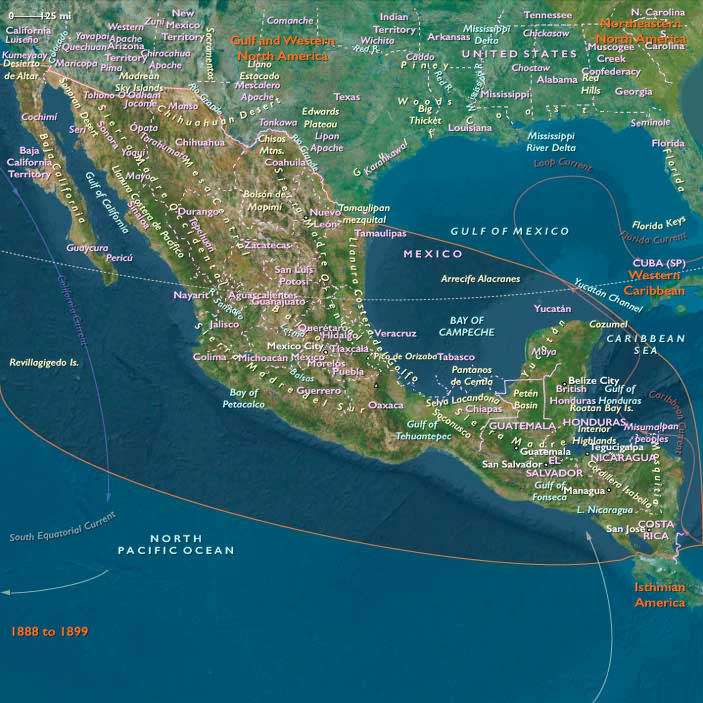 Southern North America
Subregion
Southern North America
Subregion