Southern North America (1108 – 1251 CE):…
1108 CE to 1251 CE
Southern North America (1108 – 1251 CE): Mayapán League, Migrant Mexica, and Highland Maya Consolidation
Geographic and Environmental Context
Southern North America includes: Mexico, Guatemala, Belize, Honduras, El Salvador, and Nicaragua.
-
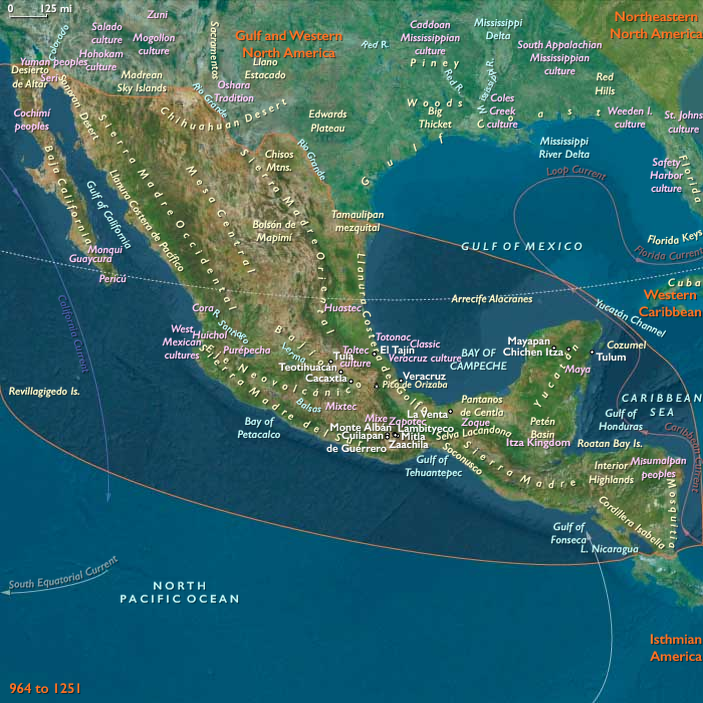
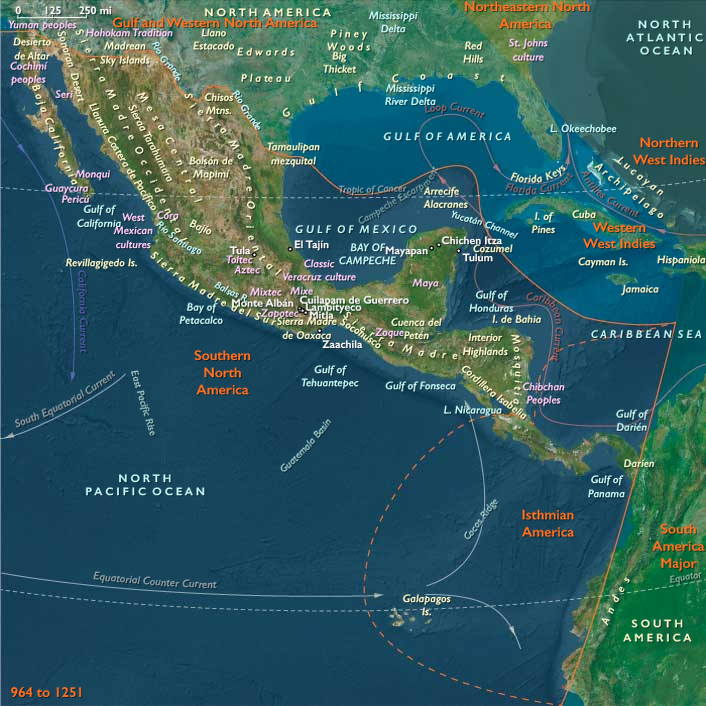
Anchors: Valley of Mexico (Azcapotzalco, Texcoco, Culhuacan; later the founding of Tenochtitlan in 1325 lies just beyond this slice but migrations start now), Michoacán (Tarascan consolidation in lake basins), Oaxaca(Mixtec–Zapotec polities at Mitla, Tututepec), Yucatán (Mayapán over Chichén by early 13th c.), Petén–Belize small Postclassic towns, Guatemalan Highlands (emergen K’iche’, Kaqchikel), Soconusco–El Salvador–Nicaragua Pacific cacao coast.
Climate and Environmental Shifts
-
Late-MWP variability increased drought risk in the Yucatán, prompting reliance on cenotes and coastal supply; highland terraces buffered Oaxaca and Guatemala; coastal cacao zones remained resilient.
Societies and Political Developments
-
Valley of Mexico: power fragmented among altepetl; the Mexica (Aztec ancestors) migrated into the basin, serving as mercenaries under Tepanec lords (Azcapotzalco).
-
Michoacán: Tarascan elites consolidated, advancing copper metallurgy and lake fisheries.
-
Oaxaca: Mixtec lords and Zapotec priest-kings (at Mitla) competed; Tututepec on the coast projected power over trade routes.
-
Yucatán: the Mayapán League replaced Chichén Itzá as hegemon (~1200–1450), centralizing tribute and coastal trade.
-
Highland Maya: K’iche’ and Kaqchikel polities crystallized around fortified hilltop capitals, claiming sacred lineages later preserved in the Popol Vuh.
-
Belize–Honduras coast: Bay of Honduras towns kept canoe exchange alive; Naco and Puerto Cortés spheres bridged interior obsidian and Caribbean shells.
-
Pacific slope: Soconusco cacao estates fed long-distance exchange into central and southern Mexico.
Economy and Trade
-
Currencies & luxuries: cacao beans, cotton mantles, obsidian, jade, spondylus, copper bells.
-
Networks: canoe trade along Yucatán–Belize–Honduras shores; overland routes from Oaxaca and Valley of Mexico to Soconusco and the Gulf; lake–canal transport in Michoacán.
Belief and Symbolism
-
Postclassic temple–plaza states used feathered serpent cults, Venus war cycles, and codices to legitimate rule; highland Maya sacralized mountain–cave complexes; Tarascan patron deities linked metallurgy and kingship.
Adaptation and Resilience
-
Multi-core landscape (Mayapán north, highland Maya south, Mixtec–Zapotec west, Tarascans northwest) spread risk; cenote–well systems and coastal provisioning sustained Yucatán during dry spells.
Long-Term Significance
By 1251, the Mayapán League defined Yucatán; Mexica migration set up 14th-century upheavals in the Valley of Mexico; Tarascan and Mixtec–Zapotec states deepened; highland Maya monarchies matured—laying the foundations for the Aztec–Tarascan–Maya chessboard of the 15th century.
Images

Southern North America (with civilization) ©2024-25 Electric Prism, Inc. All rights reserved.
Groups
Commodities
Subjects
Regions
Middle America
View →Subregions