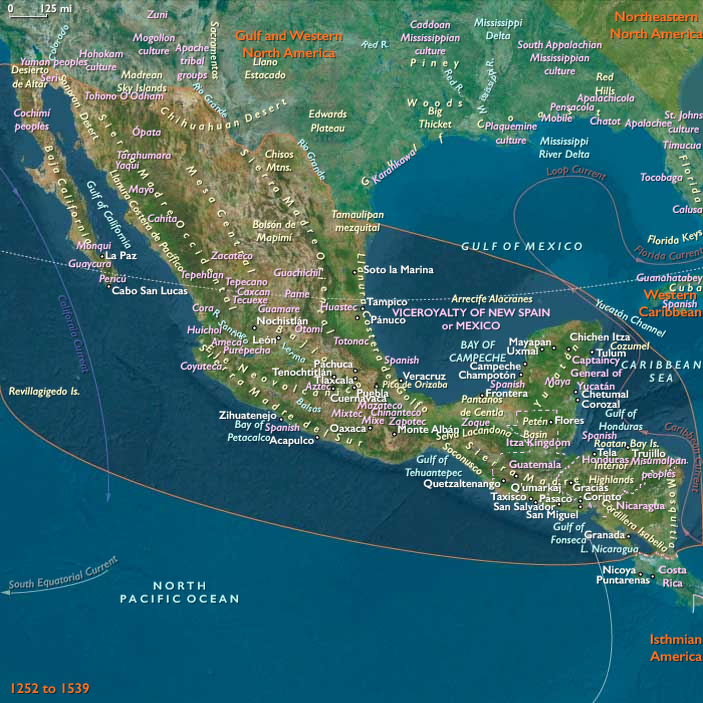
Southern North America (1252 – 1395 CE):…
1252 CE to 1395 CE
Southern North America (1252 – 1395 CE): Toltec Aftermath, Mayapán Ascendancy, and Highland Maya Formations
Geographic and Environmental Context
Southern North America includes: Mexico, Guatemala, Belize, Honduras, El Salvador, and Nicaragua.
-
Anchors: the Valley of Mexico (Azcapotzalco, Culhuacan, Texcoco lakeshores), Michoacán lake basins (Tarascan heartland), Oaxaca highlands (Mixtec kingdoms), northern Yucatán (Mayapán, Chichén Itzá), Guatemalan highlands (Quiché, Kaqchikel), and the Pacific coast (Soconusco, El Salvador, Nicaragua).
-
The region bridged Mesoamerica’s inland basins and tropical coasts, sustaining maize, cacao, and cotton economies.
Climate and Environmental Shifts
-
The Little Ice Age onset (~1300) brought episodes of drought, especially in Yucatán, and fluctuating rainfall in the highlands.
-
Irrigation and chinampa systems in the Valley of Mexico buffered stresses; coastal cacao zones remained productive.
Societies and Political Developments
-
Central Mexico:
-
Post-Toltec era: no single dominant power; instead, rival city-states (altepetl) like Azcapotzalco, Culhuacan, and Texcoco contested the Valley of Mexico.
-
Mexica (Aztecs) arrived c. 13th century as migrants; established Tenochtitlan in 1325 under Tepanec overlordship.
-
-
Michoacán: Tarascan (Purépecha) polities consolidated around Lake Pátzcuaro; metallurgy advanced.
-
Oaxaca: Mixtec lords (Tilantongo, Tututepec) and Zapotecs at Mitla competed; dynastic marriages linked elites.
-
Yucatán: Mayapán League (with Uxmal, Chichén Itzá) dominated c. 1200–1450; centralized tribute in northern Yucatán.
-
Petén and Belize: smaller Maya polities persisted; many Classic centers long abandoned.
-
Guatemalan Highlands: emerging Quiché, Kaqchikel, Mam states organized around fortified hilltop capitals.
-
Pacific Coast: cacao-rich Soconusco integrated into Maya and central Mexican trade; Pipil towns in El Salvador linked Nicaragua to Mesoamerica.
Economy and Trade
-
Staples: maize, beans, squash, cacao, cotton, chile, turkeys.
-
Luxury goods: obsidian (central Mexico, Guatemala), jade (Motagua Valley, Honduras), turquoise, cacao beans (currency), featherwork, copper bells.
-
Networks: coastal canoe trade connected Yucatán ⇄ Honduras ⇄ Nicaragua; overland caravans moved obsidian, salt, and cloth into the Valley of Mexico.
Belief and Symbolism
-
Postclassic Mesoamerican religion: worship of Quetzalcoatl/Kukulcan, Itzamna, Ix Chel, and war–sun gods.
-
Ritual calendars, codices, and temple schools perpetuated cosmology.
-
Mayapán and Central Mexican altepetl used temple-pyramid plazas for legitimacy.
Adaptation and Resilience
-
Valley of Mexico chinampas sustained population growth despite climate variability.
-
Yucatán drought adaptation: cenote water management, shifting milpa cultivation.
-
Highland fortifications protected Maya from raids and resource stress.
-
Tarascan metallurgy and fishing diversified subsistence.
Long-Term Significance
By 1395, Southern North America was a fragmented but dynamic arena:
-
Mexica Tenochtitlan founded but still subordinate.
-
Mayapán dominated Yucatán.
-
Highland Maya kingdoms crystallized.
-
Tarascans consolidated in Michoacán.
The stage was set for Aztec hegemony and further upheaval in the 15th century.
Images

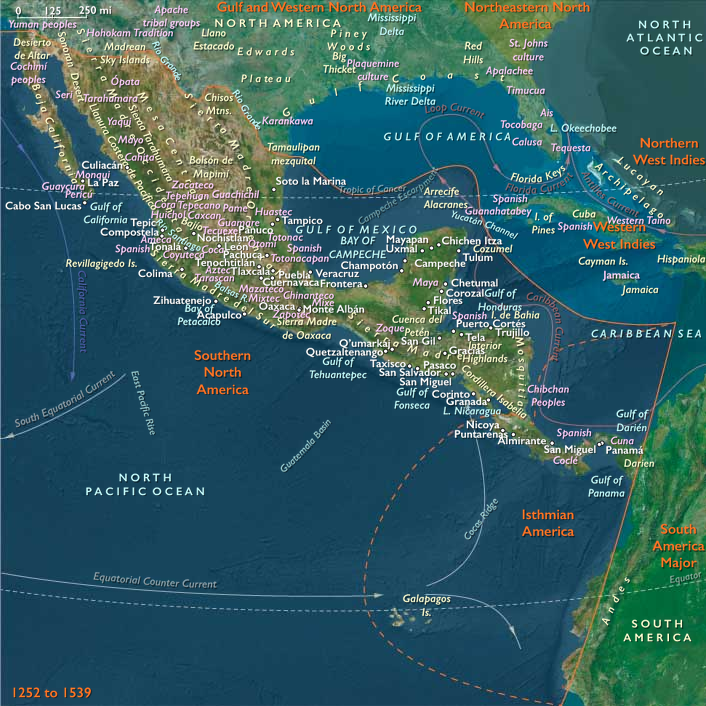
Southern North America (with civilization) ©2024-25 Electric Prism, Inc. All rights reserved.
Groups
Commodities
Subjects
Regions
Middle America
View →Subregions