
Southern Indian Ocean (6,093–4,366 BCE): Middle Holocene …
Years: 6093BCE - 4366BCE
Southern Indian Ocean (6,093–4,366 BCE): Middle Holocene — Wind Belts, Peat Beginnings, and Rookery Worlds
Geographic & Environmental Context
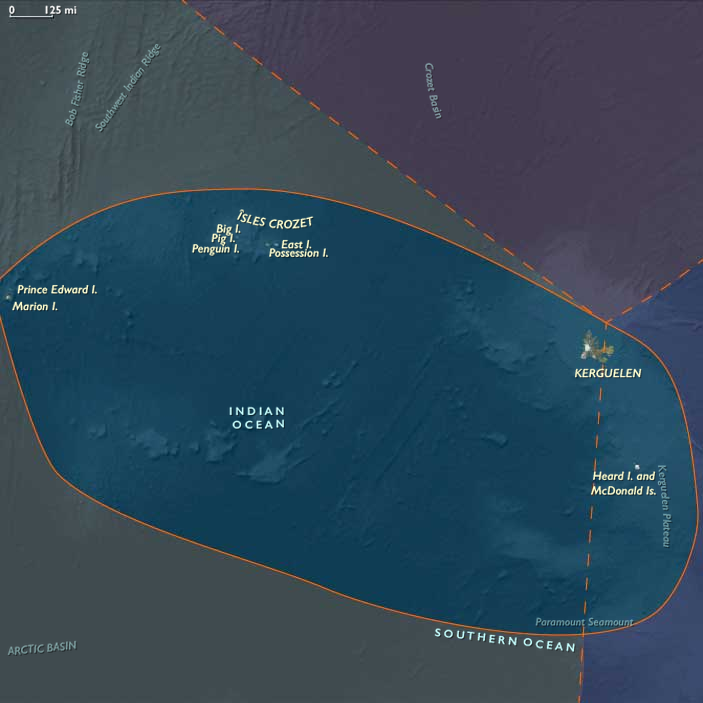
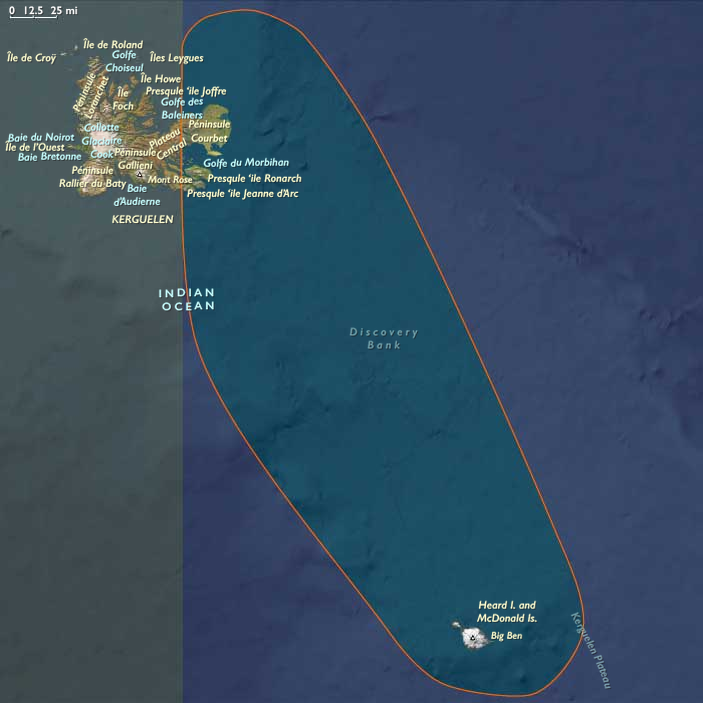
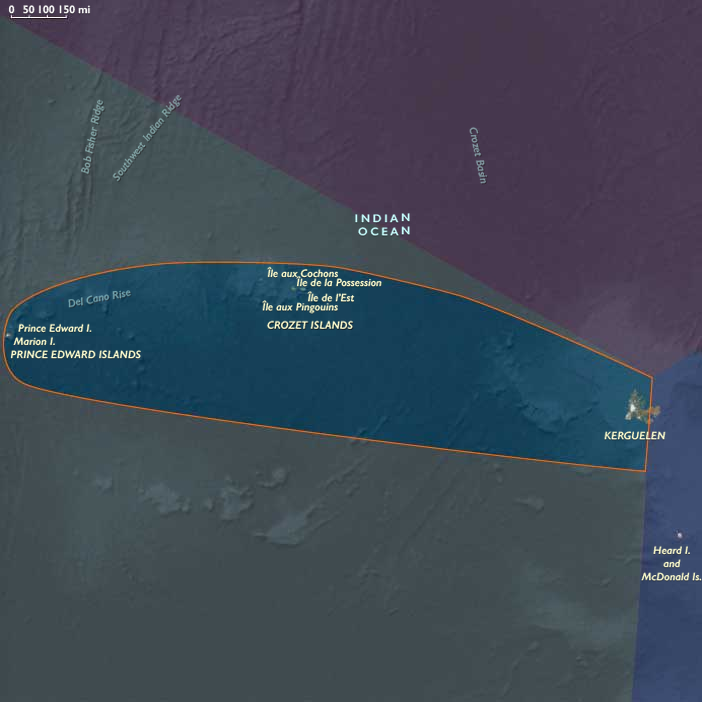
The Southern Indian Ocean formed a storm-forged crescent of subantarctic islands—Kerguelen (straddling 70°E), Heard and McDonald, and the western arc of Crozet–Prince Edward–Marion—set within the east-flowing Antarctic Circumpolar Current (ACC). Deglaciated fjorded coasts and plateaus on Kerguelen, the ice-mantled Big Ben massif on Heard, the wave-battered McDonald Islets, and the low-domed cones of Crozet and Prince Edward–Marion together created a tight mosaic of lee-slope tundras, cliff colonies, and kelp-edged bays.
Climate & Environmental Shifts
The Hypsithermal (Middle Holocene) brought modestly warmer, seasonally steadier conditions than the late glacial: sea level approached modern outlines; westerly wind belts stayed vigorous but more rhythmically phased.
-
Kerguelen: cirque and valley glaciers continued to contract, leaving proglacial lakes and new soils.
-
Heard: outlet glaciers still reached near shore, with episodic ashfalls refreshing mineral substrates.
-
Crozet–Prince Edward–Marion: longer ice-free seasons; peat initiation in saturated hollows began.
Overall, a cool, windy oceanic equilibrium prevailed—harsh to humans, ideal for high-latitude productivity.
Subsistence & Settlement
No human occupation occurred. Ecosystems diversified into self-organizing biogenic landscapes:
-
Vegetation: cushion heaths, moss carpets, lichens, and hardy graminoids advanced upslope and inland; peat hummocks began in lee basins.
-
Fauna: penguin rookeries expanded on cobble beaches; albatross and petrel colonies spread across cliff rims; elephant and fur seals cycled among haul-outs as prey shifted.
-
Aquatic systems: freshwater ponds supported algae and microcrustaceans; kelp forests thickened in semi-sheltered inlets, anchoring nearshore food webs.
Technology & Material Culture
Beyond the subantarctic, continental peoples experimented with microliths, ground stone, and early pottery—but none of these technological ensembles reached this oceanic arc. Any hypothetical human survival would have required ice-worthy boats, sewn insulating garments, and intensive marine processing—packages absent here.
Movement & Interaction Corridors
Ecological, not human, traffic structured connectivity. ACC jets and frontal zones concentrated nutrients, driving krill and plankton blooms that drew baleen whales each summer. Albatrosses and petrels stitched Kerguelen–Heard–Crozet–Prince Edward–Marion into a single subantarctic metapopulation network, while volcanic pulses (Heard/McDonald) periodically dusted lee slopes, jump-starting primary succession.
Cultural & Symbolic Expressions
No human symbolic horizon touched the subregion. Instead, biogenic landmarks—long-used guano terraces, trampling paths, peat-bound seed banks, and rookery berms—functioned like monuments in peopled lands, inscribing ecological memory across generations.
Environmental Adaptation & Resilience
Resilience was layered and dynamic: plants colonized fresh tephra and frost-heave scars; seabird and seal colonies shifted with beach exposure and ice margin retreats; peat initiation buffered moisture and nutrients, diversifying microhabitats. Disturbance (gales, spray, ash) reset patches, maintaining a moving-target mosaic rather than a static climax.
Long-Term Significance
By 4,366 BCE, glaciers had further withdrawn, coastlines lay near modern outlines, and biological networks were robust and self-maintaining. The subantarctic belt entered a stable mid-Holocene regime—still storm-lashed, intensely productive, and unseen by humans—a living laboratory where wind, current, ice, and life tuned one of Earth’s most resilient oceanic ecosystems.
Topics
Commodoties
Subjects
Regions
Subregions
Related Events
Showing 10 events out of 69156 total
Years: 6093BCE - 4366BCE
Topics
Commodoties
Subjects
Regions
Subregions