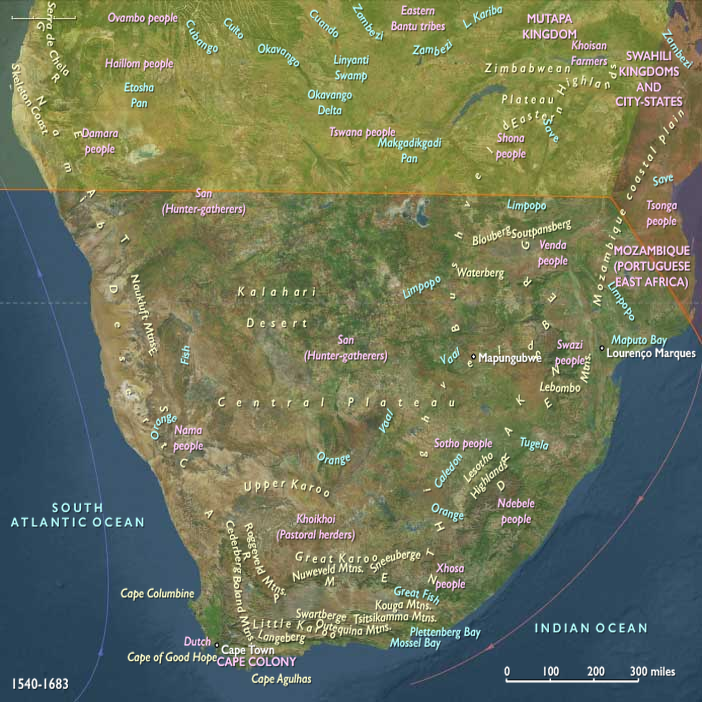
Temperate Southern Africa (1540–1683 CE): Herding Wars,…
1540 CE to 1683 CE
Temperate Southern Africa (1540–1683 CE): Herding Wars, Stone Homesteads, and the First Cape Colony
Geographic & Environmental Context
The subregion of Temperate Southern Africa includes all of South Africa, Lesotho, and Eswatini; Namibia, Botswana, and Zimbabwe south of ~19.47°S; and southwestern Mozambique. Anchors included the Cape Fold Belt, Namaqualand–Orange River, Karoo, Highveld plateau, southern Kalahari, Drakensberg–Lesotho–Eswatini escarpment, southern Zimbabwe plateau, and Limpopo–Inhambane lowlands.
Climate & Environmental Shifts
The Little Ice Age persisted with harsh winters and erratic rainfall. Drought decades hurt cattle herds; Karoo and Kalahari aridity intensified. The Cape’s winter-rain zone alternated between good grazing and dry years. Floods struck the Highveld rivers episodically. Typhoons occasionally brushed Mozambique’s coast.
Subsistence & Settlement
-
Khoekhoen herders: Transhumant cattle–sheep cycles across Cape, Karoo margins, and Namaqualand.
-
San foragers: Persisted in mountain and desert niches, focusing on antelope hunting and wild plants.
-
Highveld, Lesotho, Eswatini, southern Zimbabwe, and Mozambique farmers: Intensified mixed farming; sorghum, millet, beans, cattle herds. Stone-walled homesteads expanded on southern Zimbabwe plateau; new chiefdoms consolidated in Limpopo and Highveld zones.
-
Southern Kalahari margins: Small-scale herding and foraging adaptations.
Technology & Material Culture
-
Herders: Mat shelters, hide cloaks, bead ornaments, cattle kraals.
-
San: Rock art in Drakensberg, Matobo, Cederberg; ostrich eggshell beads, bows and arrows.
-
Farmers: Iron hoes, spears, stone-walled homesteads (e.g., Zimbabwe plateau’s Khami cultural zone), cattle byres, pottery.
-
Dutch settlers (post-1652): Fort, gardens, irrigation ditches, wagons, iron tools, muskets.
Movement & Interaction Corridors
-
Cape herder transhumance: Berg–Breede–Olifants valleys.
-
Highveld & Zimbabwe: Livestock and grain trade among chiefdoms.
-
Southwest Mozambique: Continued ties with Sofala trade, bringing beads, cloth, and prestige goods inland.
-
Dutch entry: 1652 VOC refreshment station at Table Bay; by 1670s expanding farms pushed into Khoekhoen pasturelands, sparking frontier war.
Cultural & Symbolic Expressions
-
San: Rock art recording trance dances, rain-animals, and eland hunting.
-
Khoekhoen: Herd rituals, cattle feasts, cairn offerings.
-
Farmers: Ancestor shrines at cattle byres, initiation schools, rainmaking rituals in Lesotho, Eswatini, and Zimbabwe.
-
Dutch colonists: Christian rites at the fort, VOC bureaucratic rituals, and early slave importation creating hybrid cultural forms.
Environmental Adaptation & Resilience
-
Herders diversified stock and relied on shellfish in drought.
-
Foragers broadened prey bases, moved camps seasonally, and cached foods.
-
Farmers intercropped, stored grain, and rotated fields; cattle byres supplied fertilizer for fields.
-
Dutch colonists planted orchards, dug irrigation channels, and introduced wheat, vines, and orchard fruits.
Technology & Power Shifts (Conflict Dynamics)
-
Khoekhoen–San tensions: Over grazing lands and hunting access.
-
Highveld chiefdoms: Consolidated cattle wealth and raiding power.
-
Southern Zimbabwe: Continued Khami traditions of stone-walled settlements and elite cattle–gold power.
-
Dutch settlement: Sparked Khoekhoen–Dutch wars (1659–60, 1673–77). Firearms and forts disrupted pastoral mobility; dispossession began at the Cape.
Transition
By 1683 CE, Temperate Southern Africa’s indigenous systems—Khoekhoen cattle cycles, San hunting, Highveld and Zimbabwe farming—remained resilient, but Dutch settlement at Table Bay had become a disruptive wedge. Pastures were contested, stock raided, and colonial footholds deepened. The next age would see inland expansion, intensifying conflict, and incorporation into wider colonial circuits.
Images

Temperate Southern Africa (with civilization) ©2024-25 Electric Prism, Inc. All rights reserved.
Groups
Topics
Commodities
Subjects
Regions
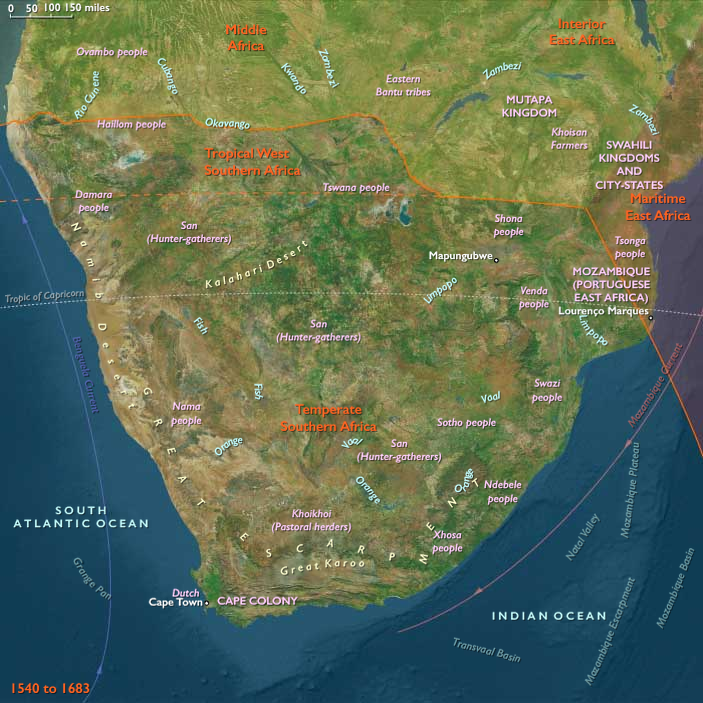
Southern Africa
View →Subregions