
Event
The 1755 Cape Ann Earthquake takes place…
The 1755 Cape Ann Earthquake takes place on November 18, 1755, at approximately 4:30 AM.
Its epicenter is believed to have been offshore, approximately twenty-four miles (thirty-nine kilometers) east of Cape Ann.
The quake is felt as far north as Halifax, Nova Scotia, south to the Chesapeake Bay and South Carolina, and from Lake George and Lake Champlain in the northwest to a ship two hundred miles (three hundred and twenty kilometers) off the east coast.
Sailors on the ship report that the quake was so strong, they had feared that they had run aground.
The region experiences several aftershocks, the first of which is a little more than an hour after the quake.
Most of these aftershocks cannot be felt in Boston, affecting only the northeastern coast of the colony.
Modern research has estimated that the quake was between 6.0 and 6.3 on the Richter scale, and the United States Geological Survey lists it as the largest earthquake in the history of Massachusetts.
Scientists are unclear on the causes of this and other quakes in the northeastern United States.
There are a number of old faults in the region, but none of them are known still to be active.
It is possible that the Cape Ann earthquake may have been remotely triggered by the larger earthquake in Lisbon, Portugal, a few weeks prior, although there is not enough evidence to prove that they are linked.
-
{# Image navigates to the detail page; the magnifying-glass chip is the only Fancybox lightbox trigger (kept a separate sibling — anchors can't nest). #}
 The North Atlantic Lands
World
-
{# Image navigates to the detail page; the magnifying-glass chip is the only Fancybox lightbox trigger (kept a separate sibling — anchors can't nest). #}
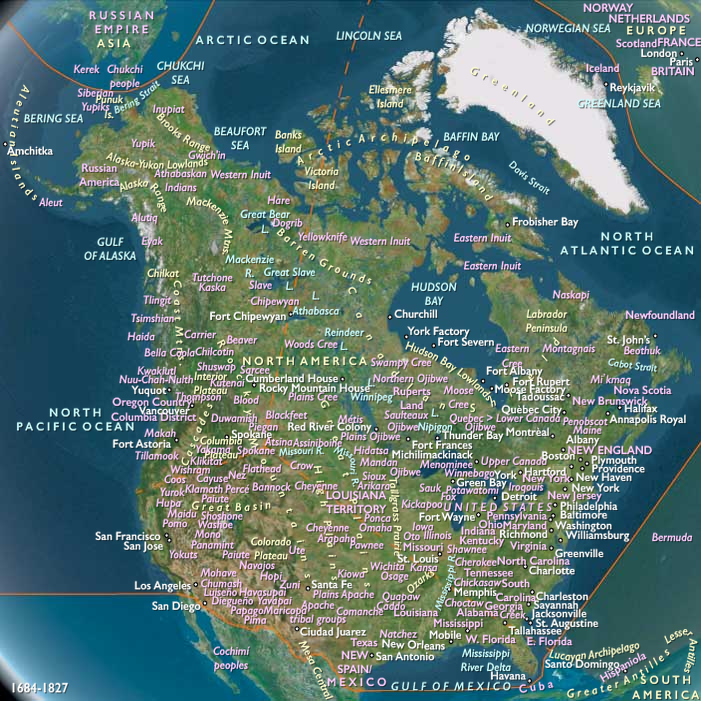 Northern North America
Region
-
{# Image navigates to the detail page; the magnifying-glass chip is the only Fancybox lightbox trigger (kept a separate sibling — anchors can't nest). #}
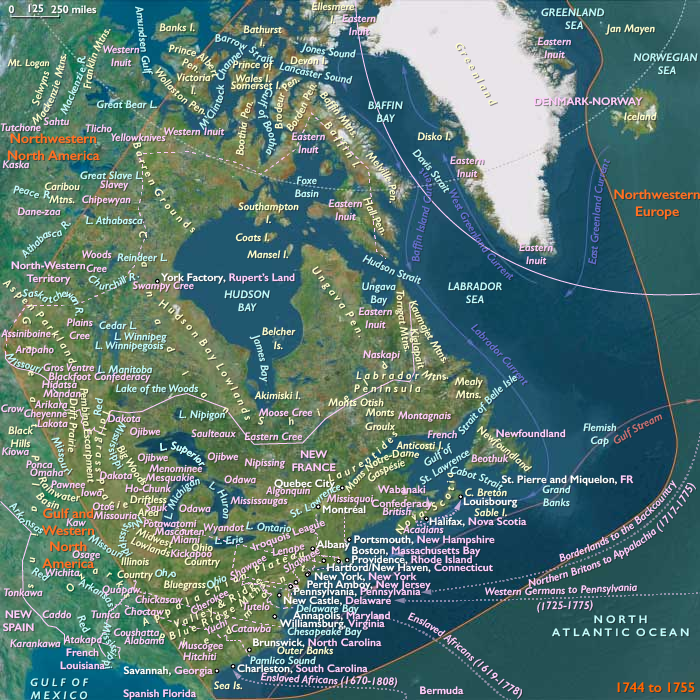 Northeastern North America
Subregion
