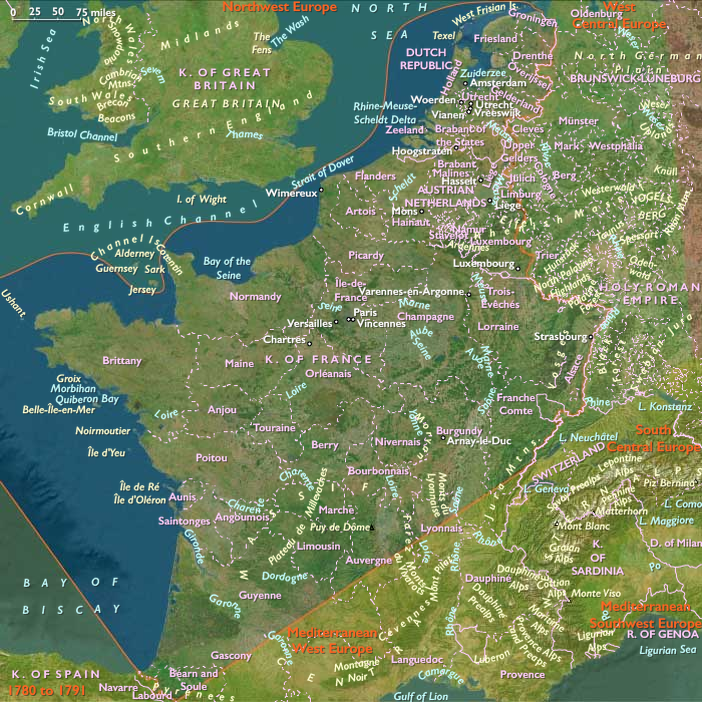
The Affair of Fielding and Bylandt has…
1780 CE
The Dutch hope to gain the armed support of the other members of the League to maintain their neutral status.
The British government sees the danger of this move (it might embroil Great Britain in war with Russia and the Nordic powers Sweden and Denmark–Norway also) and therefore declares war on the Republic shortly after its adherence in December 1780.
To forestall Russia from coming to the aid of the Dutch (something Empress Catherine II of Russia does not favor either) the British government cites a number of grievances that are ostensibly unrelated to the Dutch accession to the League.
One of these is the shelter the Dutch had (reluctantly) given to the American privateer John Paul Jones in 1779.
More importantly, much is made of a draft treaty of commerce, secretly negotiated between the Amsterdam banker Jean de Neufville and the American agent in Aix-la-Chapelle, William Lee, with the connivance of the Amsterdam pensionary Van Berckel, and found among the effects of Henry Laurens, an American diplomat who had been apprehended by the British cruiser HMS Vestal in September 1780, on the high seas.
He had been sent by the Continental Congress to establish diplomatic relations with the Dutch Republic.
The draft-treaty had been cited as proof by the British of the non-neutral conduct of the Dutch.
Groups
Topics
Subjects
Regions
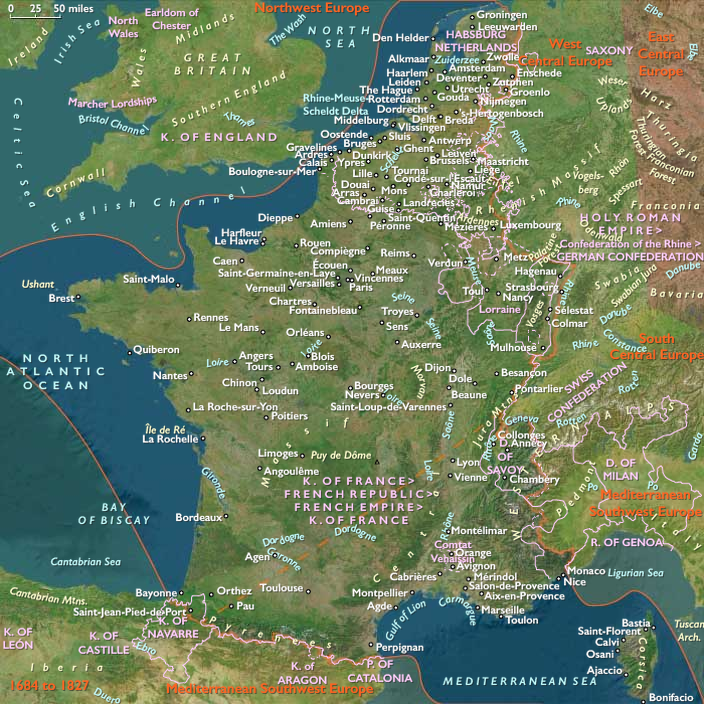
West Europe
View →Subregions