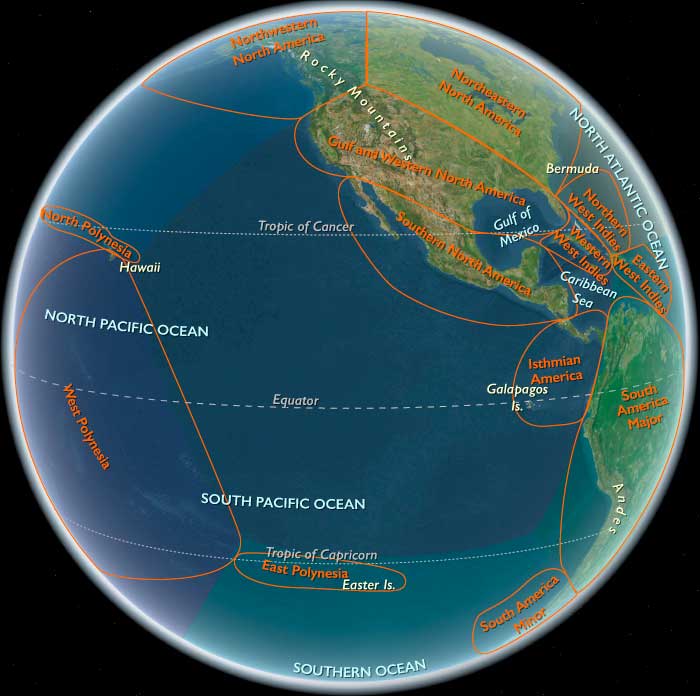
Event
The Arapaho had gradually moved farther south,…
The Arapaho had gradually moved farther south, split into the closely allied Northern and Southern Arapaho, and established a large joint territory spanning land in southern Montana, most of Wyoming, the Nebraska Panhandle, central and eastern Colorado, western Oklahoma, and extreme western Kansas.
A large group of Arapaho split from the main tribe and became an independent people, commonly known as the Gros Ventre (as named by the French) or Atsina.
The name Gros Ventre, meaning "Big Bellies" in French, is a misinterpretation of sign language between a native guide and French explorers.
The Gros Ventre speak an Algonquian language similar to Arapaho after the division; they identify as A'aninin meaning ″White Clay people″.
The Arapaho often view the Gros Ventre as inferior and referr to them as Hitúnĕna or Hitouuteen, meaning "beggar".
-
{# Image navigates to the detail page; the magnifying-glass chip is the only Fancybox lightbox trigger (kept a separate sibling — anchors can't nest). #}
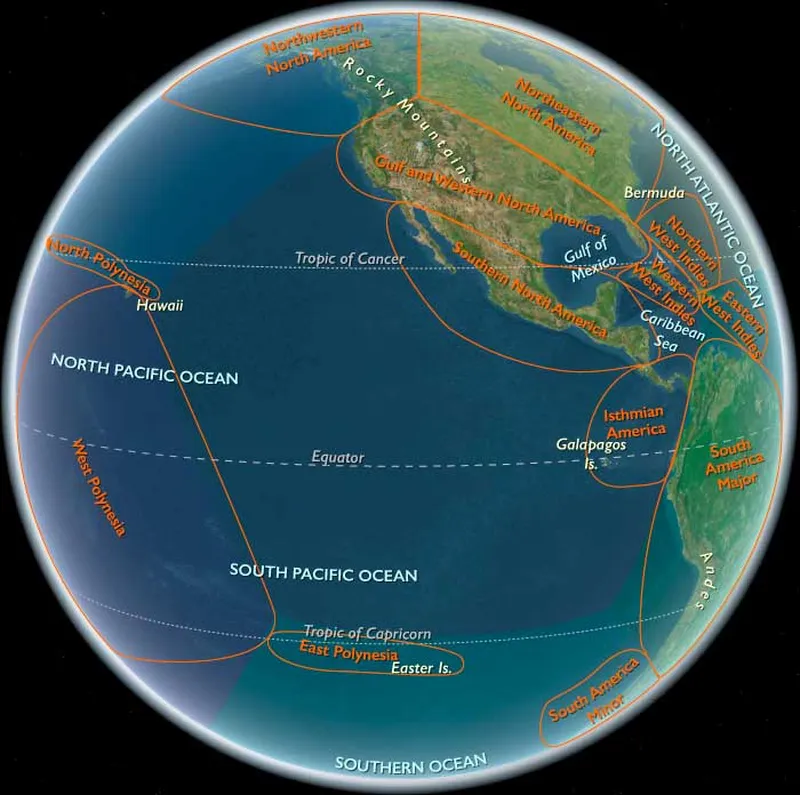 The Far West
World
-
{# Image navigates to the detail page; the magnifying-glass chip is the only Fancybox lightbox trigger (kept a separate sibling — anchors can't nest). #}
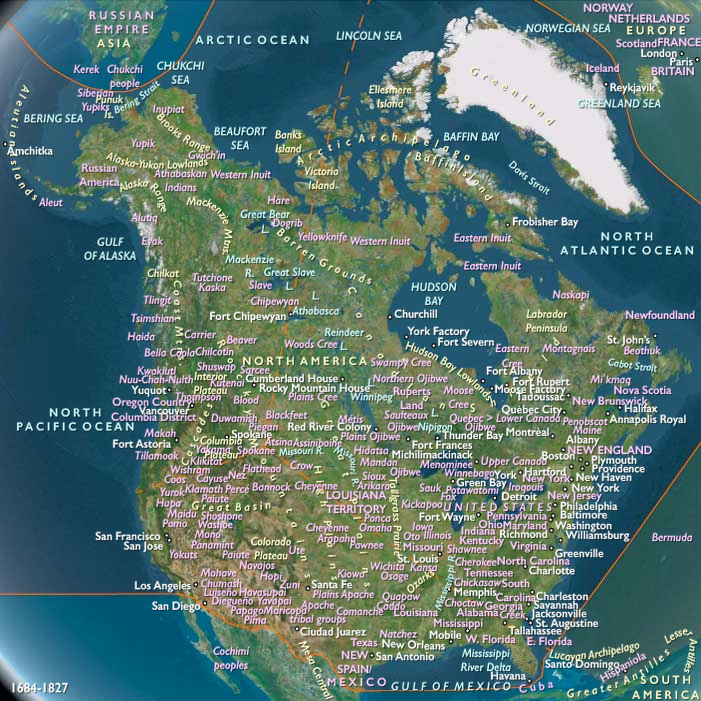 Northern North America
Region
-
{# Image navigates to the detail page; the magnifying-glass chip is the only Fancybox lightbox trigger (kept a separate sibling — anchors can't nest). #}
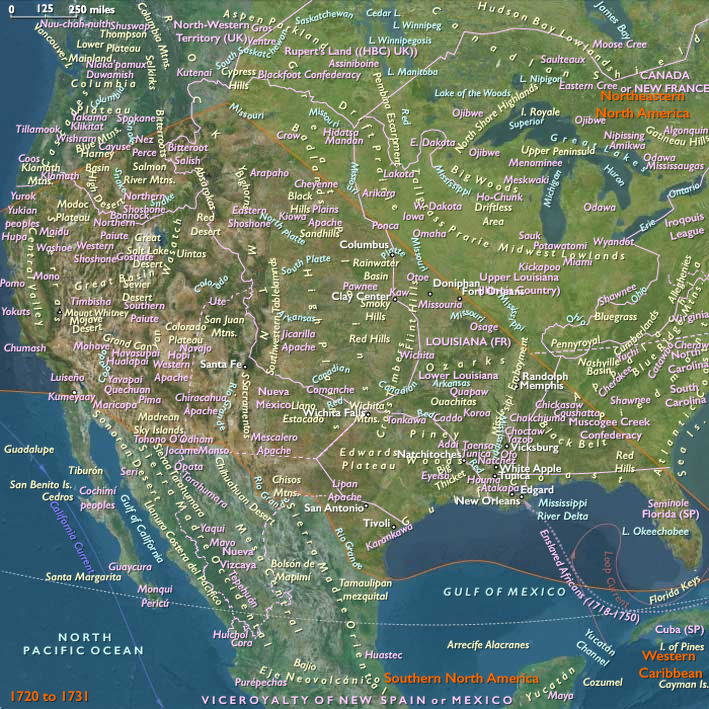 Gulf and Western North America
Subregion