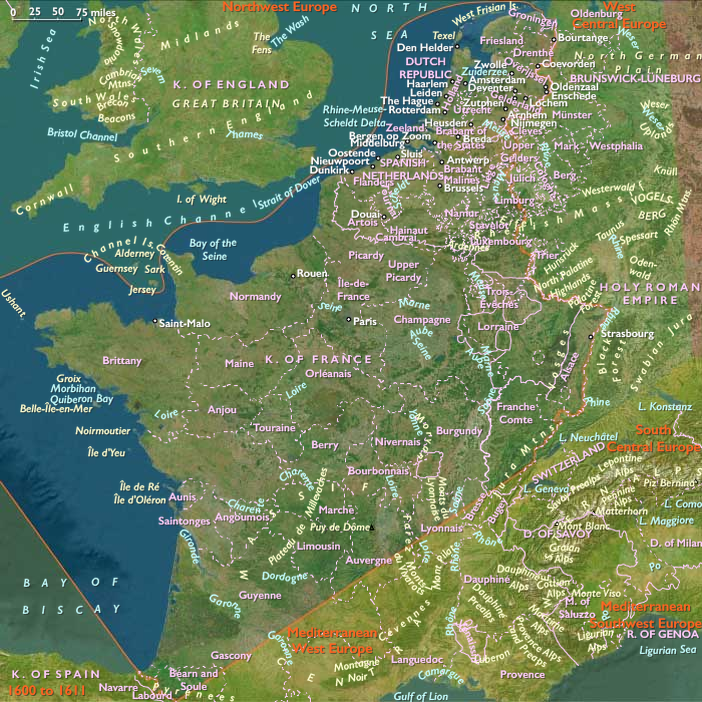
The Archduke, after this cheap victory, holds…
July 1600 CE
The Archduke, after this cheap victory, holds a conference with his captains.
Most urge to entrench the army across the road to Ostend, forcing Maurice to attack along a narrow front where the Dutch cavalry, mostly heavy, would not be effective against the lighter Spanish cavalry.
However, the mutineers, who have been rallied by the Archduke on the promise of free plunder, are eager for a fight and out-argue the rest.
The army therefore advances in battle order along the coast.
It is mid-day and the tide is coming in; so that in the end they are forced to abandon the shrinking beach and climb slowly up the slippery sand dunes.
Maurice has just time to assemble his whole army to face the Archduke.
The Battle of Nieuwpoort is to be a test by fire of the Dutch army and the new tactics developed by the stadtholders against the still-formidable Spanish infantry, Maurice is uncertain of its outcome.
However, the new tactics of volley-fire and artillery-supported infantry fighting get the better of the Spanish pikemen and Maurice personally routs the Spaniards in a cavalry charge.
In one of the most desperately contested battles of the age, Vere and Maurice completely defeat the veteran Spanish troops of the Archduke.
Spanish losses are high; about twenty-five hundred casualties, including many officers.
The artillery train is also lost.
Most of the casualties are suffered by the elite units of the second line, veteran soldiers who are very hard to replace.
Dutch losses are also high.
With the casualties at Leffinghen included, they amount to around two thousand.
Again, it is the best regiments, Scottish and English veterans, who suffer most.
On the tactical side, the battle is paradoxical.
Maurice's infantry reforms are apparently vindicated.
However, his infantry in the battle had been dislodged from a strong defensive position and it is his cavalry that had saved the day.
The strategic lesson is that it is more advantageous to besiege and capture towns than to win battles.
This fact will continue to characterize operations in the Eighty Years' War.
Groups
Topics
Commodities
Subjects
Regions
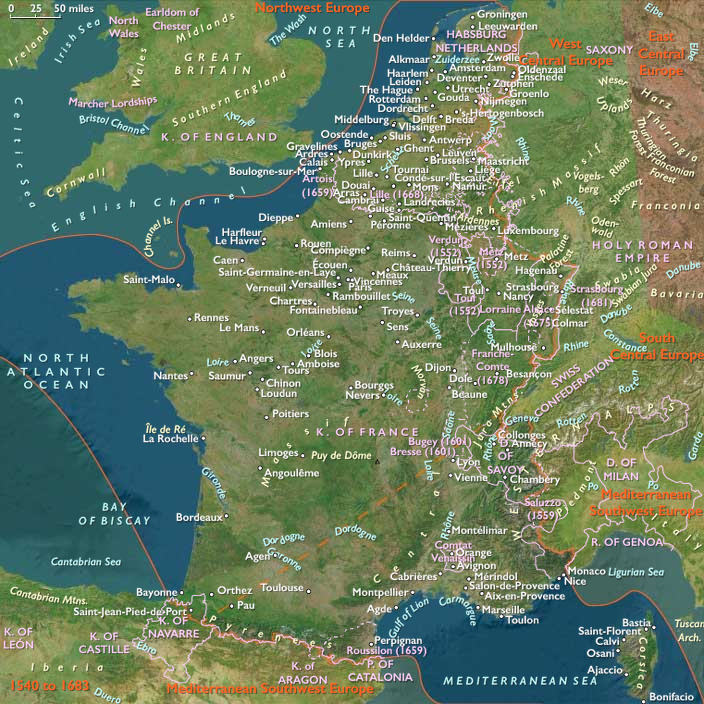
West Europe
View →Subregions