
The Spanish Armada Departs from Lisbon (May…
May 1588 CE
The Spanish Armada Departs from Lisbon (May 8, 1588)
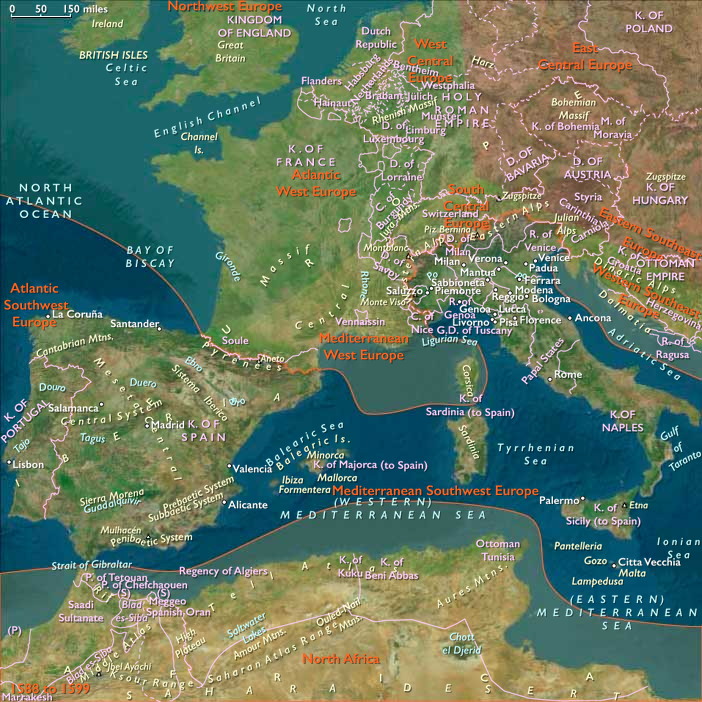
On May 8, 1588, the Spanish Armada set sail from Lisbon, which had been under Spanish control since Philip II’s annexation of Portugal in 1580. The Armada’s objective was to sail through the English Channel, rendezvous with the Duke of Parma’s tercios in Flanders, and launch an invasion of southeast England to overthrow Queen Elizabeth I and restore Catholic rule.
Composition of the Armada
The Armada was a formidable naval force, comprising:
- 151 ships, including both purpose-built warships and repurposed merchant vessels.
- 8,000 sailors and 18,000 soldiers, with more troops awaiting in Flanders.
- 1,500 brass cannons and 1,000 iron cannons, making it one of the most heavily armed fleets of the era.
Fleet Breakdown
- 28 purpose-built warships, including:
- 20 galleons (the main warships of the Armada).
- 4 galleys (low, oared vessels, not well-suited for the Atlantic).
- 4 Neapolitan galleasses (hybrid warships with both sails and oars, heavily armed).
- Heavier vessels included armed carracks and hulks, repurposed for battle.
- 34 lighter ships for reconnaissance and support.
The full departure from Lisbon took two days, reflecting the logistical challenges of mobilizing such a massive fleet.
Strategic Plan: Rendezvous with the Duke of Parma
- The Armada’s mission was not to engage the English fleet directly but to escort the Duke of Parma’s army across the Channel.
- Parma’s elite Spanish tercios in Flanders were ready for the land invasion of England, but lacked sufficient transport ships.
- The Armada would anchor off the coast of Flanders, protect the troop transports, and ensure a safe passage for the invasion force.
Challenges from the Outset
- Logistical Delays: The Armada had faced supply shortages and organizational problems even before departure.
- Weather Conditions: The large fleet was difficult to maneuver in the Atlantic, and storms would soon disrupt the journey.
- English Preparedness: By the time the Armada set sail, England was aware of the invasion plans and had mobilized its fleet.
Conclusion: The Beginning of a Doomed Campaign
The departure of the Armada on May 8, 1588, marked the start of one of history’s most famous naval campaigns. Though it was one of the largest fleets ever assembled, its reliance on coordination with Parma’s forces, logistical difficulties, and English naval tactics would ultimately lead to its failure. Within a few months, the Armada would suffer heavy losses, ensuring England’s continued dominance of the seas and marking a turning point in the Anglo-Spanish conflict.
Locations
Groups
Topics
Commodities
Subjects
Regions
Southwest Europe
View →Subregions
