
The Crisis and Revival of Roman Gaul …
Years: 244 - 387
The Crisis and Revival of Roman Gaul (250s–Early 4th Century CE)
1. The Crisis of Roman Gaul (250s–280s CE)
During the mid-3rd century CE, Roman Gaul faced a period of severe instability, coinciding with the broader Crisis of the Third Century (235–284 CE).
-
Barbarian Invasions:
- The Franks, Alemanni, and Vandals launched multiple incursions across the Rhine frontier, sacking cities and disrupting trade.
- The Goths and other Germanic groups added further pressure on Rome’s borders.
-
Political Instability:
- The collapse of central authority led to usurpations and local rebellions.
- In 260 CE, Postumus, a Roman general, declared the Gallic Empire, breaking away from Rome and ruling Gaul, Britain, and parts of Spain until 274 CE, when Emperor Aurelian reconquered the region.
-
Economic Decline:
- The destruction of cities and trade networks led to widespread economic hardship.
- The debasement of Roman currency and rising taxation further weakened the Gallic economy.
2. The Revival of Roman Gaul (Early 4th Century CE)
The situation improved significantly in the early 4th century CE, as a period of recovery and prosperity took hold.
-
The Tetrarchy and Constantine’s Reforms:
- Diocletian (r. 284–305 CE) restructured the empire, restoring order and military strength.
- Constantine I (r. 306–337 CE) further stabilized the region, reinforcing defenses along the Rhine and establishing new military bases.
-
Economic Recovery:
- With barbarian invasions subdued, trade and agriculture flourished again.
- Cities such as Treverorum (modern Trier) became imperial residences, reinforcing Roman authority in the West.
-
Rise of Christianity:
- Until 312 CE, Christians had faced periodic persecution, particularly under emperors like Diocletian.
- After Constantine’s conversion in 312 CE, Christianity spread rapidly across Gaul and the empire, reshaping its cultural and religious landscape.
- Major cities, including Lugdunum (Lyon), Treverorum (Trier), and Arelate (Arles), became key Christian centers.
Conclusion: A Period of Transformation
The 250s–280s CE marked a time of crisis in Roman Gaul, with barbarian invasions, political fragmentation, and economic decline threatening the region. However, in the early 4th century CE, reforms under Diocletian and Constantine I brought a revival, leading to a resurgence of prosperity and the rapid spread of Christianity, setting the stage for the Christianization of the empire and the transformation of Late Antiquity.
People
Groups
- Gauls
- Christians, Early
- Roman Empire (Rome): Non-dynastic
- Roman Empire: Tetrarchy
- Christianity, Arian
- Gaul, Diocese of
- Roman Empire: Constantinian dynasty (Nicomedia)
- Christianity, Nicene
- Roman Empire: Constantinian dynasty (Constantinople)
- Gaul, Praetorian prefecture of
- Roman Empire: Valentinian dynasty (Rome)
- Roman Empire: Theodosian dynasty (Constantinople)
Topics
Subjects
Regions
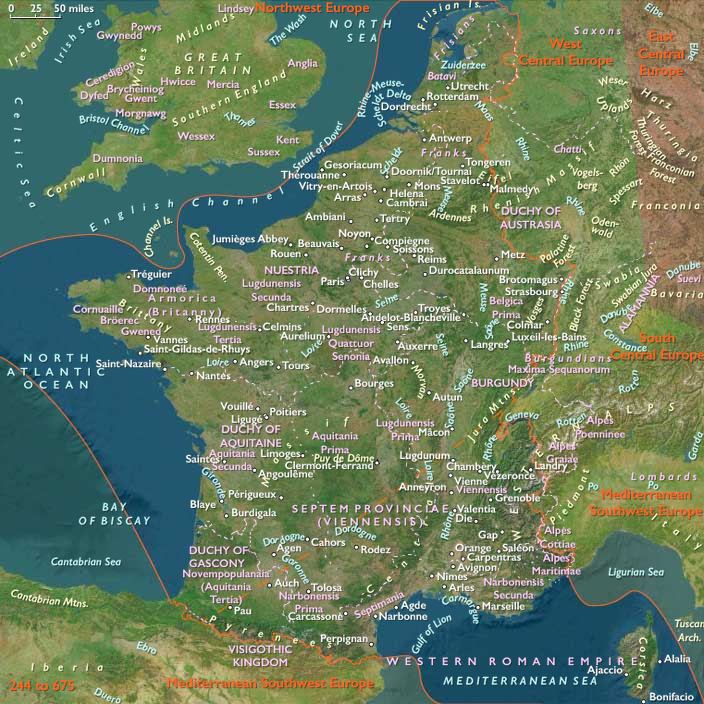
Subregions
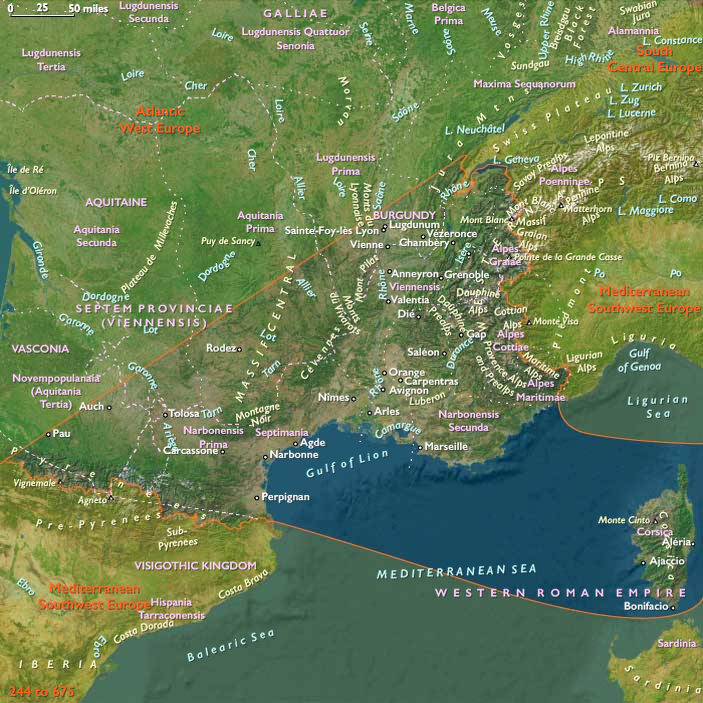
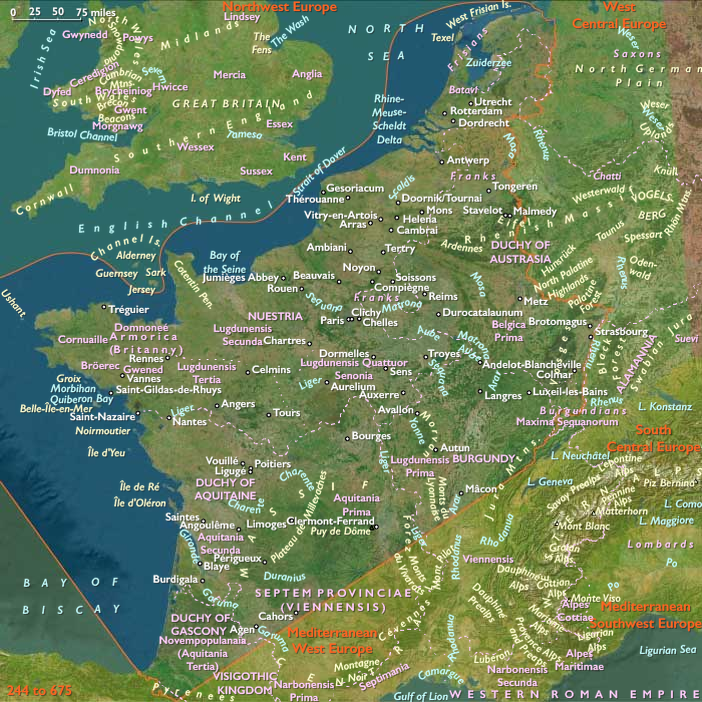
Related Events
Showing 6 events out of 6 total
Years: 244 - 387
People
Groups
- Gauls
- Christians, Early
- Roman Empire (Rome): Non-dynastic
- Roman Empire: Tetrarchy
- Christianity, Arian
- Gaul, Diocese of
- Roman Empire: Constantinian dynasty (Nicomedia)
- Christianity, Nicene
- Roman Empire: Constantinian dynasty (Constantinople)
- Gaul, Praetorian prefecture of
- Roman Empire: Valentinian dynasty (Rome)
- Roman Empire: Theodosian dynasty (Constantinople)
Topics
Subjects
Regions
Subregions