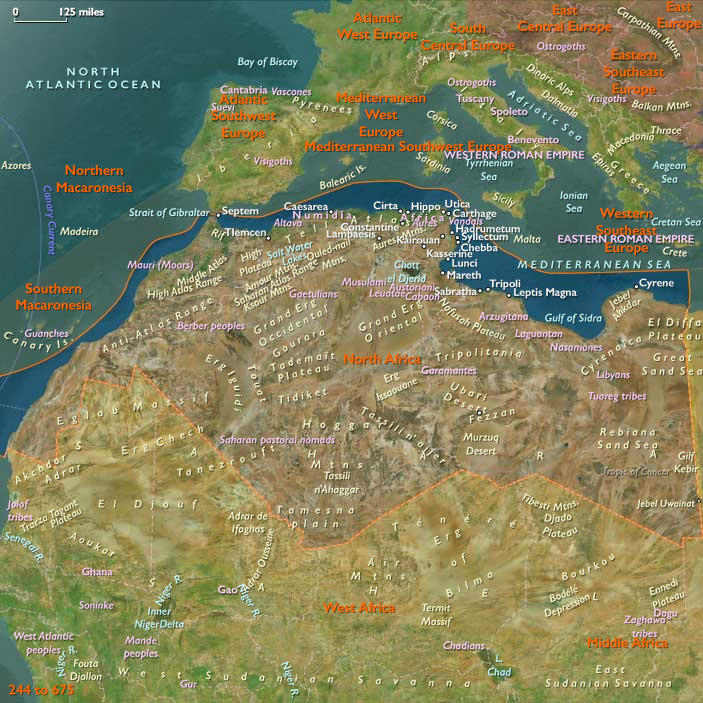
The towns of Roman North Africa have…
244 CE to 387 CE
Some Jews had been deported from Judea or Palestine in the first and second centuries CE for rebelling against Roman rule; others had come earlier with Punic settlers.
In addition, a number of Berber tribes have converted to Judaism.
Christianity had arrived in the 2nd century and soon gained converts in the towns and among slaves.
More than eighty bishops, some from distant frontier regions of Numidia, attend the Council of Carthage in 256.
By the end of the fourth century, the settled areas have become Christianized, and some Berber tribes have converted en masse.
A division in the church that comes to be known as the Donatist heresy begins in 313 among Christians in North Africa.
The Donatists stress the holiness of the church and refuse to accept the authority to administer the sacraments of those who had surrendered the scriptures when they were forbidden under the Emperor Diocletian (reigned 284-305).
The Donatists also oppose the involvement of Constantine the Great (reigned 306-337) in church affairs in contrast to the majority of Christians who welcome official imperial recognition.
Locations
Groups
Berber people (also called Amazigh people or Imazighen, "free men", singular Amazigh)
View →
Numidians
View →
Jews
View →
Africa proconsularis (Roman province)
View →
Christians, Jewish
View →
Christians, Early
View →
Mauretania Tingitana (Roman province)
View →
Mauretania Caesariensis (Roman province)
View →
Numidia (Roman Province)
View →
Roman Empire: Tetrarchy
View →
Donatism
View →
Roman Empire: Constantinian dynasty (Nicomedia)
View →
Christianity, Nicene
View →
Subjects
Regions
North Africa
View →Subregions