
The Bering expedition, after leaving Ust-Kut when …
Years: 1727 - 1727
January
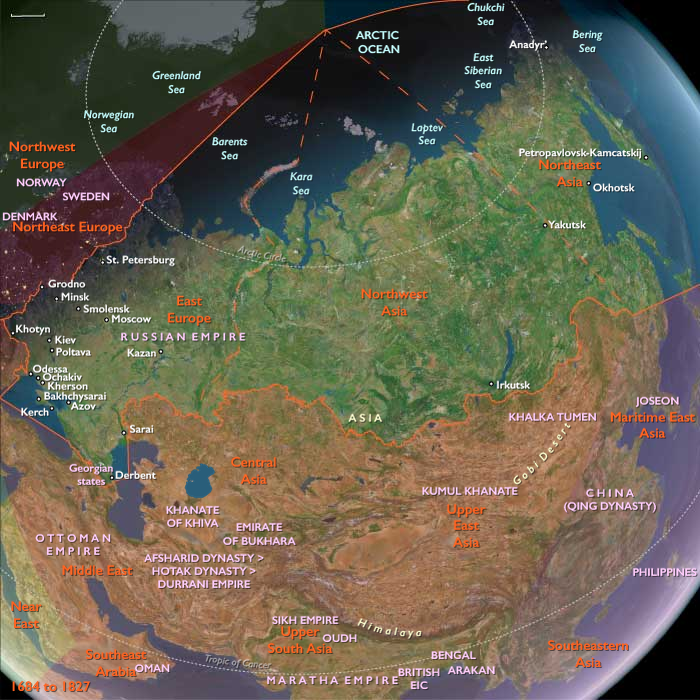
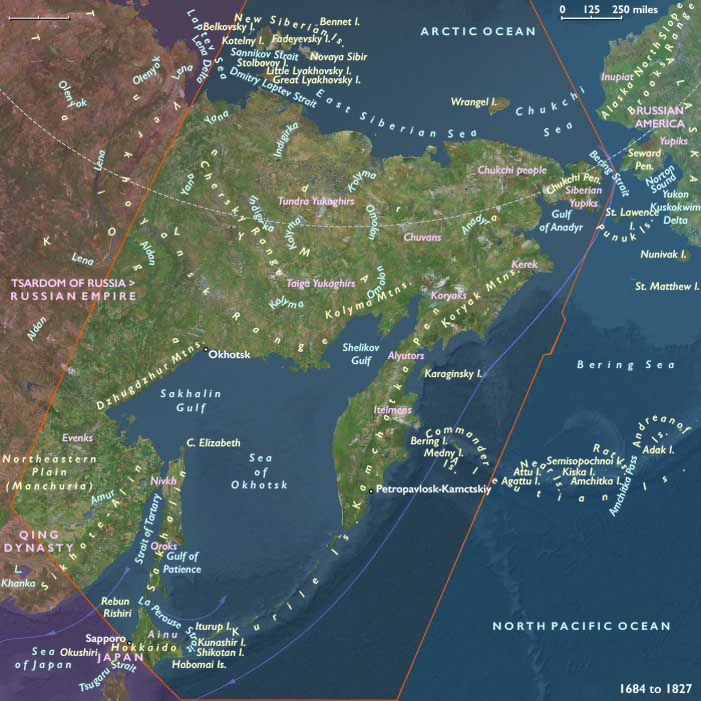
The Bering expedition, after leaving Ust-Kut when the river ice melted in the spring of 1726, had rapidly traveled down the River Lena, reaching Yakutsk in the first half of June.
Despite the need for hurry and men being sent in advance, the governor had been slow to grant them the resources they needed, prompting threats from Vitus Bering.
Bering’s lieutenant Martin Shpangberg had left on July 7, with a detachment of two hundred and nine men and much of the cargo; pprentice shipbuilder Fyodor Kozlov had on July 27 led a small party to reach Okhotsk ahead of Spangberg, both to prepare food supplies and to start work repairing the Vostok and building a new ship (the Fortuna) needed to carry the party across the bay from Okhotsk to the Kamchatka peninsula.
Bering himself had left on August 16, while it was decided that Aleksei Chirikov would follow the next spring with fresh supplies of flour.
The journeys had been as difficult as Bering had worried they would be.
Both men and horses had died, while other men (forty-six from Bering's party alone) had deserted with their horses and portions of the supplies as they struggled to build roads across difficult marshland and river terrain.
If Bering's party (which reached Okhotsk in October) had fared badly, Shpangberg's had fared far worse.
His heavily loaded boats could be tugged at no more than one mile a day‚ and they had some six hundred and eighty-five miles to cover.
When the rivers froze, the cargo was transferred to sleds and the expedition continued, enduring blizzards and waist-high snow.
Even provisions left by Bering at Yudoma Cross could not fend off starvation.
Shpangberg and two other men, who had together formed an advance party carrying the most vital items for the expedition, reach Okhotsk on January 6, 1727; ten days later, sixty others join them, although many are ill.
Parties sent by Bering back along the trail from Okhotsk rescue seven men and much of the cargo that had been left behind.
Locations
People
Groups
Topics
Commodoties
Subjects
Regions
Subregions
Years: 1727 - 1727
January
Locations
People
Groups
Topics
Commodoties
Subjects
Regions
Subregions