The Black Death and Its Impact on…
1348 CE
The Black Death and Its Impact on France’s War Effort (1348)
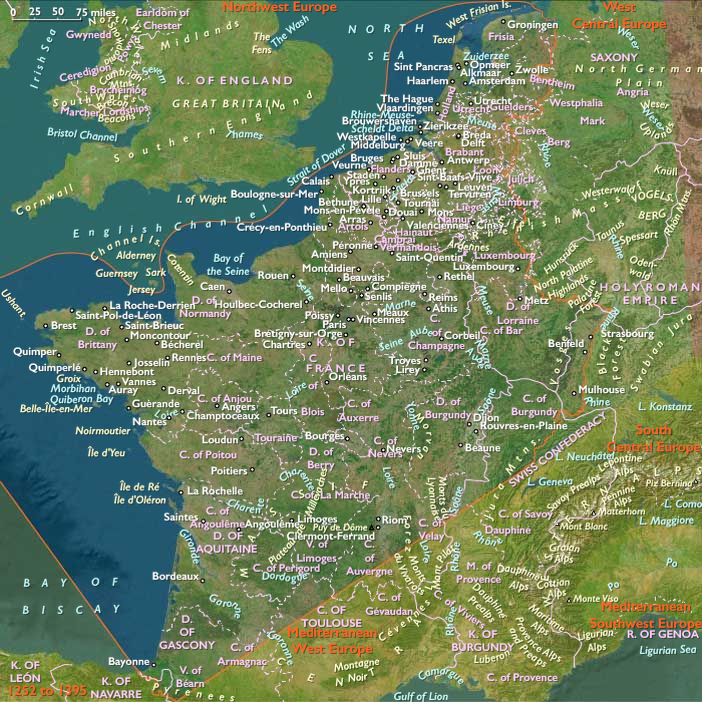
In 1348, the Black Death reached Paris, marking the beginning of its devastation across Europe. The pandemic, which would ultimately kill between 30-50% of the European population, struck at a time when King Philip VI of France was already struggling in the Hundred Years’ War against Edward III of England. The plague crippled Philip’s military plans, further weakening France’s position in the ongoing conflict.
The Black Death Arrives in France (1348)
- The plague had already ravaged Italy, moving northward through trade routes.
- By 1348, it swept through Paris, quickly spreading into the countryside and other major cities.
- The high population density and poor sanitation in urban centers accelerated the disease’s spread.
Disruption of Philip VI’s Military Plans
- Before the outbreak, Philip VI had been rebuilding his military forces, aiming to counter Edward III’s advances in the war.
- He had implemented a well-financed army program, but the plague disrupted recruitment, taxation, and supply lines.
- Deaths among soldiers, tax collectors, and administrators severely weakened the French war effort.
Wider Impact on France and the War
- The French economy collapsed, with widespread labor shortages and inflation crippling Philip’s ability to sustain the war.
- Peasant revolts and social unrest increased as taxation became unbearable, leading to further instability.
- While England was also affected by the plague, Edward III had secured key victories at Crécy (1346) and Calais (1347) before the worst of the pandemic hit, putting France at a severe disadvantage.
The arrival of the Black Death in 1348 marked a turning point for France, as Philip VI’s military ambitions were shattered and the country plunged into economic and social chaos, further weakening its position in the Hundred Years’ War.
Locations
People
Topics
Regions
West Europe
View →Subregions