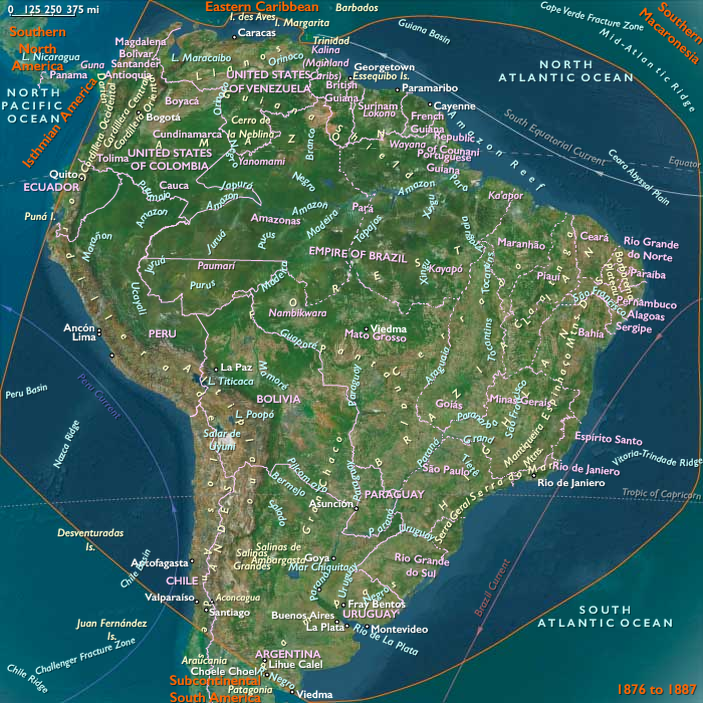
The 1870s and 1880s in Brazil see…
1876 CE to 1887 CE
The 1870s and 1880s in Brazil see a crisis in each of the three pillars of the imperial regime—the church, the military, and the slave-holding system.
Together, these crises represent the failure of the regime to adapt without alienating its base.
In the 1870s, Rome pressures Brazil's Roman Catholic Church to conform to the conservative reforms of Vatican Council I, which strengthens the power of the pontiff by declaring him infallible in matters of faith and morals.
This effort by Rome to unify doctrine and practice worldwide conflicts with royal control of the church in Brazil.
The crown had inherited the padroãdo, or right of ecclesiastical patronage, from its Portuguese predecessor.
This right gives the crown control over the church, which imperial authorities treat as an arm of the state.
Although some clerics had displayed republican sentiments earlier in the century, a church-state crisis explodes in the mid-1870s over efforts to Europeanize the church.
Regions
South America
View →Subregions