The British decision to administer Trinidad and…
1852 CE to 1863 CE
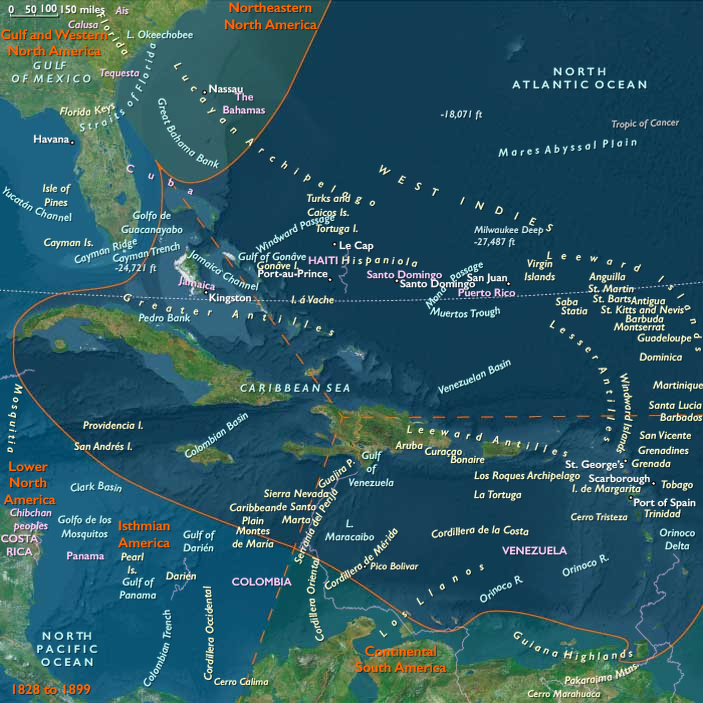
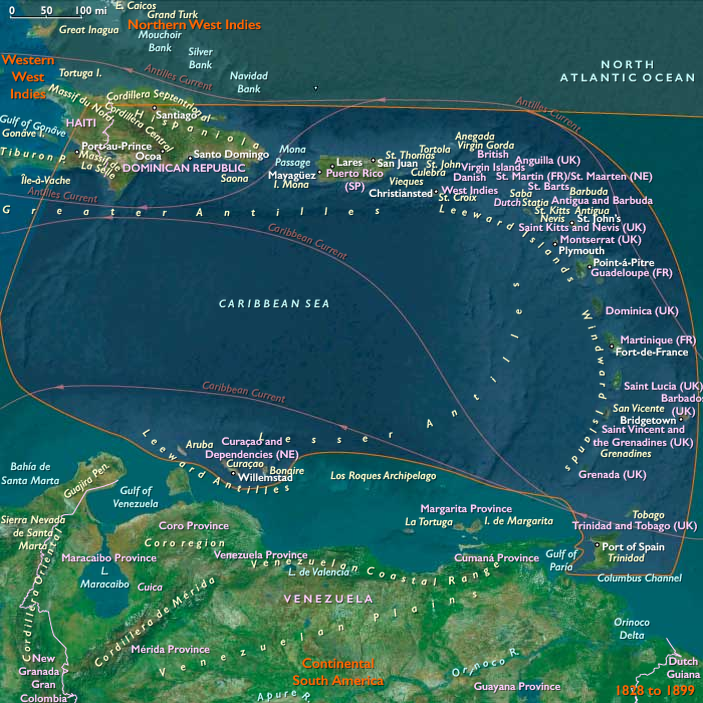
The British decision to administer Trinidad and St. Lucia as crown colonies results from a number of complex factors.
First, the British, cognizant of the difficulty that they had had with the various local planters' assemblies, are not anxious to create legislative bodies on two more islands.
Beyond that, the acquisition of Trinidad had presented the British with several new challenges.
First, the free nonwhite population on the island outnumbered the white residents.
The British were unwilling to extend voting rights to a nonwhite majority but also felt that free nonwhites would not accept an electoral system only open to whites.
Second, French and Spanish planters on the island outnumbered those from Britain.
Even if a way could be found to restrict the vote to whites, "foreigners" would dominate the assembly.
Finally, with the British abolition of the slave trade in 1808, the British had wanted to prevent illegal arrivals of new slaves into Trinidad.
Enforcement of the new law could be handled more easily through direct control.
Groups
Subjects
Regions