Smeaton's Tower, the third and most notable…
1759 CE
The Royal Society had recommended John Smeaton, a celebrated civil engineer, for the task, and he has modeled the lighthouse on an oak tree.
He has rediscovered the use of hydraulic lime, a form of concrete used in Roman times.
The technique allows concrete to set under water, as Smeaton puts granite blocks together using dovetail joints and marble dowels.
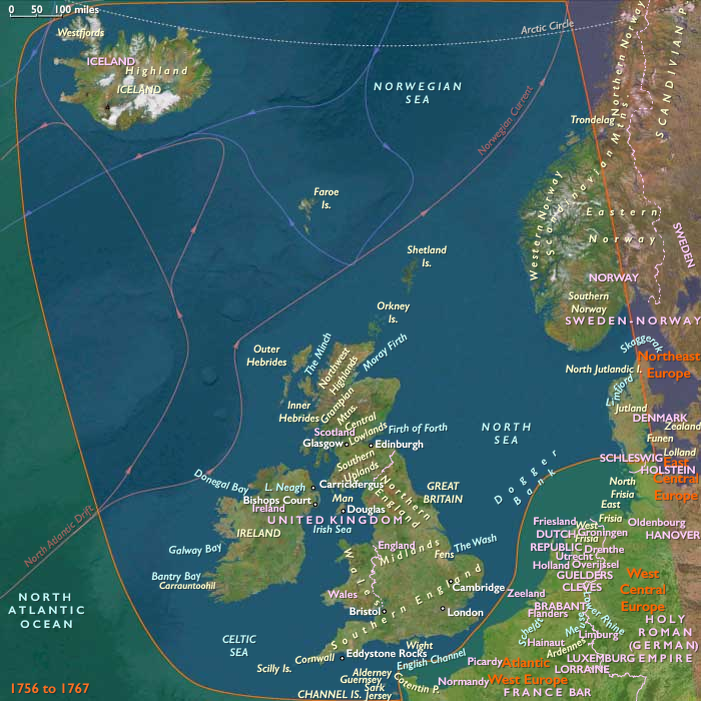
Construction had started in 1756 at a site in Millbay, where Smeaton has built a jetty and a workyard in the southwestern corner of the harbor to unload and work on stones.
Timber rails of three feet six inches (one hundred and seven centimeters) gauge had been laid for four-wheeled flat trucks, which are used to move masonry around the site.
A ten-ton ship named the Eddystone Boat is based here, and transports worked stones out to the reef.
The ship had carried the 2¼-ton foundation stone out in the morning of June 12, 1756.
The work is completed in August 1759 at a cost of £40,000 (£5,525,926 with inflation).
Many Cornish tin miners have been employed in its construction.
To avoid the possibility of press ganging, a practice which is common at this time, Trinity House had arranged with the Admiralty that the workers would be immune from the press.
Each worker has been issued a medal to confirm he was a worker at the lighthouse.
The lighthouse is seventy-two feet high, and has a diameter at the base of twenty-six feet (eight meters) and at the top of seventeen feet (five meters).
After the structure is completed, the lighthouse's twenty-four candles are lit on October 16, 1759.
Each candle weighs between two pounds (0.9 kg) and five pounds (2.3 kg).
A timepiece placed alongside the light is set to chime every half-hour, alerting the lighthouse keeper to the need to replace expired candles.
Images
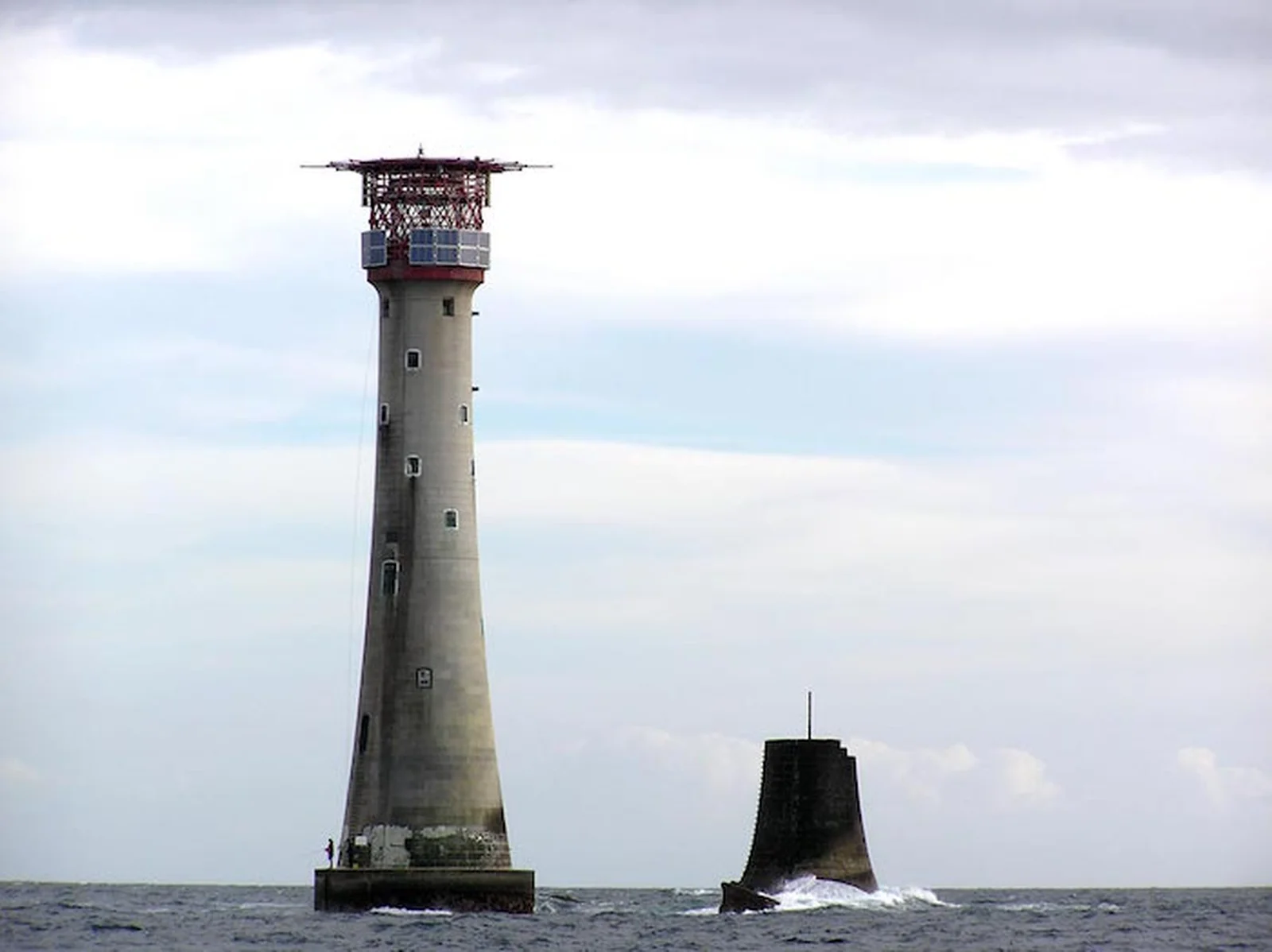
The base of Smeaton's Tower still in position next to the current Eddystone Lighthouse (Photo taken 25 May 2006 by Pline)
People
Regions
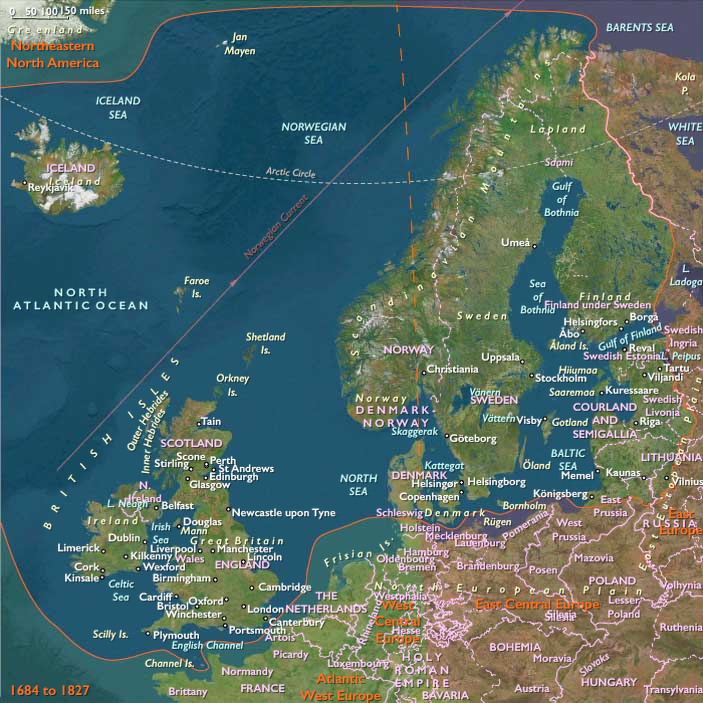
North Europe
View →Subregions