The British suppress a mutiny at Fort…
April 1807 CE
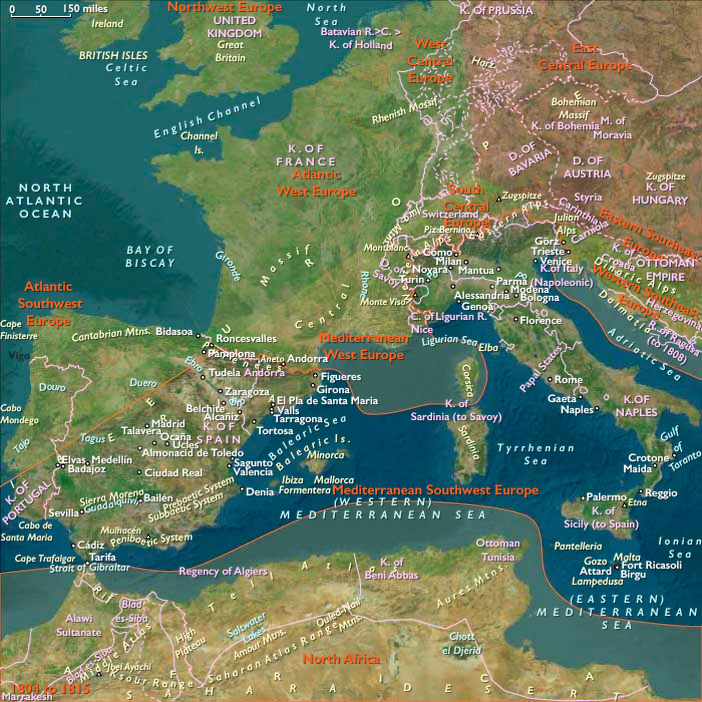
The British suppress a mutiny at Fort Ricasoli, Malta, by men of the irregularly-recruited Frobert Regiment, from April 4 to 12, 1807.
The Froberg Regiment had been founded in December 1803 by the French royalist Gustave de Montjoie, who had claimed he was the German Count Froberg.
He had been given permission by the Secretary at War to raise a regiment for service on Malta, which he had done in Albania and the Christian parts of the Ottoman Empire.
It consists of men with various nationalities, including Germans, Poles, Swiss, Albanians, Bulgarians, Greeks and Russians.
The regiment's five hundred and thirteen men had arrived on Malta in 1806.
The regiment was commanded by Major Schumelketel and Lieutenant Schwartz, the latter of whom had supervised the dubious recruiting process.
Soon after their arrival, some of the men of the regiment had begun to complain: they had been promised high rank with good pay, but have been forced to work as privates at lower wages.
While the men were quarantined at the Lazzaretto on Manoel Island, they demanded to be sent back to Corfu.
They had withdrawn their demands after Schwartz threatened to stop their food rations, which itself had created more discontent.
After the release from quarantine, the soldiers had been allowed to go into the capital Valletta, where they had quarreled among themselves and with the locals.
To prevent unrest, the Commander of the British Forces in Malta, William Villettes, had confined them to Fort Ricasoli, a large fortification at the entrance of the Grand Harbour.
In November 1806, Villettes had appointed Lieutenant-Colonel James Barnes as the regiment's commander, but this had only increased their resentment.
The mutiny breaks out on April 4, 1807, while Lieutenant-Colonel Barnes is in Valletta.
It involves two hundred Greeks and Albanians who kill Lieutenant Schwartz, Captain De Wattville, Gunner John Johnstone and a number of privates.
They also wound Major Schumelketel and three other officers.
They remove the British flag and replace it with the Russian ensign, close the fort's gates and raise the drawbridge.
The mutineers take the regimental officers and their families hostage, and forced about twenty British artillerymen to aim the fort's guns and mortars at Valletta.
The revolt is led by a Greco-Bulgarian named Caro Mitro.
Some men who had escaped from the fort inform the British of the mutiny.
The Royal Maltese Regiment and the 39th (Dorsetshire) Regiment of Foot take positions on the glacis of the fort, while the guns of Fort Saint Elmo and Fort Saint Angelo are trained on Ricasoli.
In a message, the mutineers demand to be discharged and to be sent home, with money and a pardon from Villettes.
They threaten to open fire on Valletta, but Villettes refuses their demands and ordered them to surrender.
Groups
Regions
Southwest Europe
View →Subregions