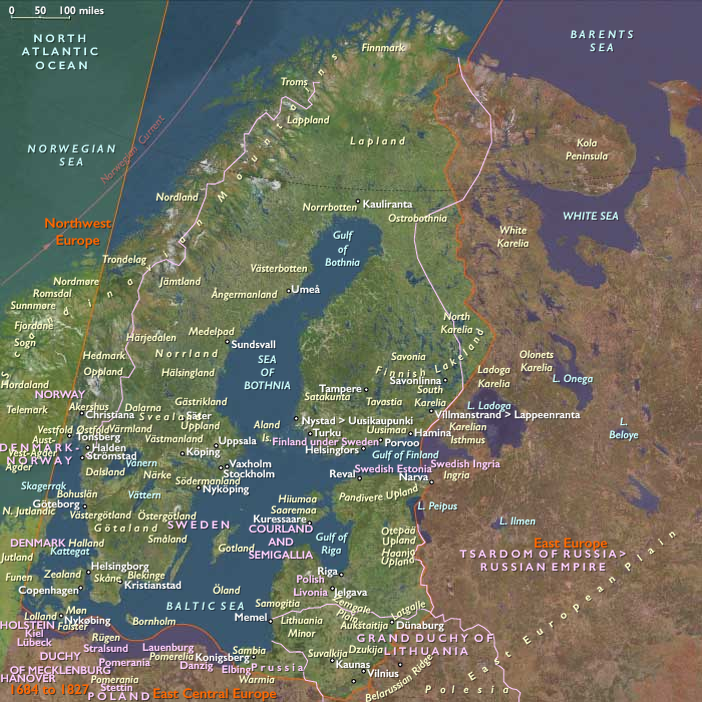
Russia plans at first to annex Finland…
1684 CE to 1827 CE
Finland is not annexed to the Russian Empire but is joined to Russia instead through the person of the tsar.
In addition, Finland is made an autonomous state—the Grand Duchy of Finland—with its inherited traditions intact.
Thus the laws and constitution of Finland remain unchanged, and the tsar takes the place of the Swedish king as sovereign.
The official forms of government inherited from the era of Swedish absolutism are sufficiently autocratic to allow the tsar to accept them largely intact; however, included in these forms of government is the comprehensive law code of 1734 that protects individual rights.
Imperial assurances that Finland will be autonomous and that its traditions will be respected are encoded in two 1809 decrees that constitute for the Finns the basis of their relationship with Russia.
The Finnish Diet that meets at Porvoo (Swedish, Borgå) in 1809 seconds the tsar's decrees.
As a further gesture of magnanimity, in 1812 the tsar restores to Finland the lands Russia had annexed in the eighteenth century.
These conciliatory measures were effective, and, as long as Russia respects this arrangement, the Finns will prove to be loyal subjects of the Russian Empire.
Groups
Finns
View →
Sami people
View →
Karelians
View →
Tavastians
View →
Germans
View →
Estonians
View →
Dutch people
View →
French people (Latins)
View →
Swedes (Scandinavians)
View →
Sweden, (second) Kingdom of
View →
Swedish Empire
View →
Finland, (Swedish) Grand Duchy of
View →
Russian Empire
View →
Britain (United Kingdom of Great Britain and Ireland)
View →
France, (first) Empire of
View →
Topics
Regions
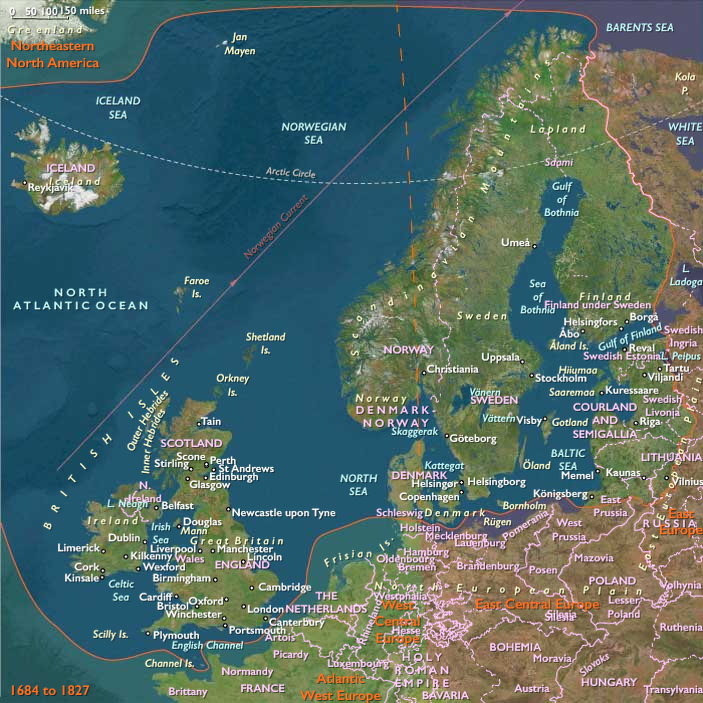
North Europe
View →Subregions