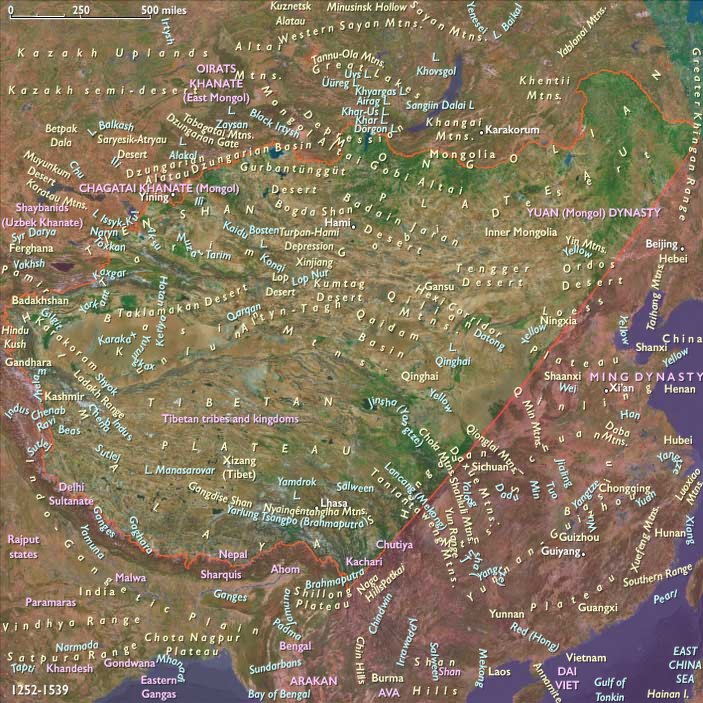
The end of the Yüan dynasty is…
1396 CE to 1539 CE
The end of the Yüan dynasty is the second turning point in Mongol history.
The retreat of more than sixty thousand Mongols into the Mongolian heartland brings radical changes to the quasi-feudalistic system.
In the early fifteenth century, the Mongols split into two groups, the Oirat in the Altai region and the eastern group that later comes to be known as the Khalkha in the area north of the Gobi.
A lengthy civil war (1400-54) precipitates still more changes in the old social and political institutions.
By the middle of the fifteenth century, the Oirat have emerged as the predominant force, and, under the leadership of Esen Khan, they unite much of Mongolia, then continue their war against China.
Esen is so successful against China that, in 1449, he defeats and captures the Ming emperor.
After Esen is killed in battle four years later, however, the brief resurgence of Mongolia comes to an abrupt halt, and the tribes return to their traditional disunity.
Groups
Subjects
Regions
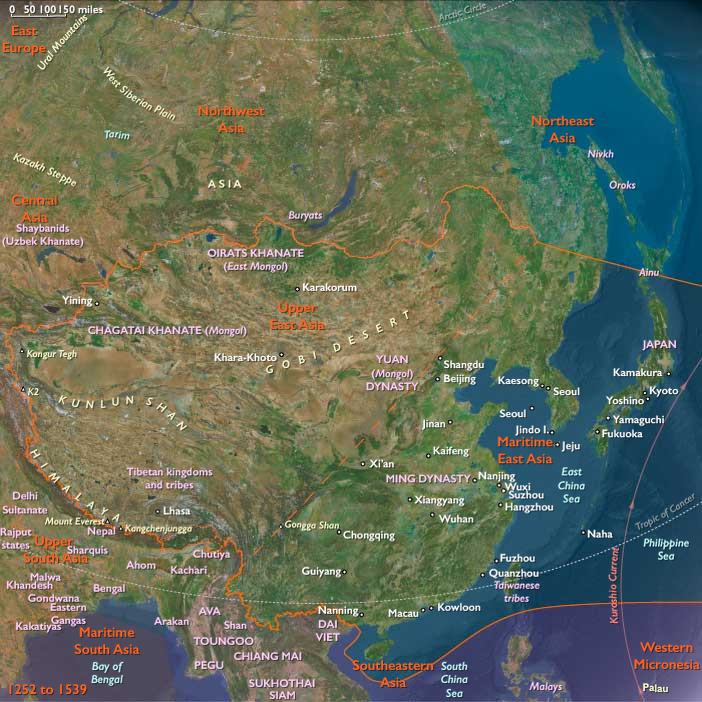
East Asia
View →Subregions