
East Europe (909–766 BCE): Chernoles Culture, Scythian …
Years: 909BCE - 766BCE
East Europe (909–766 BCE): Chernoles Culture, Scythian Emergence, and Proto-Slavic Foundations
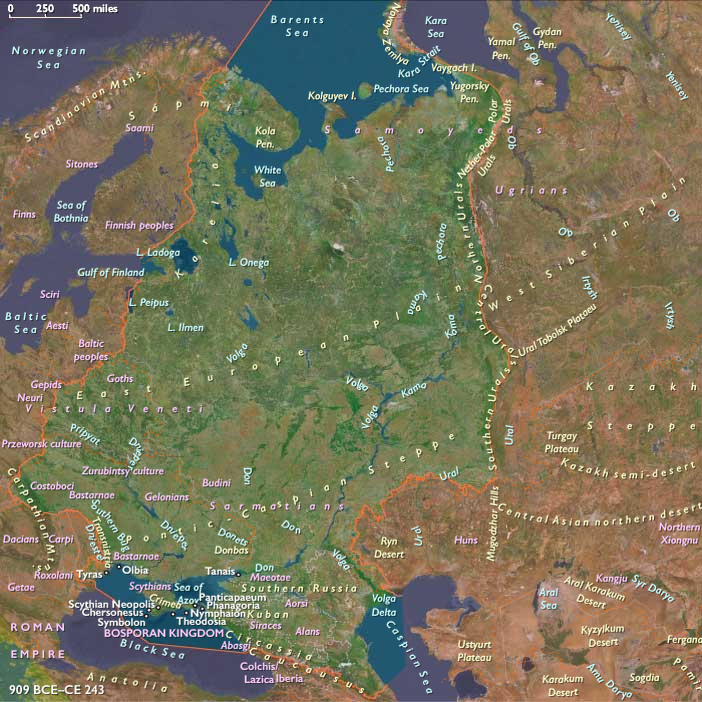
Between 909 and 766 BCE, East Europe—encompassing the territories of modern-day Belarus, Ukraine, and the European part of Russia—witnessed significant cultural and demographic transformations, marked especially by the prominence of the Chernoles culture and the early phases of Scythian dominance.
Political and Cultural Developments
Chernoles Culture and Proto-Slavic Identity
-
The Chernoles culture (circa 1050–500 BCE), flourishing primarily between the Dniester and Dnieper Rivers, characterized this era. It represented settled agriculturalists whose way of life contrasted with neighboring nomadic peoples.
-
Some scholars, including Maria Gimbutas, propose this culture as the early homeland of the proto-Slavs, seeing them as the ancestors of later Slavic-speaking peoples. Others prefer a more cautious interpretation, viewing the culture as a key developmental stage without assigning direct ethnic labels.
Emergence and Influence of Scythians
-
This period also witnessed the initial emergence of nomadic peoples, commonly identified as early Scythians. Originating from Central Asia, they entered the Pontic steppe regions north of the Black Sea, beginning to exert pressure on established agricultural communities such as those associated with the Chernoles culture.
-
Herodotus’s reference to "Scythian plowmen" corresponds geographically and culturally to populations within the Chernoles region, suggesting an early, nuanced relationship between nomadic Scythian warriors and settled agricultural peoples, possibly involving tributary or client relationships.
Uralic and Proto-Hungarian Migrations
-
Around 1000 BCE, Uralic-speaking peoples, including the ancestors of the Hungarians, had begun migrating southwest from territories west of the Ural Mountains into regions that border modern East Europe. The proto-Hungarians gradually shifted from hunting and fishing toward nomadic cattle-herding.
Economic and Social Transformations
-
The Chernoles communities relied predominantly on settled agriculture, cultivating grains and maintaining livestock. They constructed fortified settlements, indicating a social structure with emerging hierarchies and defensive concerns.
-
By contrast, early Scythian groups were pastoralists, whose economy relied heavily on cattle, sheep, and horses, setting the stage for the region’s characteristic duality between nomadic pastoralists and settled agriculturalists.
Technological and Artistic Developments
-
Iron metallurgy expanded during this period, enhancing agricultural tools and weaponry. The Chernoles people contributed significantly to regional technological developments, refining iron implements that would become central to Eastern European agrarian life.
-
Early Scythian artistic expressions emerged, evident in burial practices and artifacts such as decorative horse trappings and weaponry, foreshadowing the rich artistic tradition known as the "Scythian animal style."
Long-Term Consequences and Historical Significance
The age from 909 to 766 BCE established foundational patterns in East Europe. The contrast between settled, proto-Slavic agricultural communities (Chernoles culture) and emerging nomadic, pastoral groups (Scythians) defined regional dynamics, influencing the cultural and demographic landscape for centuries to come. The early migration of Uralic-speaking proto-Hungarians into adjacent territories added further diversity, significantly shaping the ethnic and cultural complexity characteristic of later periods. These interactions and migrations laid crucial groundwork for the subsequent historical trajectory of East Europe.
Groups
Topics
Commodoties
Subjects
Regions

Subregions
Related Events
Showing 10 events out of 185 total
Years: 909BCE - 766BCE
Groups
Topics
Commodoties
Subjects
Regions
Subregions