The Shimabara Rebellion of 1637-38, in which…
1636 CE to 1647 CE
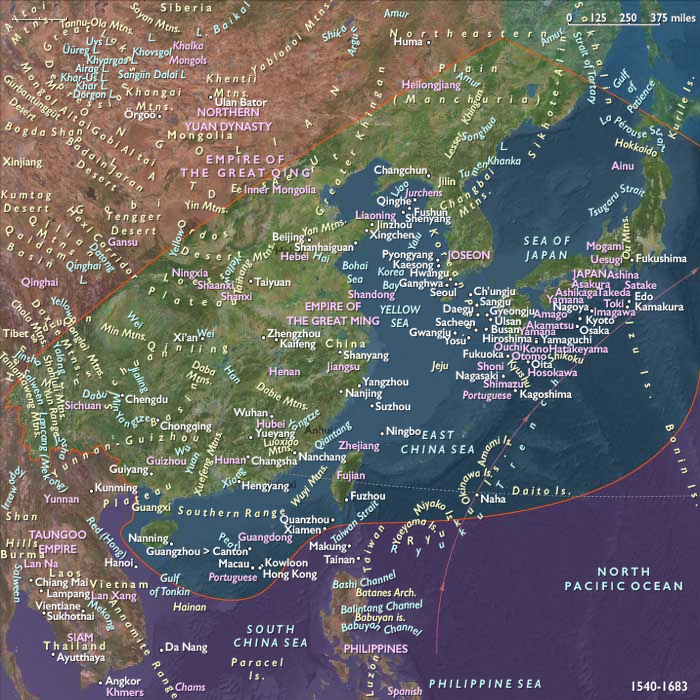
The Shimabara Rebellion of 1637-38, in which discontented Christian samurai and peasants rebel against the bakufu—and Edo calls in Dutch ships to bombard the rebel stronghold—marks the end of the Christian movement.
Soon thereafter the Portuguese are permanently expelled, members of the Portuguese diplomatic mission are executed, all subjects are ordered to register at a Buddhist or Shinto temple, and the Dutch and Chinese are restricted respectively to Deshima and a special quarter in Nagasaki.
Besides small trade of some outer daimyo with Korea and the Ryukyu Islands, to the southwest of Japan's main islands, by 1641 foreign contacts are limited to Nagasaki.
Locations
People
Groups
Shinto
View →
Japanese people
View →
Chinese (Han) people
View →
Dutch people
View →
Buddhists, Zen or Chán
View →
Portuguese people
View →
Christians, Roman Catholic
View →
Chinese Empire, Ming Dynasty
View →
Portugal, Habsburg (Philippine) Kingdom of
View →
Netherlands, United Provinces of the (Dutch Republic)
View →
Japan, Tokugawa, or Edo, Period
View →
Topics
Subjects
Regions
East Asia
View →Subregions