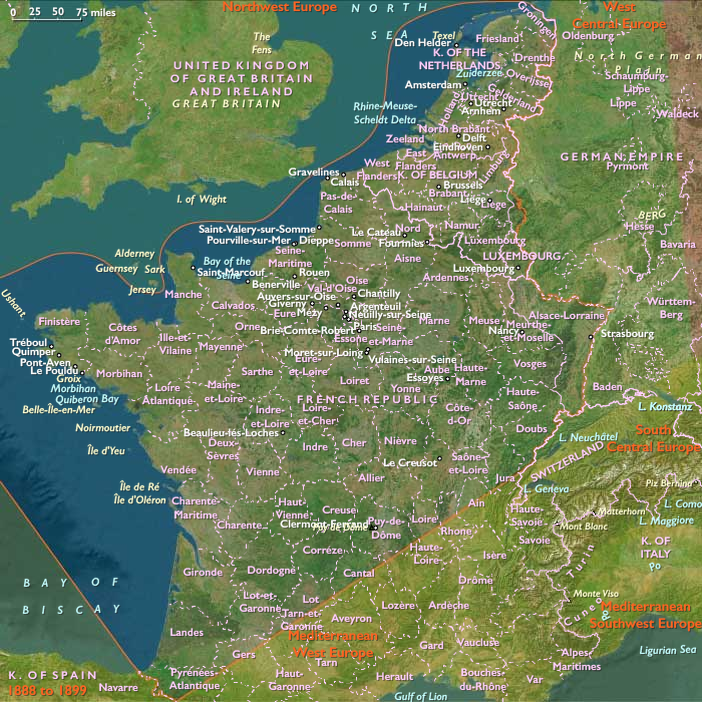
Vincent van Gogh moves on May 20,…
May 1890 CE
In 1889, van Gogh had experienced a deterioration in his mental health.
As a result of incidents in Arles leading to a public petition, he had been admitted to a hospital, where his condition improved and he was ready to be discharged by March 1889, coinciding with the wedding of his brother Theo to Johanna Bonger.
However, at the last moment his resolution failed him and he confided to Frédéric Salles, who served as an unofficial chaplain to the hospital's Protestant patients, that he wanted to be confined to an asylum.
At Salles' suggestion van Gogh chose an asylum in nearby Saint-Rémy.
Theo had originally resisted this choice, even suggesting that Vincent rejoin Paul Gauguin in Pont Aven, but was eventually won over, agreeing to pay the asylum fees (requesting the cheapest third-class accommodation).
Vincent had entered the asylum in early May 1889.
His mental condition remained stable for a while and he was able to work en plein air, producing many of his most iconic paintings, such as Starry Night, at this time.
However at the end of July, following a trip to Arles, he suffered a serious relapse that lasted a month.
He made a good recovery, only to suffer another relapse in late December 1889, and early the following January an acute relapse while delivering a portrait of Madame Ginoux to her in Arles.
This last relapse, described by Jan Hulsker as his longest and saddest, had lasted until March 1890.
In May 1890 Vincent was discharged from the asylum (the last painting he produced at the asylum was At Eternity's Gate, an image of desolation and despair), and after spending a few days with Theo and Jo in Paris, Vincent goes to live in Auvers-sur-Oise, a commune north of Paris popular with artists.
Subjects
Regions
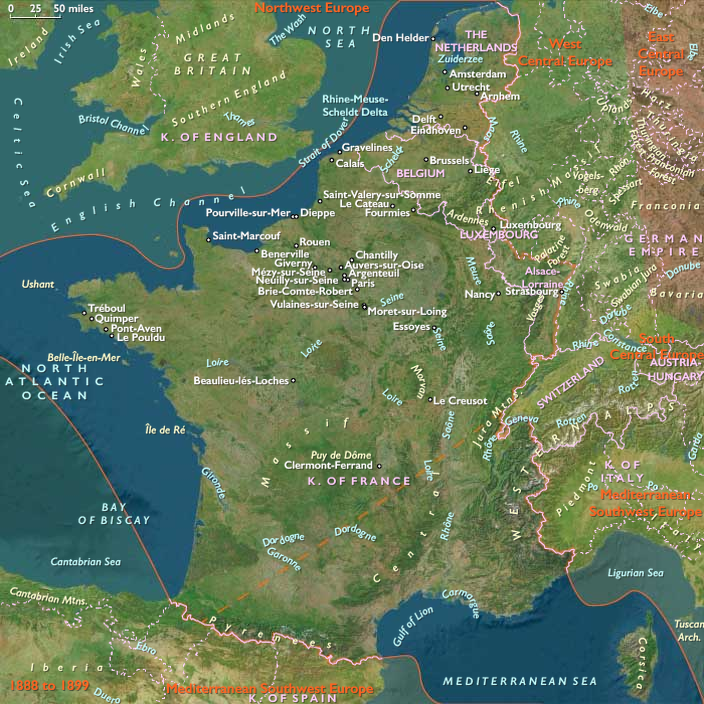
West Europe
View →Subregions