Saladin dies peacefully in Damascus in 1193.…
1108 CE to 1251 CE
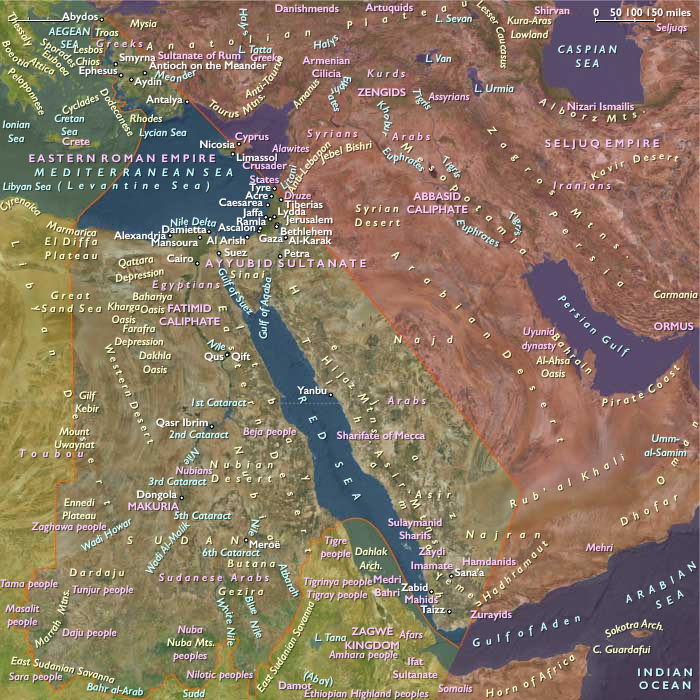
His dominions split up after his death into a loose dynastic empire controlled by members of his family, the Ayyubids.
The Ayyubid sultans of Egypt are paramount within this empire because their control of a rich, well-defined territory gives them a secure basis of power.
Economically, the Ayyubid period is one of growth and prosperity.
Italian, French, and Catalan merchants operate in ports under Ayyubid control.
Egyptian products, including alum, for which there is a great demand, are exported to Europe.
Egypt also profits from the transit trade from the East.
Like the Fatimids before him, Saladin had brought Yemen under his control, thus securing both ends of the Red Sea and an important commercial and strategic advantage.
Culturally, too, the Ayyubid period is one of great activity.
Egypt becomes a center of Arab scholarship and literature and, along with Syria, acquires a cultural primacy that it will retain through the modern period.
The prosperity of the cities, the patronage of the Ayyubid princes, and the Sunni revival make the Ayyubid period a cultural high point in Egyptian and Arab history.
People
Groups
Egyptians
View →
Arab people
View →
Jews
View →
Christians, Monophysite
View →
Christianity, Chalcedonian
View →
Coptic Orthodox Church of Alexandria
View →
Greeks, Medieval (Byzantines)
View →
Islam
View →
Egypt in the Middle Ages
View →
Muslims, Sunni
View →
Muslims, Shi'a
View →
Ismailism
View →
Abbasid Caliphate (Baghdad)
View →
Fatimid Caliphate
View →
Egypt, Ayyubid Sultanate of
View →
Subjects
Regions
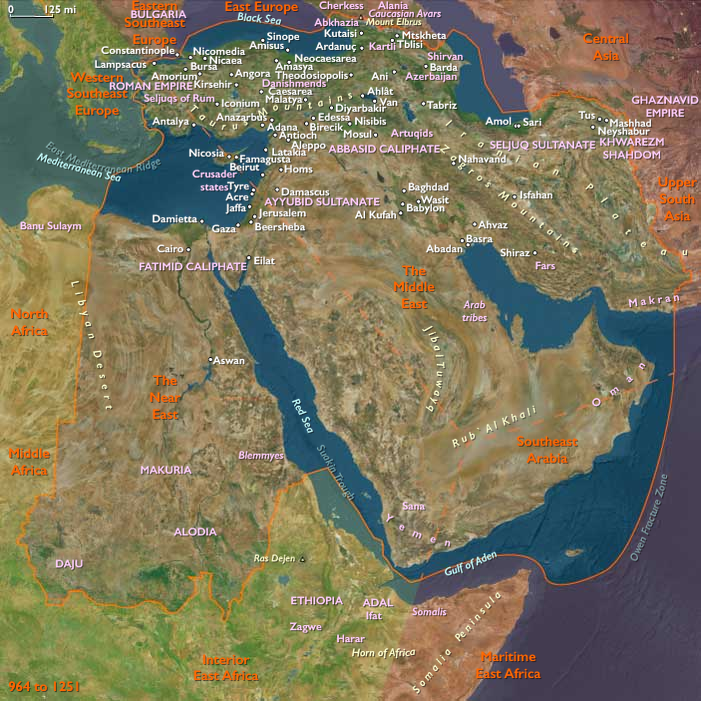
The Near and Middle East
View →Subregions