
The Origins of the Domain of Soissons …
Years: 461 - 461
The Origins of the Domain of Soissons
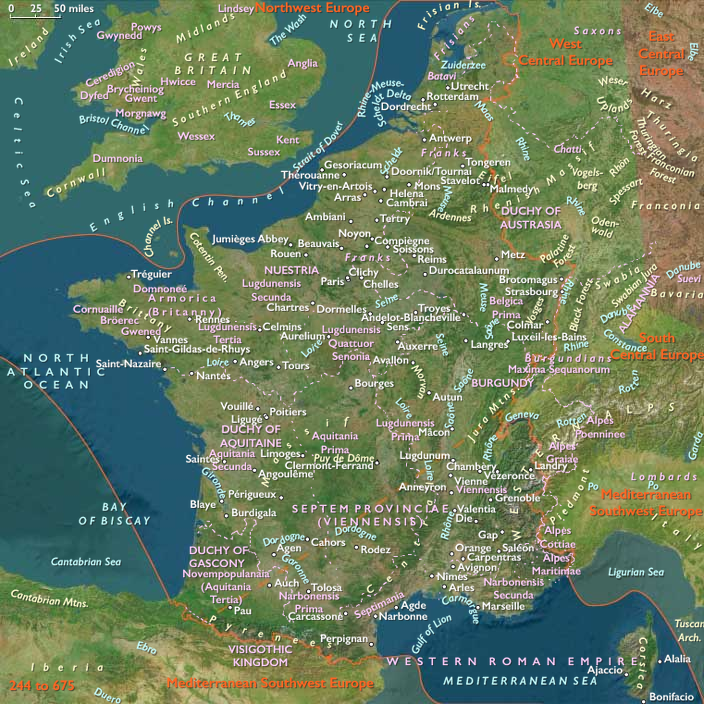
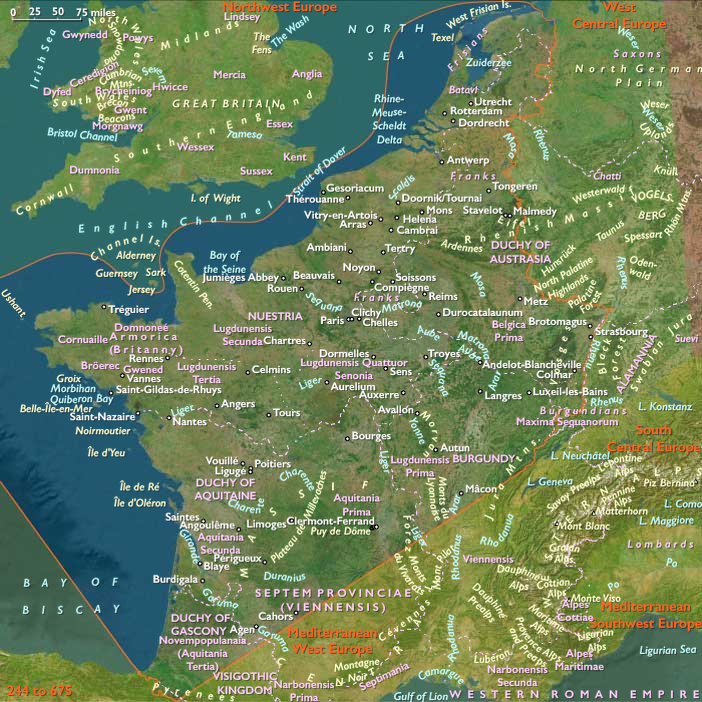
The Domain of Soissons, a last vestige of Roman rule in northern Gaul, traces its origins to the reign of Emperor Majorian (457–461 CE). During this period, Majorian appoints Aegidius as magister militum of the Gallic provinces, entrusting him with the defense of the remaining Roman territories in the northwest.
The Isolation of Aegidius
Initially, the northwestern Roman strongholds in Gaul remain connected to Italy via a narrow corridor linking them with the last imperial territories in Auvergne, Provence, and Languedoc. However, during Majorian’s reign:
- This corridor is overrun by the Visigoths, Burgundians, and Franks, who are rapidly expanding their territories.
- The conquest severs the last land connection between Aegidius’ domain and the Western Roman Empire, leaving him and his forces effectively isolated.
Aegidius’ Rule and Alliances
Though cut off from direct imperial support, Aegidius governs independently, maintaining control over the remnants of Roman Gaul in the northwest, centered around Soissons.
- He establishes friendly relations with the Romano-British in Armorica (Brittany), forming a strategic alliance that strengthens his position against both Franks and Visigoths.
- His domain is often referred to as a "Roman rump state," a last outpost of Roman law, administration, and military resistance against the encroaching Germanic powers.
The Last Roman Stronghold in Gaul
Following Majorian’s assassination in 461 CE, Aegidius refuses to recognize the authority of his successor, Ricimer, the Germanic powerbroker in Italy. Instead, he continues to rule autonomously, preserving Roman traditions in northern Gaul until his death.
His successor, Syagrius, will inherit this Roman enclave, maintaining its independence until 486 CE, when it is finally conquered by Clovis I, marking the definitive end of Roman rule in Gaul.
Locations
People
Groups
- Britons (historical)
- Franks
- Breton people
- Roman Empire, Western (Ravenna)
- Britain, Sub-Roman
- Francia (Merovingians)
- Soissons, (Gallo-Roman) Domain of
Topics
Subjects
Regions
Subregions
Related Events
Showing 10 events out of 58617 total
Years: 461 - 461
Locations
People
Groups
- Britons (historical)
- Franks
- Breton people
- Roman Empire, Western (Ravenna)
- Britain, Sub-Roman
- Francia (Merovingians)
- Soissons, (Gallo-Roman) Domain of
Topics
Subjects
Regions
Subregions