
Filters:
Portugal and its Brazilian subjects have divergent …
Years: 1540 - 1683
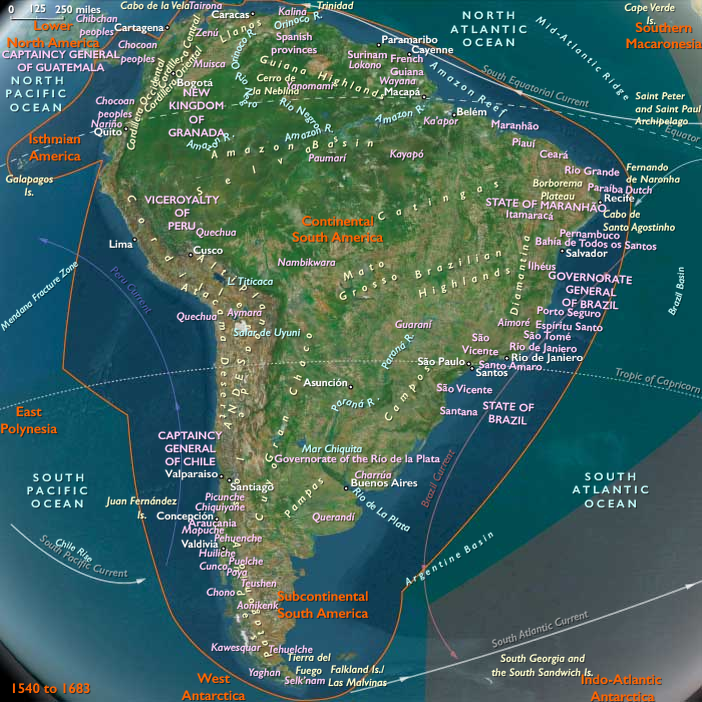
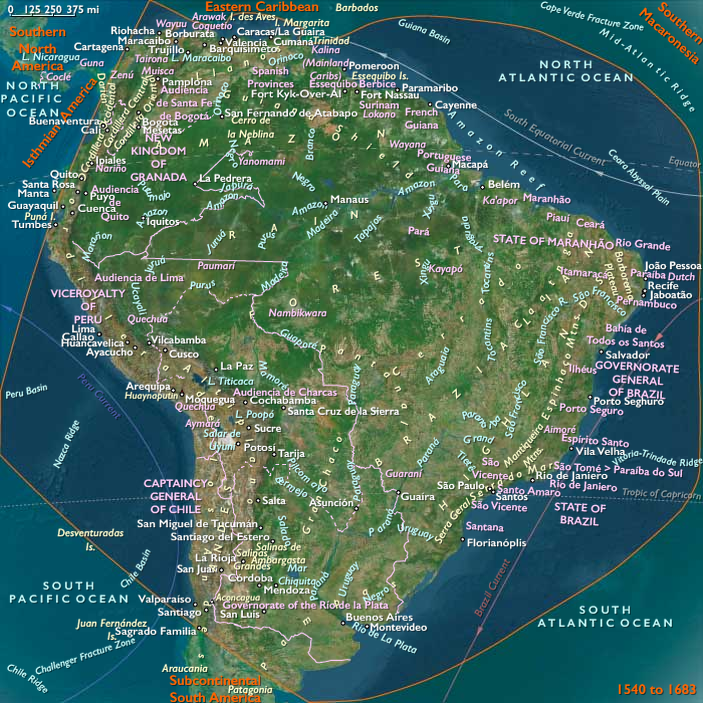
Portugal and its Brazilian subjects have divergent interests in responding to the Dutch.
When the Duke of Braganca takes the throne as João IV in 1640, his government faces the determination of Philip IV to reconquer Portugal, and he therefore needs to maintain peace with the rest of Europe.
As much as the Portuguese economy needs the revenues from the sugar trade, the court has to face the reality that in Europe the Dutch dominate a good portion of that trade.
Thus, if Portugal attacks Dutch-held Pernambuco, it will earn an enemy in Europe and lose access to the market.
At the same time, the king understands the importance of Brazil when he calls it his milk cow (vaca de kite).
Indeed, historian Charles Boxer will assert that Portugal's independence depended chiefly on the Brazil trade, which centered on sugar and slavery.
The Dutch do not show the same hesitation.
In 1641 they seize Luanda, an important source of enslaved Africans, in violation of a truce with Portugal.
Holland now holds sugar and slave ports in the South Atlantic and the distribution system in Europe.
Lisbon cannot merely abandon its subjects in Brazil, but it realizes that it will be foolhardy to fight for the sugar area without also regaining the source of enslaved Africans.
The colonists in the Dutch-occupied area play their own game of deception.
They borrow Dutch money to restore their war-torn plantations and engenhos and to buy slaves, but they realize that their long-term interests lie in expelling the Dutch and with them their indebtedness.
After 1645, together with the governor general in Bahia, they conspire, rebel, and fight against the Dutch.
Their victories of 1648 and 1649 at the Battle of Guararapes in the Recife area of Pernambuco are commemorated today.
However, after nine years of war the scorched-earth tactics have ravaged the region.
When the Duke of Braganca takes the throne as João IV in 1640, his government faces the determination of Philip IV to reconquer Portugal, and he therefore needs to maintain peace with the rest of Europe.
As much as the Portuguese economy needs the revenues from the sugar trade, the court has to face the reality that in Europe the Dutch dominate a good portion of that trade.
Thus, if Portugal attacks Dutch-held Pernambuco, it will earn an enemy in Europe and lose access to the market.
At the same time, the king understands the importance of Brazil when he calls it his milk cow (vaca de kite).
Indeed, historian Charles Boxer will assert that Portugal's independence depended chiefly on the Brazil trade, which centered on sugar and slavery.
The Dutch do not show the same hesitation.
In 1641 they seize Luanda, an important source of enslaved Africans, in violation of a truce with Portugal.
Holland now holds sugar and slave ports in the South Atlantic and the distribution system in Europe.
Lisbon cannot merely abandon its subjects in Brazil, but it realizes that it will be foolhardy to fight for the sugar area without also regaining the source of enslaved Africans.
The colonists in the Dutch-occupied area play their own game of deception.
They borrow Dutch money to restore their war-torn plantations and engenhos and to buy slaves, but they realize that their long-term interests lie in expelling the Dutch and with them their indebtedness.
After 1645, together with the governor general in Bahia, they conspire, rebel, and fight against the Dutch.
Their victories of 1648 and 1649 at the Battle of Guararapes in the Recife area of Pernambuco are commemorated today.
However, after nine years of war the scorched-earth tactics have ravaged the region.
Locations
People
Groups
- Brazil, Indigenous people in
- Dutch people
- Portuguese people
- Portugal, Avizan (Joannine) Kingdom of
- Portuguese Empire
- Brazil, Colonial
- Spaniards (Latins)
- Spain, Habsburg Kingdom of
- Portugal, Habsburg (Philippine) Kingdom of
- Netherlands, United Provinces of the (Dutch Republic)
- Dutch West India Company
- Dutch Brazil (New Holland)
Topics
- Age of Discovery
- Colonization of the Americas, Portuguese
- Colonization of the Americas, French
- Counter-Reformation (also Catholic Reformation or Catholic Revival)
- Guararapes, First Battle of
- Guararapes, Second Battle of
Commodoties
Subjects
Regions
Subregions
Years: 1540 - 1683
Locations
People
Groups
- Brazil, Indigenous people in
- Dutch people
- Portuguese people
- Portugal, Avizan (Joannine) Kingdom of
- Portuguese Empire
- Brazil, Colonial
- Spaniards (Latins)
- Spain, Habsburg Kingdom of
- Portugal, Habsburg (Philippine) Kingdom of
- Netherlands, United Provinces of the (Dutch Republic)
- Dutch West India Company
- Dutch Brazil (New Holland)
Topics
- Age of Discovery
- Colonization of the Americas, Portuguese
- Colonization of the Americas, French
- Counter-Reformation (also Catholic Reformation or Catholic Revival)
- Guararapes, First Battle of
- Guararapes, Second Battle of
Commodoties
Subjects
Regions
Subregions