
The earliest European or American visitors along…
1829 CE
The earliest European or American visitors along the Siskiyou Trail, the shortest practical travel path between early settlements in California and Oregon, were likely hunters and trappers connected with the Hudson's Bay Company (HBC) who, in the 1820s, began to travel the rivers of Southern Oregon and Northern California in search of fur and pelts.
The HBC had established itself on the Columbia River, and built Fort Vancouver, its regional headquarters in 1824.
HBC parties began to explore south toward California in 1825.
Alexander McLeod led exploration and trapping parties south beginning in 1826, reaching the Klamath River in 1827, and the Sacramento River in 1828.
In 1829 he leads the first HBC trapping expedition to the Sacramento Valley, which reaches as far south as today's Stockton.
McLeod's exploring and trapping expeditions essentially establishes the Siskiyou Trail, linking Fort Vancouver with the Sacramento Valley.
At first it is known by names such as the California Brigade Trail and the Southern Party Trail.
McLeod and other members of his parties reported that the Native Americans south of the Umpqua River, along the Klamath and Siuslaw Rivers, had never seen white men before.
Although the 42nd parallel (today the boundary between California and Oregon) marks the northern border of Mexican California, the Mexicans know little about the interior and the HBC trappers range south at will.
Other HBC trappers who make early use of the Siskiyou Trail include Peter Skene Ogden and Michel Laframboise.
Groups
Commodities
Regions
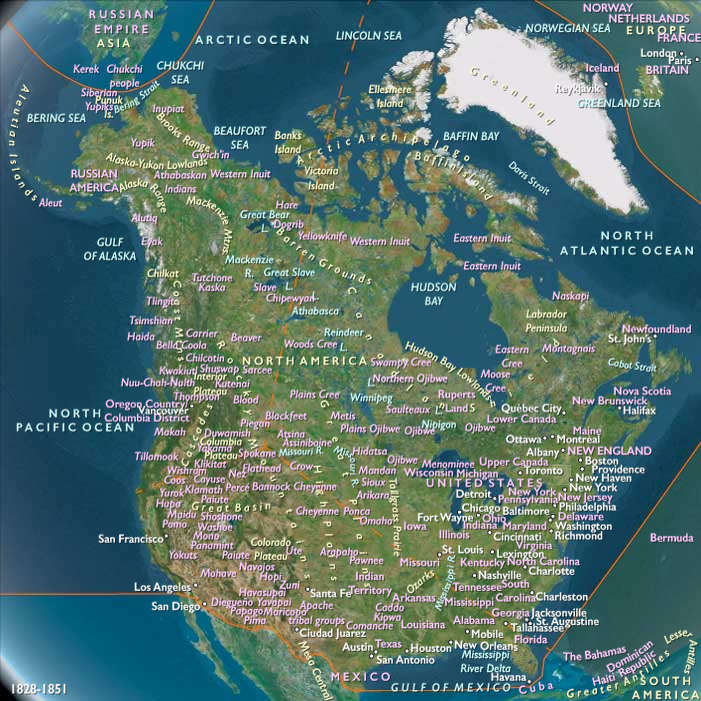
Northern North America
View →Subregions
