
The Aftermath of the 1755 Earthquake –…
1756 CE
The Aftermath of the 1755 Earthquake – Ajuda, Royal Exile, and the Reconstruction of Lisbon
The 1755 Lisbon Earthquake not only reshaped the physical landscape of Portugal but also left a profound psychological mark on King José I. In the wake of the disaster, the monarch developed an overwhelming fear of living within walls, fearing that another earthquake might bring further devastation. As a result, the Portuguese court relocated to Ajuda, a hilly area on the outskirts of Lisbon, where they lived in an expansive complex of tents and wooden pavilions.
Ajuda – From Sacred Site to Royal Refuge
Situated between the beach area of Belém and the foothills of Monsanto, Ajuda had long held religious significance. According to legend, a shepherd witnessed an apparition of the Virgin Mary while passing through the region. News of the event spread rapidly, and a small chapel was built to commemorate the vision. Over time, pilgrims flocked to the site, including members of the nobility, who began constructing residences in the area. Queen Catherine of Austria, the wife of King John III of Portugal, was among those who visited and prayed at the chapel, further enhancing Ajuda’s status as a noble retreat. By 1551, Ajuda was formally recognized as an ecclesiastical parish.
Despite its historic significance, Ajuda was not spared from the devastation of 1755. Many of its older buildings were severely damaged, including the Convento de Nossa Senhora da Boa Hora (Convent of Our Lady of the Good Hour), which was rebuilt by the Augustinian monks in 1756.
The Real Barraca – The Temporary Royal Residence
In addition to the widespread destruction of Lisbon, the Ribeira Palace, the traditional royal residence, was reduced to ruins. With the capital in chaos, King José I and his court took up residence in Quinta de Cima, a royal estate in Ajuda. Initially, they lived in wooden buildings locally referred to as the Real Barraca (Royal Barracks).
The earthquake and tsunami had left many Lisbon residents feeling unsafe, prompting an influx of people to Ajuda. The population surged from 1,059 to 4,784 residents, leading to the development of five distinct clusters of habitation:
- Calçada da Ajuda (adjacent to Alcântara)
- Travessa da Estopa
- Calçada de Nossa Senhora da Ajuda
- Rua das Mercês
- Rua da Paz
Ajuda thus transformed from a quiet religious retreat into a bustling refuge for the Portuguese aristocracy and displaced citizens.
The Reconstruction of Lisbon – A New, Perfectly Ordered City
Despite the widespread devastation, Prime Minister Sebastião José de Carvalho e Melo (later the Marquis of Pombal) responded quickly and decisively. Immediately after the disaster, he and King José I commissioned architects and engineers to design a new Lisbon, one that would reflect rational order, modernity, and resilience.
By late 1756, just a year after the disaster, Lisbon had been cleared of debris, and reconstruction was well underway. The city’s rebirth was envisioned as a model of urban planning, incorporating the grid system used in leading Spanish American cities. The new Lisbon would feature:
- Generous public squares
- Wide, rectilinear avenues
- Uniform, seismically resistant buildings
This approach not only restructured the capital but also set a new standard for urban development in Europe.
Pombaline Architecture – A Revolution in Seismic Engineering
The new buildings were among the first in the world designed with seismic protection in mind. Known as Pombaline architecture, these structures incorporated innovative anti-seismic measures, including:
- Flexible wooden frameworks to absorb shockwaves
- Reinforced masonry
- Wide streets and open spaces to prevent fire spread
To test their earthquake resistance, wooden models of buildings were constructed, and Portuguese troops marched around them to simulate seismic vibrations—a rudimentary but groundbreaking approach to earthquake engineering.
The reconstructed downtown area, known today as the Pombaline Downtown (Baixa Pombalina), became one of Lisbon’s defining landmarks and a symbol of resilience and innovation. The influence of this urban planning model extended beyond Lisbon, with sections of other Portuguese cities, such as Vila Real de Santo António in the Algarve, also being rebuilt along Pombaline principles.
Legacy – A City Transformed
The 1755 Lisbon Earthquake marked a turning point in Portuguese history. It reshaped the capital, accelerated urban modernization, and strengthened the power of the monarchy and the Marquis of Pombal. The reconstruction of Lisbon—founded on scientific principles, Enlightenment ideals, and bold pragmatism—became a model for future urban planning and one of the most remarkable engineering achievements of the 18th century.
Though King José I never overcame his fear of living within walls, his reign saw the birth of a new Lisbon, one that would emerge grander, stronger, and more rationally designed than ever before.
Locations
Groups
Regions
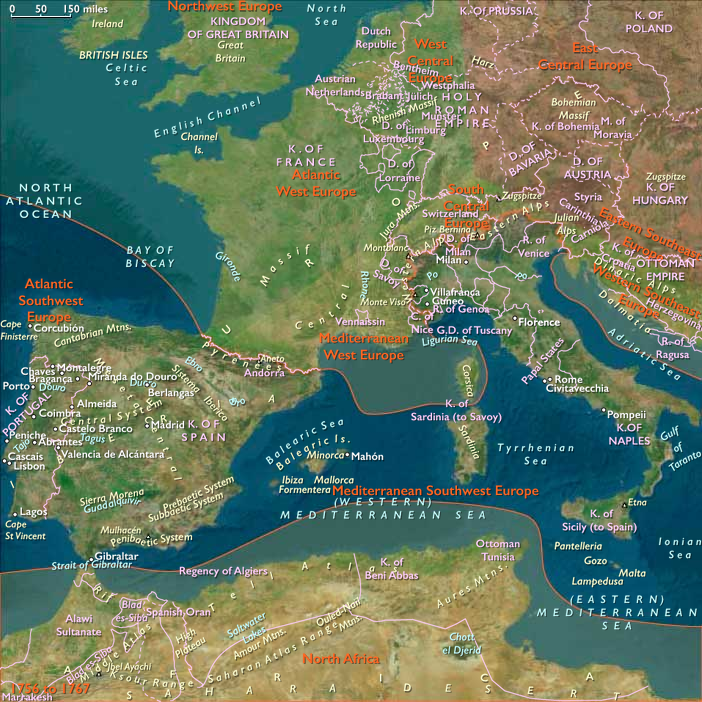
Southwest Europe
View →Subregions
