The Papacy’s Shift from Byzantium to the…
676 CE to 819 CE
The Papacy’s Shift from Byzantium to the Franks
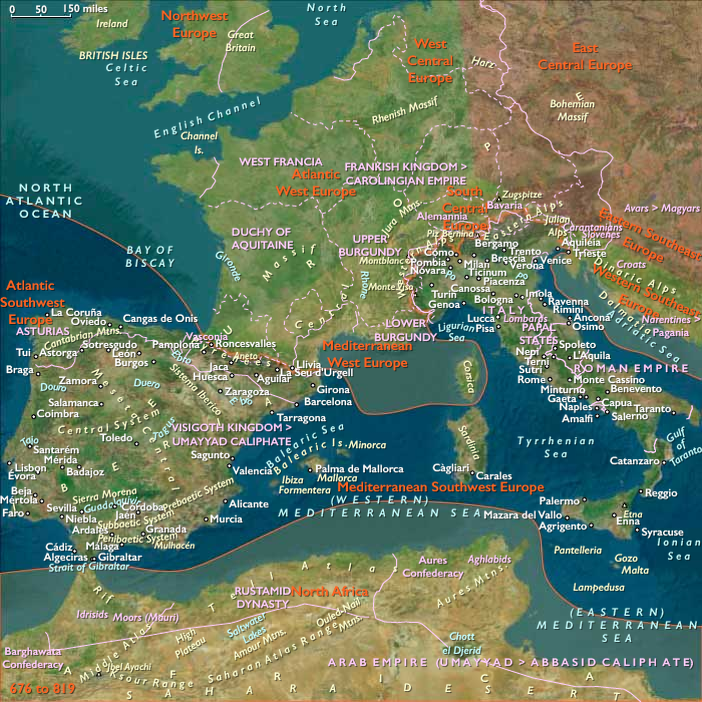
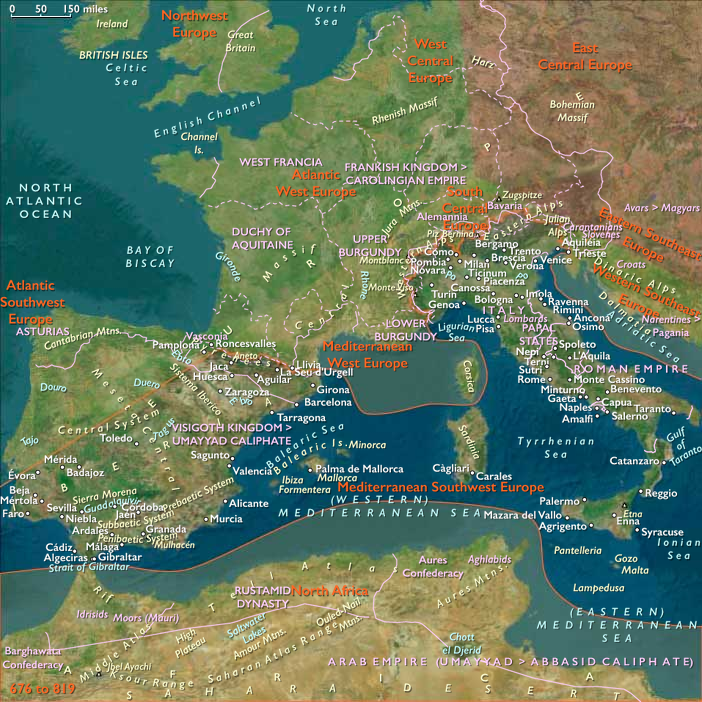
Between 756 and 857, the papacy gradually transitions from the influence of the East Roman Empire to the authority of the Frankish kings, a shift that reshapes the political and religious landscape of Western Europe. This transformation begins when the Lombards seize the Exarchate of Ravenna from the Byzantines, weakening the empire’s hold over Italy and leaving the papacy increasingly vulnerable.
Seeking protection, the popes turn to the rising power of the Carolingians. Pepin the Short, in alliance with the papacy, defeats the Lombards and grants the Papal States to the pope—a move that cements the Carolingians as the papacy’s chief defenders. This alliance deepens under Charlemagne and his son Louis the Pious, both of whom wield significant influence over the selection and administration of popes, ensuring that the church remains aligned with their imperial ambitions.
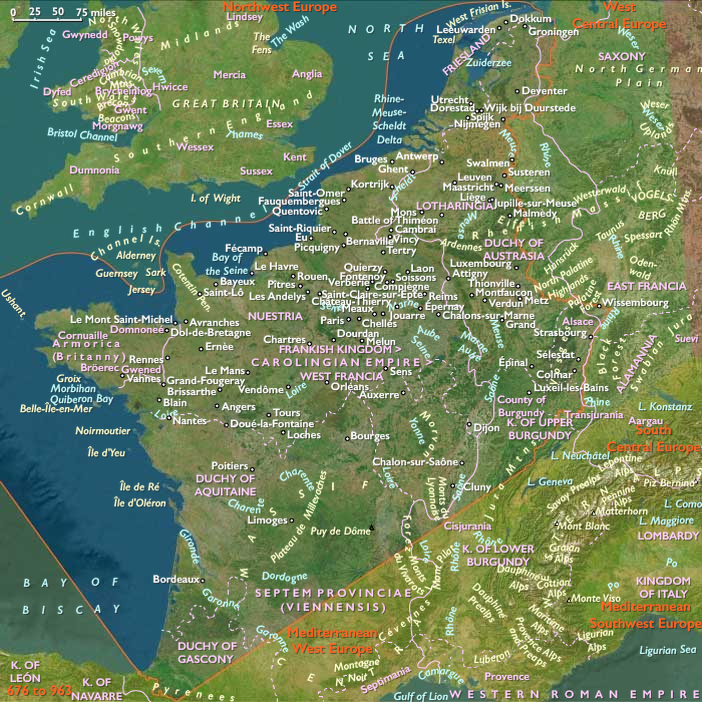
However, this close relationship weakens following the division of the Frankish Empire into West Francia, Middle Francia, and East Francia in 843. With no single dominant Frankish ruler, papal independence grows, marking the end of Carolingian control over the Holy See and setting the stage for future conflicts between church and state in medieval Europe.