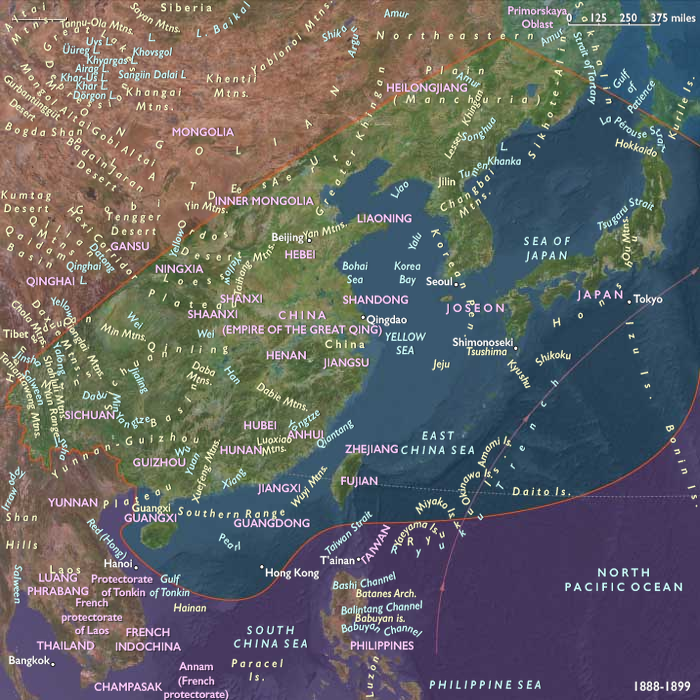
The Guangxu Emperor has come to believe,…
June 1898 CE
The emperor begins the Hundred Days' Reform, aimed at a series of sweeping political, legal and social changes, in June 1898.
For a brief time, after Cixi's supposed retirement, the Guangxu Emperor issues edicts for a massive number of far-reaching modernizing reforms with the help of more progressive officials such as Kang Youwei and Liang Qichao.
Changes range from infrastructure to industry and the civil examination system.
The Guangxu Emperor issues decrees allowing the establishment of a modern university in Beijing, the construction of the Lu-Han railway, and a system of budgets similar to that of Western governments.
The initial goal is to make China a modern constitutional empire, but still within the traditional framework, as with Japan's Meiji Restoration.
The reforms, however, are not only too sudden for a China still under significant neo-Confucian influence and other elements of traditional culture, but also ome into conflict with Cixi, who holds real power.
Many officials, deemed useless and dismissed by the Guangxu Emperor, beg her for help.
Groups
Regions
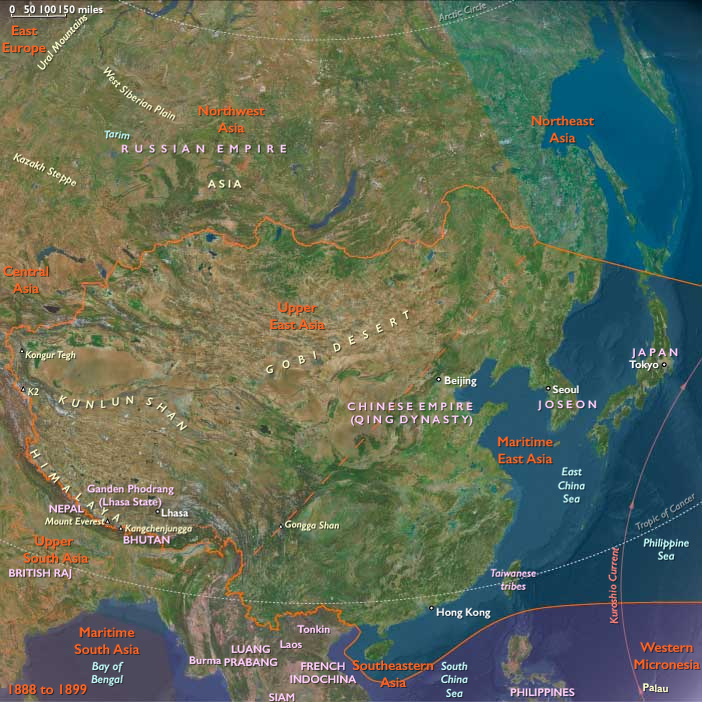
East Asia
View →Subregions