
The energetic Shah Abbas, having laid siege…
1605 CE
The energetic Shah Abbas, having laid siege to the Ottoman-held fortress of Erivan in November 1603, had summoned Alexander of Kakheti to his headquarters.
After months of hesitation, Alexander had acceded and arrived at Erivan in April 1604.
Shah Abbas sends him back early in 1605 with orders to raid Shirvan.
He is accompanied by his son, Constantine, who had been raised at the Saffavid court as a convert to Islam.
Back in Kakheti, Alexander finds a new Russian embassy requesting his support in a projected campaign against the shamkhal of Tarki.
The Russian envoys had already been favorably received by Alexander’s son, George, who had run the kingdom in his father’s absence.
Dissatisfied by this maneuver, Constantine demands the loyal execution of the shah’s orders.
On March 12, 1605, Alexander summons a council at the Dzegami Palace.
Within hours, Constantine leads his Qizilbash entourage into a bloody coup against his own father; Alexander, George and several of their nobles are massacred.
Constantine is made by the shah king of Kakheti, and Safavid suzerainty is, for the time being, reasserted in the kingdom.
Ketevan, born to Prince Ashotan of Mukhrani (Bagrationi) and married to the late King David, has since her husband’s death engaged in religious building and charity.
Now, however, Ketevan rallies the Kakhetian nobles against the parricide and routs Constantine’s loyal force.
After the uprising, she negotiates with Shah Abbas to confirm her underage son, Teimuraz I, as king of Kakheti, while she assumes the function of a regent.
Thus begins Teimuraz’s long and difficult reign (1605–1648) in conflict with the Safavids, as the fortunes of Kakheti begin to reverse.
Locations
Groups
Commodities
Subjects
Regions
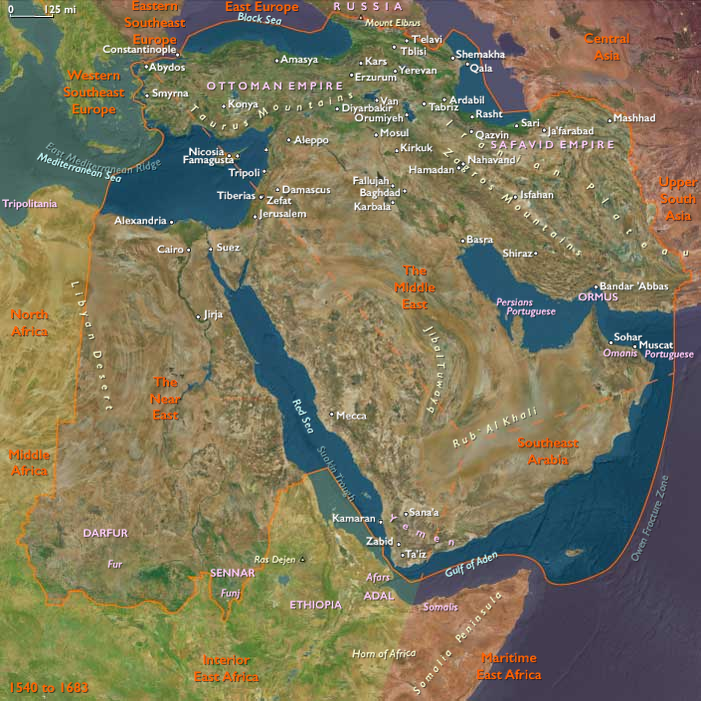
The Near and Middle East
View →Subregions
