
Atlantic Southwest Europe (1552–1563 CE): Peak of …
Years: 1552 - 1563
Atlantic Southwest Europe (1552–1563 CE): Peak of Iberian Imperial Power, Heightened Counter-Reformation, and Cultural Transition
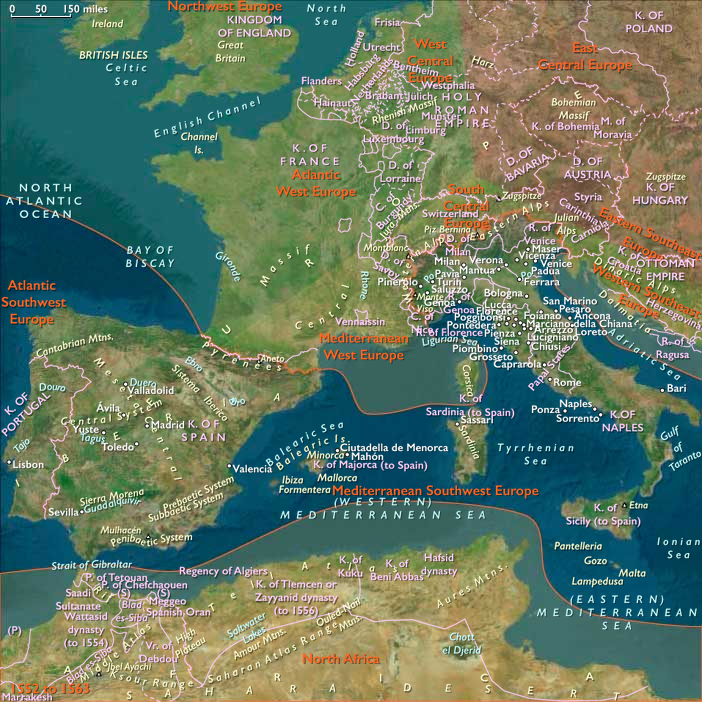
Between 1552 and 1563 CE, Atlantic Southwest Europe—including Galicia, northern and central Portugal, Asturias, Cantabria, and northern Spain south of the Franco-Spanish border (43.05548° N, 1.22924° W)—reached a pivotal stage marked by the apex of Iberian global dominance under Emperor Charles V and King Philip II, the expansion of Portugal’s maritime empire under João III and Sebastião, and intensifying religious and cultural transformations resulting from the Counter-Reformation. During this era, the region saw heightened ecclesiastical authority, intensified imperial rivalries, and shifts in cultural expression, decisively shaping regional identities, economic prosperity, and global influence.
Political and Military Developments
Imperial Transition from Charles V to Philip II
The era began with Emperor Charles V (1516–1556 CE) preparing his abdication, leading to the ascension of his son, Philip II of Spain (1556–1598 CE). Philip inherited an empire of unprecedented scale, including Iberia, vast American territories, European dominions, and territories in Italy and the Netherlands. Philip II decisively reinforced central governance, expanded bureaucratic administration, and intensified imperial control, especially in Atlantic Southwest Europe, shaping regional governance and identity for decades.
Portuguese Maritime Strength under João III and Regency
Under King João III (1521–1557 CE), Portugal decisively maintained global maritime dominance through expansive trade networks, fortified Asian and African outposts, and thriving Brazilian settlements. João’s death in 1557 led to a complex regency for his young grandson, Sebastião (1557–1578 CE). The regency managed ongoing imperial trade and colonial administration, preserving Portuguese maritime and economic power amid emerging internal political uncertainties.
Navarre and Basque Regional Autonomy
Southern Navarre continued its integration under Spanish Habsburg administration, though Basque communities decisively maintained distinctive regional identities, customs, and governance structures. Northern Navarre remained linked to France, preserving regional autonomy and reinforcing local cultural resilience amid growing geopolitical tensions between France and Spain.
Economic Developments
Sustained Agricultural Prosperity and Stability
Regional agricultural productivity decisively remained robust, supported by diverse crops—grains, vineyards, olives, citrus fruits, and almonds—and extensive livestock farming. Extraction of gold and silver, particularly in Galicia and Asturias, significantly supported economic stability, demographic resilience, and regional prosperity.
Portuguese Global Commerce and Economic Continuity
Portugal decisively continued its global commercial dominance under João III and subsequent regencies. Lisbon, Porto, Braga, and Coimbra thrived economically through lucrative trade networks in spices, textiles, precious metals, and luxury commodities from Africa, Asia, and America. Galician ports, notably A Coruña, benefited significantly from continued maritime commerce, reinforcing regional economic prosperity.
Spanish-American Trade and Imperial Wealth
Under Philip II, Spain decisively maintained intense economic engagement with American colonies, notably importing vast quantities of silver and gold. These resources significantly reshaped Iberian economic dynamics, financed imperial policies, and underpinned Spain’s geopolitical ambitions and military expenses, reinforcing the region’s global economic influence.
Cultural and Religious Developments
Heightened Counter-Reformation Influence and Ecclesiastical Authority
This era witnessed decisive intensification of the Counter-Reformation, profoundly reshaping religious life, intellectual freedom, and cultural expressions across Atlantic Southwest Europe. Ecclesiastical authority and the Spanish Inquisition intensified, reinforcing religious orthodoxy, suppressing perceived heresies, and shaping intellectual and cultural life significantly. The Council of Trent (concluded in 1563) decisively reinforced doctrinal orthodoxy and ecclesiastical reforms, profoundly influencing Iberian religious identity.
Portuguese Cultural Continuity and Humanist Scholarship
Portugal decisively maintained Renaissance humanist traditions, scholarly patronage, artistic innovation, and scientific inquiry under João III and subsequent regencies. Institutions like the University of Coimbra flourished intellectually, reinforcing Portugal’s cultural sophistication and European intellectual prominence amid increasingly orthodox religious pressures.
Spanish Renaissance Culture and Religious Orthodoxy
Under Philip II, Spain decisively balanced Renaissance cultural flourishing with intensified religious orthodoxy. Humanist scholarship, artistic creativity, and literary innovations persisted, enriched by European intellectual exchanges. However, cultural life increasingly reflected orthodox religious themes, evident in architectural and artistic expressions, signaling a cultural transition shaped by Counter-Reformation ideals.
Galician Cultural Resilience and Ecclesiastical Influence
Galicia decisively sustained cultural prominence, reinforced by Santiago de Compostela’s ecclesiastical authority and pilgrimage traditions. Scholarly activities, manuscript preservation, artistic patronage, and architectural projects continued, decisively reinforcing Galician cultural identity and international recognition despite increased religious orthodoxy.
Civic Identity and Governance
Portuguese Civic Unity amid Regency Challenges
Portugal decisively preserved national unity, civic identity, and governance continuity despite João III’s death and ensuing regency. Imperial ambitions, global commerce, and cultural sophistication significantly reinforced Portuguese identity, economic prosperity, and political coherence.
Spanish Civic Identity under Philip II’s Centralized Administration
Under Philip II, Spain decisively reinforced civic identity, centralized governance, and imperial administrative coherence. His meticulous bureaucratic reforms and religious orthodoxy significantly reshaped regional identity, political coherence, and cultural expression, decisively reinforcing Spanish national unity.
Basque Regional Autonomy and Identity
Navarre and broader Basque territories decisively maintained distinctive regional identities, traditions, and governance structures despite political integration, reinforcing northern Iberian cultural resilience, regional coherence, and local autonomy amid intensified imperial centralization.
Notable Regional Groups and Settlements
-
Portuguese: Sustained maritime dominance, global economic prosperity, and Renaissance cultural maturity under João III and subsequent regency, decisively influencing Portugal’s historical trajectory and global prominence.
-
Spaniards (Castilians and Aragonese): Reinforced imperial coherence, centralized governance, heightened religious orthodoxy, and cultural maturity under Philip II, decisively shaping Iberian political structures and Renaissance cultural development.
-
Galicians: Maintained vibrant economic resilience, cultural vitality, and ecclesiastical prominence, significantly reinforced by pilgrimage activity and maritime commerce.
-
Basques (Navarre): Preserved distinctive regional identities, cultural resilience, and local governance despite integration, decisively influencing northern Iberian regional coherence.
Long-Term Significance and Legacy
Between 1552 and 1563 CE, Atlantic Southwest Europe:
-
Achieved the peak of Iberian imperial dominance under Charles V and Philip II, decisively shaping global geopolitics, economic prosperity, and regional identity.
-
Experienced intensified Counter-Reformation currents and heightened ecclesiastical authority, significantly reshaping intellectual life, cultural expression, and religious practices.
-
Maintained Portuguese global commerce and imperial administration, reinforcing regional economic prosperity, civic unity, and cultural sophistication despite internal political challenges.
-
Reinforced regional resilience, agricultural stability, economic continuity, cultural innovation, and vibrant pilgrimage traditions, profoundly influencing historical trajectories and regional identities.
This transformative era decisively shaped regional governance, economic prosperity, cultural expression, and religious life, significantly influencing Atlantic Southwest Europe’s trajectory toward continued global prominence, heightened religious orthodoxy, and enduring historical significance.
People
Groups
- Galicia, Kingdom of
- Portuguese people
- Basque people
- Christians, Roman Catholic
- Galicians
- Portugal, Avizan (Joannine) Kingdom of
- Asturias, Principality of
- Portuguese Empire
- Portuguese Gold Coast
- Inquisition, Spanish
- Christians, New
- Portuguese Mozambique
- Portuguese Malacca
- Spaniards (Latins)
- Spain, Habsburg Kingdom of
- Inquisition, Portuguese
- Brazil, Colonial
- Spain, Habsburg Kingdom of
Topics
- Colonization of the Americas, Portuguese
- Renaissance, Portuguese
- Renaissance, Spanish
- Colonization of the Americas, Spanish
- Colonization of Asia, Portuguese
- Colonization of Asia, Spanish
- Counter-Reformation (also Catholic Reformation or Catholic Revival)
Commodoties
Subjects
Regions
Subregions

Years: 1552 - 1563
People
Groups
- Galicia, Kingdom of
- Portuguese people
- Basque people
- Christians, Roman Catholic
- Galicians
- Portugal, Avizan (Joannine) Kingdom of
- Asturias, Principality of
- Portuguese Empire
- Portuguese Gold Coast
- Inquisition, Spanish
- Christians, New
- Portuguese Mozambique
- Portuguese Malacca
- Spaniards (Latins)
- Spain, Habsburg Kingdom of
- Inquisition, Portuguese
- Brazil, Colonial
- Spain, Habsburg Kingdom of
Topics
- Colonization of the Americas, Portuguese
- Renaissance, Portuguese
- Renaissance, Spanish
- Colonization of the Americas, Spanish
- Colonization of Asia, Portuguese
- Colonization of Asia, Spanish
- Counter-Reformation (also Catholic Reformation or Catholic Revival)
Commodoties
Subjects
Regions
Subregions