A different picture emerges from the history…
1396 CE to 1539 CE
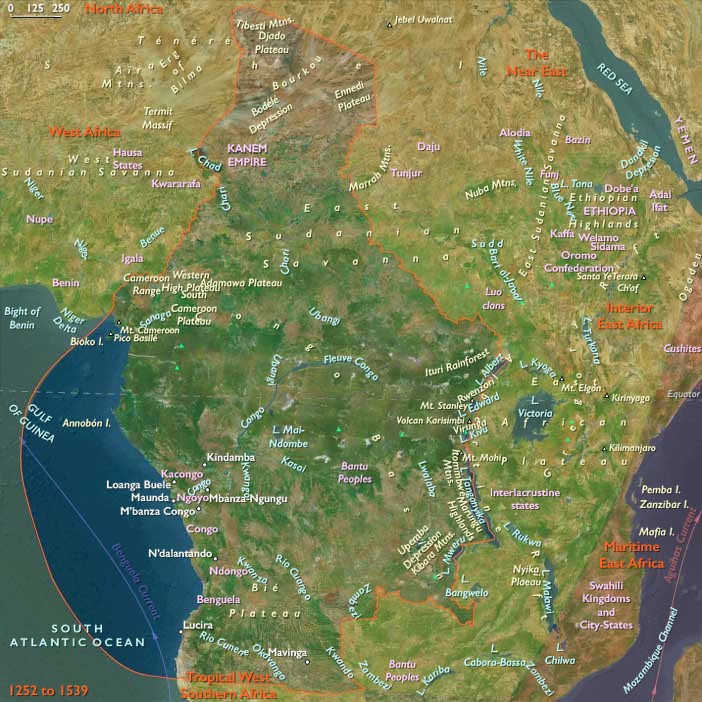
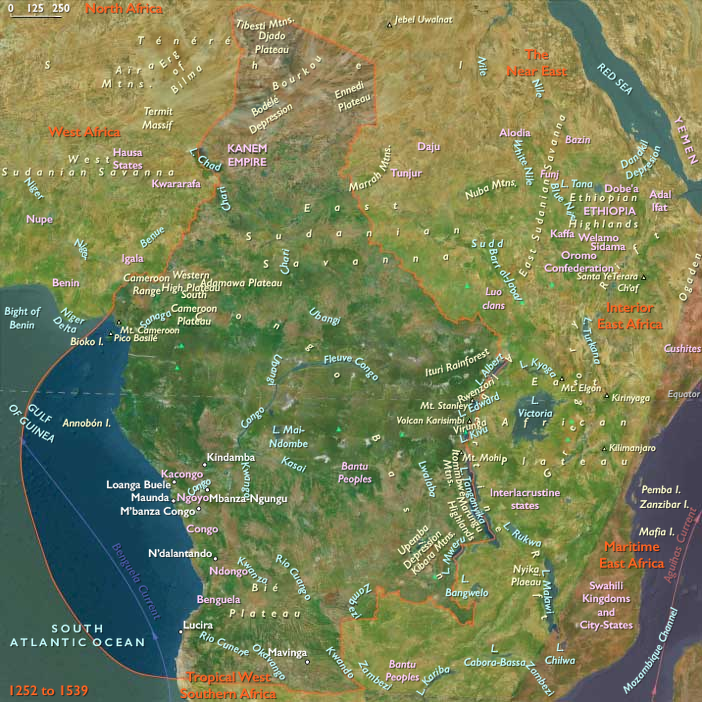
A different picture emerges from the history of the southern savannas, the traditional habitat of several large-scale societies with centralized political systems, variously described as kingdoms, empires, and chiefdoms, that emerge between 1200 and 1500.
These include the Kongo, Lunda, Luba, and Kuba state systems, all of which share certain common features, such as a centralized structure of authority identified with a single ruler, more often than not enjoying the attributes of divine kingship; a corpus of oral traditions tracing the birth of the state to a mythical figure; and a tendency to incorporate and assimilate smaller neighboring societies.
Cultural assimilation goes hand in hand with political conquest.
As recent historical research suggests, territorial expansion of the original nuclear kingdom involves various methods, ranging from armed raids and military occupation to more peaceful forms of interaction.
Yet in each case, the end result is the creation of large-scale political entities that are far more capable of concerted action than the segmentary societies of the rain-forest zone.
Groups
Regions
Middle Africa
View →Subregions