Lajos Kossuth, the most popular of Hungary's…
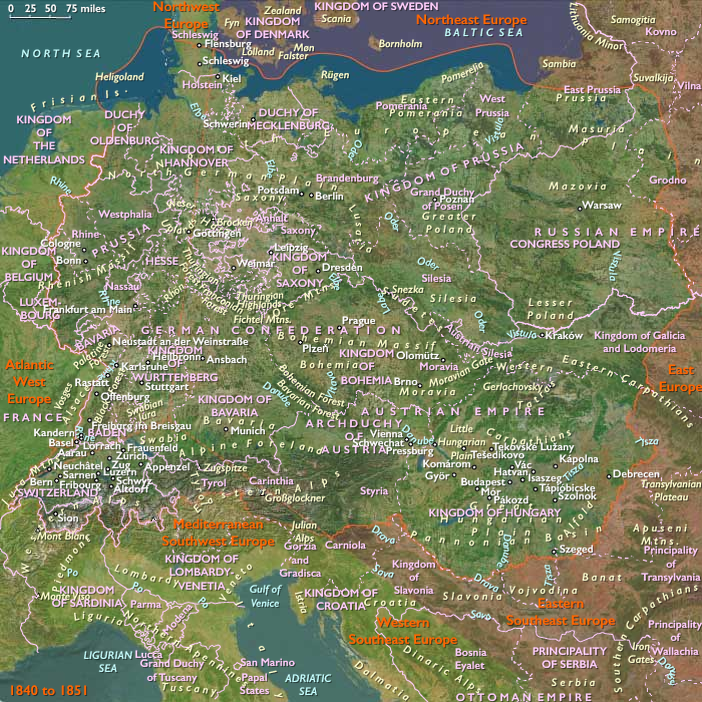
1840 CE to 1851 CE
The son of a landless, lesser nobleman of Protestant background, Kossuth had practiced law with his father before moving to Pest, where he had published commentaries on the Diet's activities, which made him popular with young, reform-minded people.
Kossuth had been imprisoned in 1836 for treason.
After his release in 1840, he gains quick notoriety as the editor of a liberal party newspaper.
Kossuth argues that only political and economic separation from Austria will improve Hungary's plight.
He calls for broader parliamentary democracy, industrialization, general taxation, economic expansion through exports, and abolition of privileges and serfdom, but Kossuth is also a Magyar chauvinist whose rhetoric provokes the strong resentment of Hungary's minority ethnic groups.
Kossuth gains support among liberal lesser nobles, who constitute an opposition minority in the Diet.
They have sought reforms with increasing success after Francis's death in 1835 and succession of Ferdinand V (1835-48).
In 1843 a law is enacted making Hungarian the country's official language over the strong objections of the Croats, Slovaks, Serbs, and Romanians.
Locations
People
Groups
Transylvania, region of
View →
Jews
View →
Germans
View →
Hungarian people
View →
Vlachs
View →
Serbs (South Slavs)
View →
Croats (South Slavs)
View →
Romanians
View →
Slovaks (West Slavs)
View →
Christians, Eastern Orthodox
View →
Christians, Roman Catholic
View →
Austria, Archduchy of
View →
Hungary, Kingdom of
View →
Holy Roman Empire
View →
Union of Three Nations
View →
Lutheranism
View →
Protestantism
View →
Croatia, (Habsburg) Kingdom of
View →
Calvinists
View →
Unitarians
View →
Transylvania, (Austrian) Grand Principality of
View →
Regions
Central Europe
View →Subregions