The Rayonnant Style: The Pinnacle of Gothic…
1252 CE to 1263 CE
The Rayonnant Style: The Pinnacle of Gothic Light and Elegance
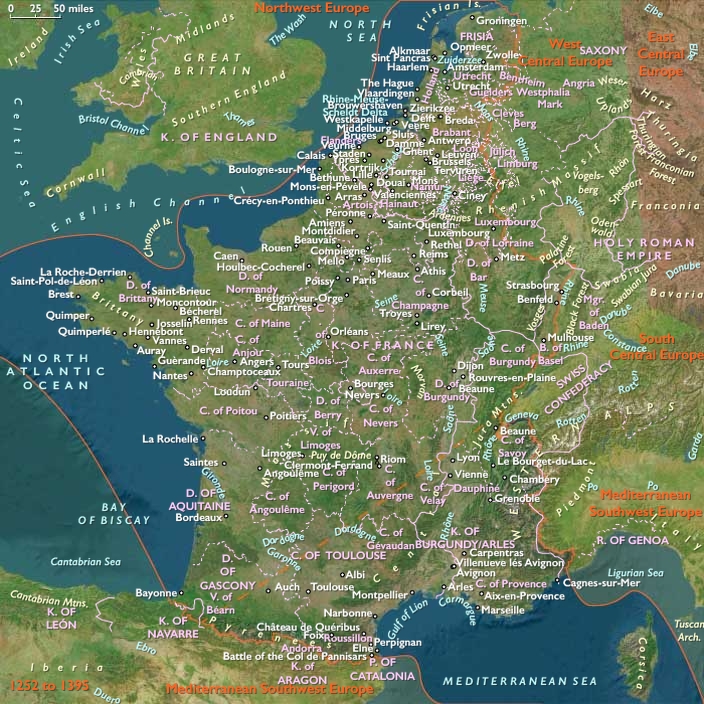
Emerging in Paris after 1250, the Rayonnant style in Gothic art and architecture represents a refinement of earlier High Gothic principles, emphasizing height, luminosity, and intricate detailing. The term "Rayonnant" itself refers to the radiating stone tracery of the immense rose windows, which became defining elements of cathedrals in this period. From its origins in Île-de-France, the style spread to central and southern France, influencing both ecclesiastical and civic architecture.
Buildings in the Rayonnant style pushed the aesthetic and structural ambitions of French Gothic architecture to their most accomplished and delicate expression. Characterized by an emphasis on light and transparency, these structures incorporated expansive windows, skeletal masonry, and intricate tracery, creating facades so open and delicate that they appeared almost lace-like from the exterior.
Notable examples include:
- Sainte-Chapelle (Paris, 1248) – A masterpiece of stained glass, where walls seem to dissolve into radiant color.
- Amiens Cathedral (Rayonnant phase, mid-13th century) – Refining High Gothic elements with increasing emphasis on intricate window tracery.
- Rouen Cathedral (late 13th century renovations) – Showcasing elaborate rose windows and detailed stonework characteristic of the style.
The Rayonnant style, with its focus on delicacy and illumination, marks a turning point in Gothic architecture, influencing subsequent Flamboyant Gothic developments across Europe.
Groups
Commodities
Subjects
Regions