The Royal Gold Cup (c. 1380): A…
1380 CE
The Royal Gold Cup (c. 1380): A Masterpiece of Medieval Goldsmithing
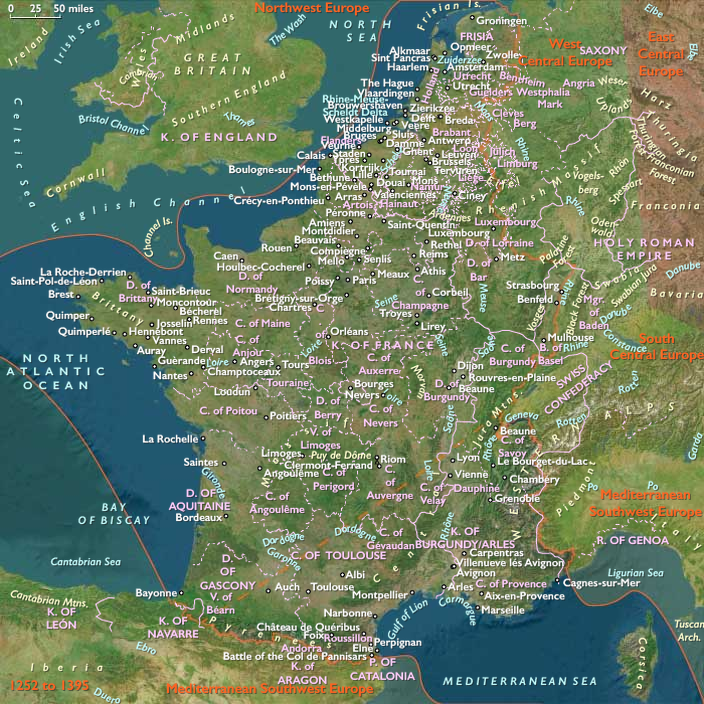
The Royal Gold Cup, also known as the "Royal Cup of the Kings of France and England," is one of the few surviving secular gold or silver objects from the late 14th century. Created around 1380, its exact origins remain uncertain, but it is first definitively recorded in 1391, in an inventory of the valuables of Charles VI of France (r. 1380–1422), copies of which survive in the Bibliothèque nationale de France.
Description and Dimensions
- Material: Solid gold.
- Height: 23.6 cm (9.25 inches).
- Diameter: 17.8 cm (6.94 inches) at its widest point.
- Weight: 1.935 kg (4.26 pounds).
- Structure:
- The cup originally stood on a triangular stand, now lost.
- The cover lifts off, though its original knop or finial has been lost.
- The stem has been extended twice, making it originally much shorter.
- A molding with 36 pearls once adorned the outer edge of the cover, but it has been removed, leaving a jagged strip of gold where it was attached.
Artistic Decoration and Techniques
The gold surfaces are intricately decorated using basse-taille enamel, a technique that:
- Uses translucent enamel colors to allow light to reflect from the gold surface beneath, enhancing brilliance and depth.
- Incorporates engraved and pointillé decoration, with fine dot patterns worked into the gold for added texture.
Significance of the Rouge Clair Enamel
- Large areas of translucent red enamel (rouge clair) remain in excellent condition.
- This was one of the most difficult colors to achieve technically and was highly prized for its brilliance and rarity.
Iconography: Saint Agnes and the Four Evangelists
- Scenes from the Life of Saint Agnes are featured:
- Running around the top of the cover.
- Depicted on the sloping underside of the main body.
- The symbols of the Four Evangelists appear around the foot of the cup.
- Enamel medallions decorate the center of both the cup and the cover.
Cultural and Historical Significance
- The Royal Gold Cup exemplifies the height of medieval goldsmithing, demonstrating the sophistication of 14th-century craftsmanship.
- Originally owned by Charles VI of France, it later passed into English royal collections, reflecting the intertwined dynastic and political history of the period.
- Its religious iconography, despite its secular purpose, underscores the importance of Christian themes in courtly luxury objects.
The Royal Gold Cup of c. 1380 is a rare surviving masterpiece, showcasing technical mastery, exquisite materials, and rich historical associations with the French and English royal courts.
Images

The Royal Gold Cup, 23.6 cm high, 17.8 cm across at its widest point; weight 1.935 kg, British Museum. Saint Agnes appears to her friends in a vision. (Photographed at the British Museum on 4 June 2010 by BabelStone)
Locations
Commodities
Subjects
Regions
West Europe
View →Subregions