
Filters:
Most Chileans work in agriculture because precious …
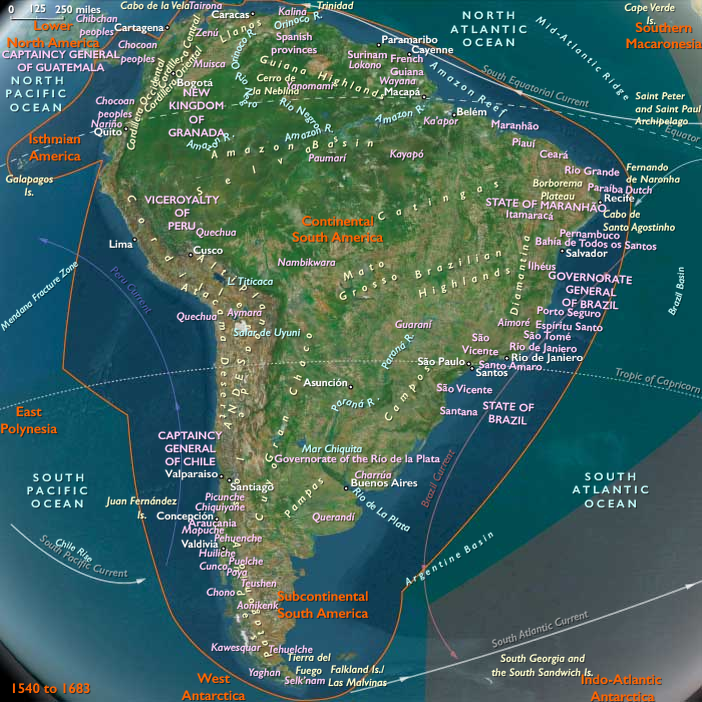
Years: 1540 - 1683
Most Chileans work in agriculture because precious metals are scarce.
Large landowners become the local elite, often maintaining a second residence in the capital city.
Traditionally, most historians have considered these great estates (called haciendas or fundos) inefficient and exploitive, but some scholars have claimed that they were more productive and less cruel than is conventionally depicted.
The haciendas initially depend for their existence on the land and labor of the indigenous people.
As in the rest of Spanish America, crown officials reward many conquerors according to the encomienda system, by which a group of native Americans is commended or consigned temporarily to their care.
The grantees, called encomenderos, are supposed to Christianize their wards in return for small tribute payments and service, but they usually take advantage of their charges as laborers and servants.
Many encomenderos also appropriate native lands.
Throughout the sixteenth and seventeenth centuries, the encomenderos fend off attempts by the crown and the church to interfere with their exploitation of the indigenous people.
Large landowners become the local elite, often maintaining a second residence in the capital city.
Traditionally, most historians have considered these great estates (called haciendas or fundos) inefficient and exploitive, but some scholars have claimed that they were more productive and less cruel than is conventionally depicted.
The haciendas initially depend for their existence on the land and labor of the indigenous people.
As in the rest of Spanish America, crown officials reward many conquerors according to the encomienda system, by which a group of native Americans is commended or consigned temporarily to their care.
The grantees, called encomenderos, are supposed to Christianize their wards in return for small tribute payments and service, but they usually take advantage of their charges as laborers and servants.
Many encomenderos also appropriate native lands.
Throughout the sixteenth and seventeenth centuries, the encomenderos fend off attempts by the crown and the church to interfere with their exploitation of the indigenous people.
Locations
Groups
- Mapuche (Amerind tribe)
- Christians, Roman Catholic
- Spain, Habsburg Kingdom of
- Spaniards (Latins)
- Jesuits, or Order of the Society of Jesus
- Chile (Spanish colony)
- Peru, Viceroyalty of
- Spain, Habsburg Kingdom of
Topics
Commodoties
Subjects
Regions
Subregions
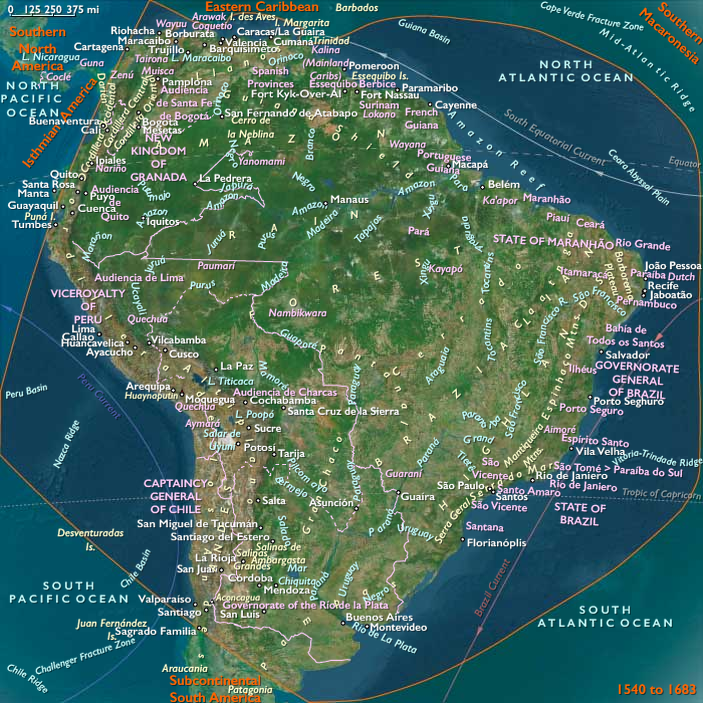
Years: 1540 - 1683
Locations
Groups
- Mapuche (Amerind tribe)
- Christians, Roman Catholic
- Spain, Habsburg Kingdom of
- Spaniards (Latins)
- Jesuits, or Order of the Society of Jesus
- Chile (Spanish colony)
- Peru, Viceroyalty of
- Spain, Habsburg Kingdom of
Topics
Commodoties
Subjects
Regions
Subregions