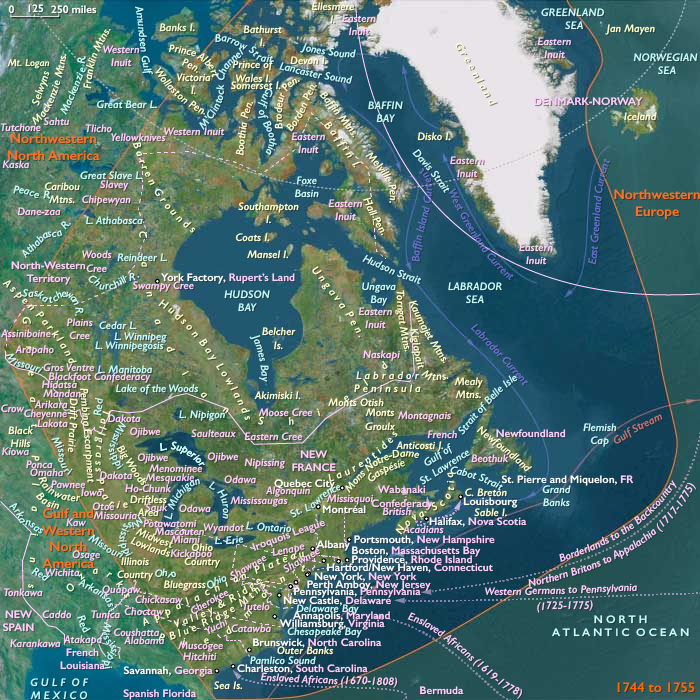
Pisiguit is the Acadian region located along…
October 1755 CE
Settlement in the region had commenced simultaneous to the establishment of Grand-Pré.
Many villages (Rivet, Foret, Babin, Landry, Thibodeau, Vincent, etc.) had spread rapidly eastward along the river banks.
These settlements became known as Pisiguit or (Pisiquit, Pigiguit, Pisiquid, Pisiguid).
The name is from the Mi'kmaq Pesaquid, meaning "Junction of Waters".
In 1714, there were 351 people (in fifty-six families) here.
A memoire from 1748 noted that there were twenty-seven hundred people in Pisiguit compared to twenty-four hundred in the Grand Pré and Canard area, but the area had lost its population rather quickly.
Pisiguit is the Acadian settlement closest to Halifax, the newly forming English settlement.
Both French and English powers had created disturbances that destabilized the Minas area.
Attacks on English forces at Grand Pré had led to the building of Fort Edward in 1750, and attacks such as that at Five Houses on the St Croix River (Battle at St. Croix) and the intrigues of Le Loutre and his Mi'kmaq followers further led to difficulties.
This had led many Pisiguit Acadians, particularly along the Cobequid shore, to pack up and leave, heading mainly toward the Chignecto area and Ile Saint-Jean (Prince Edward Island).
By 1755, based on Charles Morris's remarks concerning the removal of the Acadians, there were about fourteen hundred people left here (about eight hundred on the left bank, about a hundred on the right bank and Kennetcook River, and about five hundred on the St. Croix River and today's Windsor area.
At exactly the same time as Winslow read the expulsion orders in Grand Pré, September 5 at 1500 hrs, Captain Alexander Murray had read the order to the one hundred and eighty-three Acadian males he had imprisoned at Fort Edward.
Nine hundred and twenty Acadians from Pisiguit are loaded on to four transports on October 20.
Unlike the neighboring community of Grand Pré, the buildings at Pisiguit are not destroyed by fire.
As a result, when the New England Planters begin to arrive some years later, many houses and barns will still stand here.
Locations
People
Groups
Abenaki people (Amerind tribe)
View →
Maliseet, or Wolastoqiyik, people (Amerind tribe)
View →
Mi'kmaq people (Amerind tribe)
View →
Christians, Roman Catholic
View →
Wabanaki Confederacy
View →
Passamaquoddy (Amerind tribe)
View →
New France (French Colony)
View →
Anglicans (Episcopal Church of England)
View →
Puritans
View →
France, (Bourbon) Kingdom of
View →
Massachusetts, Province of (English Crown Colony)
View →
Britain, Kingdom of Great
View →
Nova Scotia (British Colony)
View →
Topics
Commodities
Subjects
Regions
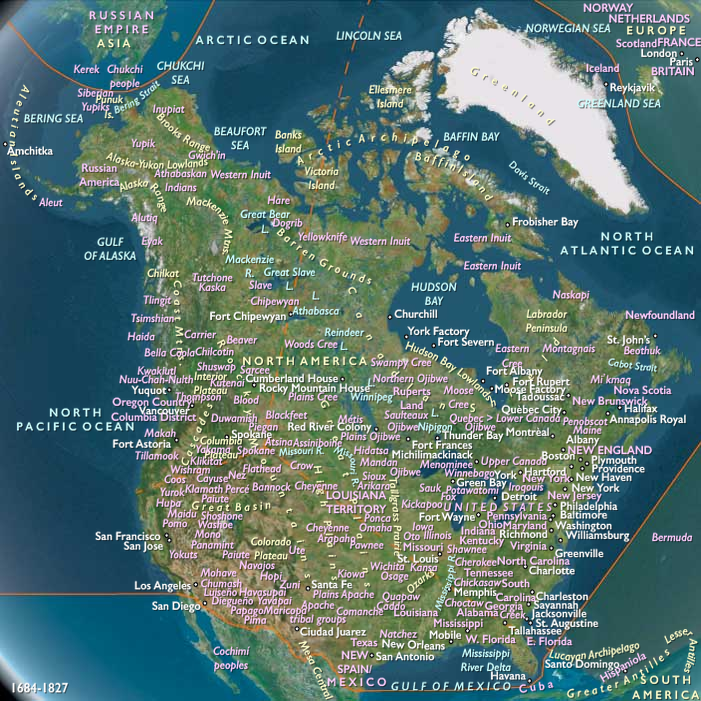
Northern North America
View →Subregions