The End of Gothic Sculpture and the…
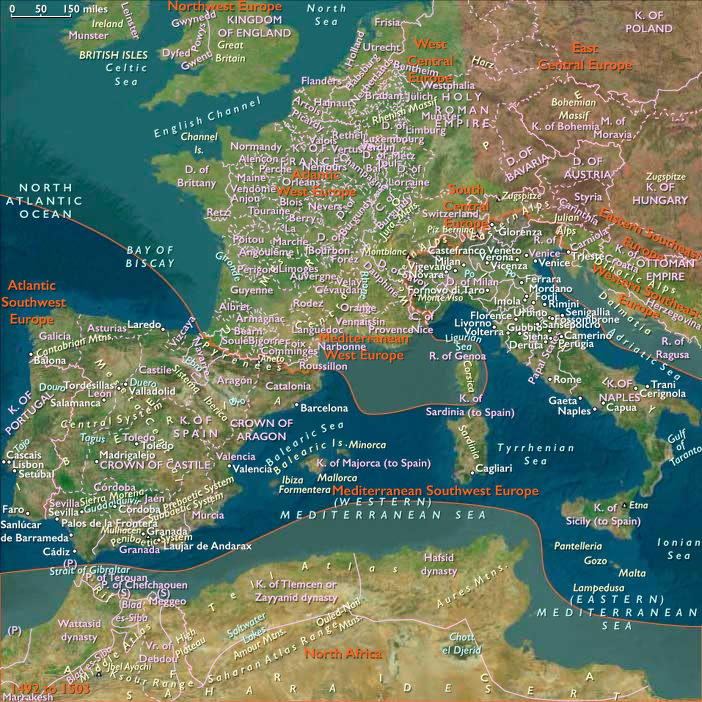
1492 CE to 1503 CE
The End of Gothic Sculpture and the Rise of Renaissance Art
By the late 15th and early 16th centuries, Gothic sculpture—characterized by its elongated figures, intricate drapery, and religious themes—was gradually giving way to the fully developed artistic ideals of the Renaissance.
The Transition from Gothic to Renaissance Sculpture
- Gothic sculpture (12th–15th centuries) emphasized:
- Verticality and spiritual elegance, often seen in church portals and altarpieces.
- Figures with elongated proportions and stylized drapery, meant to convey grace and otherworldliness.
- A focus on biblical narratives, saints, and the Last Judgment.
- By contrast, Renaissance sculpture (15th–16th centuries) introduced:
- Naturalistic human forms, inspired by classical antiquity.
- A renewed emphasis on proportions, perspective, and anatomy.
- The use of contrapposto, a pose that creates a more lifelike and dynamic stance.
Key Figures in the Transition
- Claus Sluter (c. 1340–1406) – A late Gothic sculptor whose work, such as the Well of Moses (Dijon, France), introduced more realism and emotional depth.
- Donatello (c. 1386–1466) – The first great Renaissance sculptor, who broke from Gothic tradition with his:
- Bronze David (c. 1440) – The first freestanding nude sculpture since antiquity.
- Gattamelata (c. 1453) – The first lifelike equestrian statue since Roman times.
- Michelangelo (1475–1564) – His masterpieces, such as David (1501–1504) and Pietà (1498–1499), fully embodied classical ideals of beauty, anatomy, and proportion.
The Decline of Gothic Sculpture
- Religious commissions shifted from Gothic altarpieces to classically inspired sculptures of the human form.
- The revival of Greco-Roman art inspired sculptors to study realistic anatomy and perspective rather than the symbolism of Gothic works.
- Renaissance artists developed freestanding statues, whereas Gothic sculptors typically worked in high relief on cathedrals and tombs.
Legacy and Influence
- The transition from Gothic to Renaissance sculpture was part of the larger cultural shift of the Renaissance, which emphasized humanism, classical revival, and artistic innovation.
- By 1500, Renaissance sculpture had largely replaced Gothic forms in Italy, while Gothic styles persisted longer in Northern Europe before eventually fading.
- This artistic transformation ushered in the great sculptural achievements of the High Renaissance, shaping Western art for centuries.
Thus, as the Gothic age came to an end, Renaissance sculpture redefined European art, blending classical inspiration with cutting-edge techniques, making figures more lifelike, expressive, and dynamic.