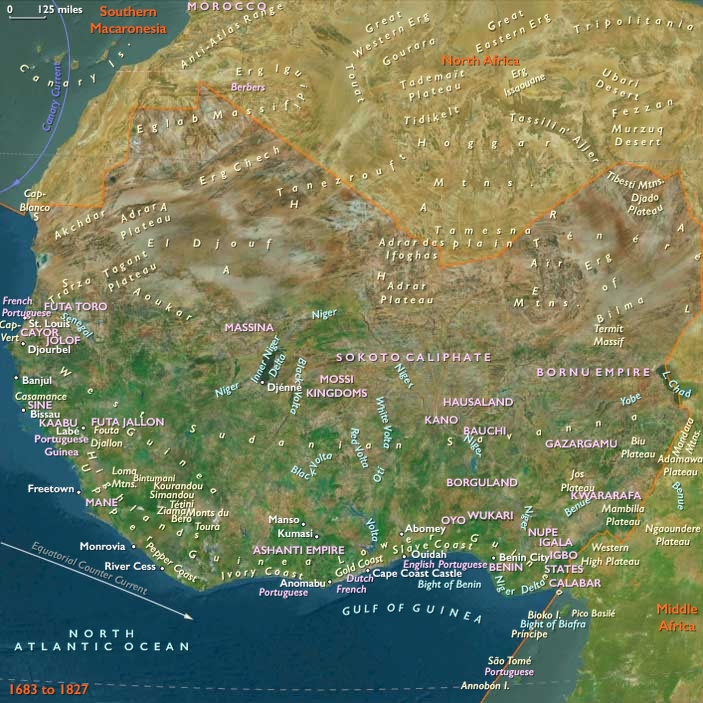
Some historians doubt that the abolitionist movement…
1684 CE to 1827 CE
According to historian Walter Rodney, for example, Europe abolished the trans-Atlantic slave trade only because its profitability was undermined by the Industrial Revolution.
Rodney argues that mass unemployment caused by the new industrial machinery, the need for new raw materials, and European competition for markets for finished goods are the real factors that brought an end to the trade in human cargo and the beginning of competition for colonial territories in Africa.
Other scholars, however, disagree with Rodney, arguing that humanitarian concerns as well as social and economic factors were instrumental in ending the African slave trade.
Locations
Groups
Dutch people
View →
Danes (Scandinavians)
View →
Ga-Adangme
View →
Akan people
View →
Portuguese people
View →
Fante people
View →
Ewe people
View →
English people
View →
Swedes (Scandinavians)
View →
Portuguese Empire
View →
Portuguese Gold Coast
View →
Gold Coast, Portuguese
View →
Denmark-Norway, Kingdom of
View →
Swedish Empire
View →
Netherlands, United Provinces of the (Dutch Republic)
View →
Gold Coast, Dutch
View →
Brandenburg-Prussia
View →
Friends, Religious Society of (Quakers)
View →
Gold Coast, Swedish
View →
Gold Coast, Danish
View →
England, (Stewart, Restored) Kingdom of
View →
Royal African Company
View →
Gold Coast Settlements, Prussian
View →
Gold Coast, Brandenburger
View →
England, (Orange and Stewart) Kingdom of
View →
England, (Stuart) Kingdom of
View →
Britain, Kingdom of Great
View →
Topics
Commodities
Regions

West Africa
View →Subregions