
The Hellenizing policies of Antiochus IV Epiphanus,…
175 BCE
The Hellenizing policies of Antiochus IV Epiphanus, the son and successor of Antiochus III, have brought him into conflict with the prosperous Oriental temple organizations, and particularly with Jerusalem's Jews.
Antiochus apparently aims at a wholesale restoration of the Seleucid empire in the east, including an occupation of Egypt, as a counter to the loss of the western province occasioned by the Peace of Apamea.
Since the reign of Antiochus III, the Jews have enjoyed extensive autonomy under their high priest.
They now divide into two parties, the orthodox Hasideans (”Pious Ones”) and a reform party that favors Hellenism.
The Hasideans trace their origins to the so-called Hasidim ha-Rishonim (”early pious men”) of the fourth century BCE, members of Judaean agricultural communities who had followed the teachings of simple piety and brotherly love.
Rebelling against Hellenistic influences, the Hasideans emphasize a meticulous observance of their own traditions.
The quarrels are factional ones, the issue being whether the old and popular government of the Ptolemies should continue, or whether the Jews should deliver themselves over to the Syrian kings and their Hellenization.
In an ongoing dispute between the current High Priest, Onias III, and Simon the Benjamite, the philhellene Jason, brother to Onias, offers to pay Antiochus in order to be confirmed as the new High Priest in Jerusalem.
For financial reasons, Antiochus supports the reform party and accepts the offer.
Groups
Topics
Commodities
Regions
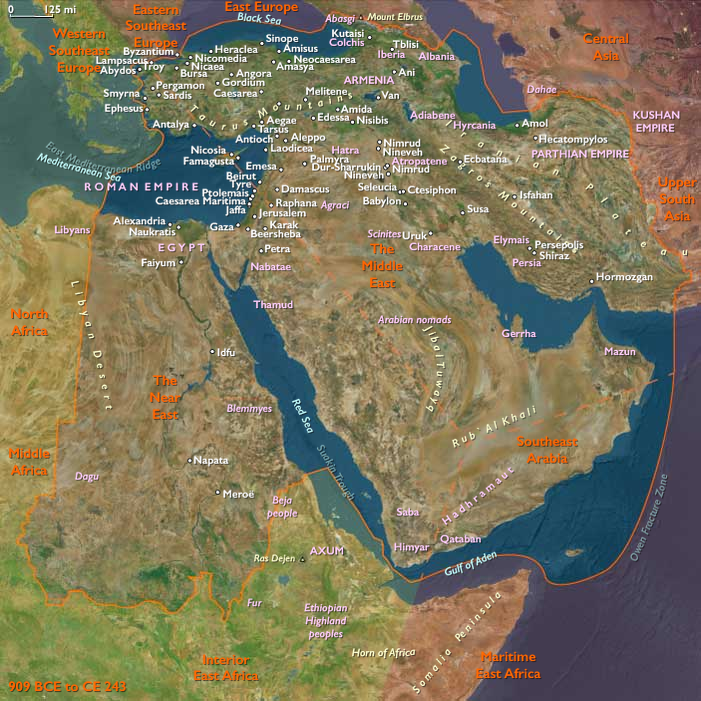
The Near and Middle East
View →Subregions
