This type of bicycle was retronymed the…
1875 CE
They are fast, but unsafe. The rider is high up in the air and traveling at a great speed.
If he hits a bad spot in the road he can easily be thrown over the front wheel and be seriously injured (two broken wrists are common, in attempts to break a fall) or even killed
"Taking a header" (also known as "coming a cropper"), is not at all uncommon.
The rider's legs are often caught underneath the handlebars, so falling free of the machine is often not possible.
The dangerous nature of these bicycles (as well as Victorian mores) make cycling the preserve of adventurous young men.
The risk averse, such as elderly gentlemen, prefer the more stable tricycles or quadracycles.
In addition, women's fashion of the day makes the "ordinary" bicycle inaccessible.
Queen Victoria owns Starley's "Royal Salvo" tricycle, though there is no evidence she actually rode it.
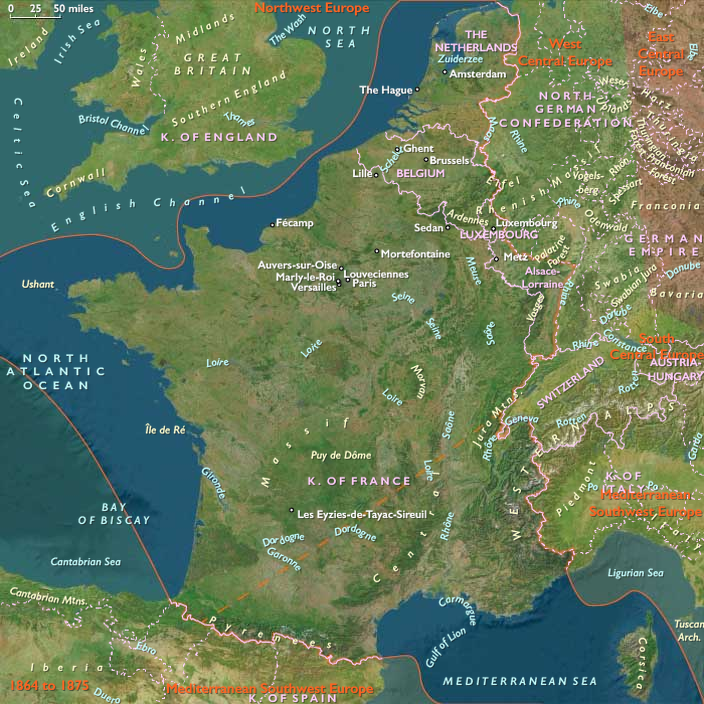
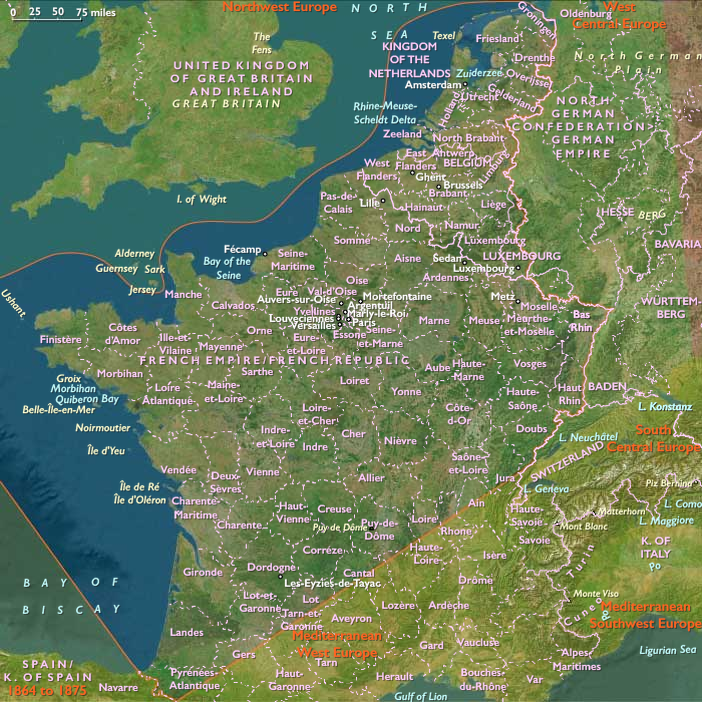
Although French and English inventors have modified the velocipede into the high-wheel bicycle, the French are still recovering from the Franco-Prussian war, so English entrepreneurs put the high-wheeler on the English market, and the machine becomes very popular there, Coventry, Oxford, Birmingham and Manchester being the centers of the English bicycle industry (and of the arms or sewing machine industries, which have the necessary metalworking and engineering skills for bicycle manufacturing, as in Paris and St. Etienne, and in New England).
Soon bicycles found their way across the English Channel.
By 1875, high-wheel bicycles are becoming popular in France, though ridership expands slowly.
Images

Starley's "Royal Salvo" tricycle, as owned by Queen Victoria