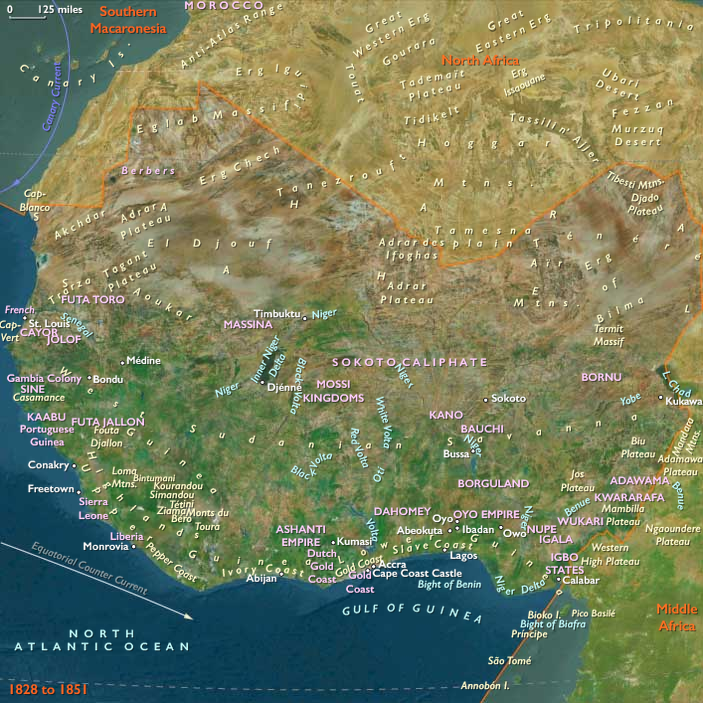
British legislation forbids ships under British registry…
1828 CE to 1839 CE
Other countries more or less hesitantly follow the British lead.
The United States, for example, had also prohibited the slave trade in 1807 (Denmark actually was the first country to declare the trade illegal in 1792).
Attitudes change slowly, however, and not all countries cooperate in controlling the activity of their merchant ships.
American ships, for instance, are notorious for evading the prohibition and going unpunished under United States law.
It should be noted, moreover, that the abolition movement had concentrated on the transatlantic trade for more than five decades before eventually turning to a full-fledged attack on slave trading within Africa itself
Locations
Groups
Igbo people
View →
Hausa Kingdoms, the
View →
Hausa people
View →
Yoruba people
View →
Ijaw people
View →
Kano (Hausa city state)
View →
Zaria (Zazzau), Hausa City-State of
View →
Katsina (Hausa city state)
View →
Gobir (Hausa city state)
View →
Benin Empire
View →
Ibibio people
View →
Bonny, Ijo city-state of
View →
Oyo Empire
View →
Calabar, Efik state of
View →
Dahomey, Kingdom of
View →
Khasso, Fulani Jihad State
View →
Aro Confederacy
View →
Fouta Djallon (Futa Jallon) Fulani Jihad State
View →
Elem, Ijo city-state of
View →
Fouta-Toro, or Futa Toro, Fulani Jihad State of
View →
United States of America (US, USA) (Washington DC)
View →
Britain (United Kingdom of Great Britain and Ireland)
View →
Fulani Empire
View →
Nupe, Emirate of the
View →
Sokoto, Kingdom of
View →
Macina (Masina), Fulani Jihad State of
View →
Denmark, Kingdom of
View →
France, constitutional monarchy of
View →
Zaria, Emirate of
View →
Oyo, Yoruba Kingdom of
View →
Commodities
Regions
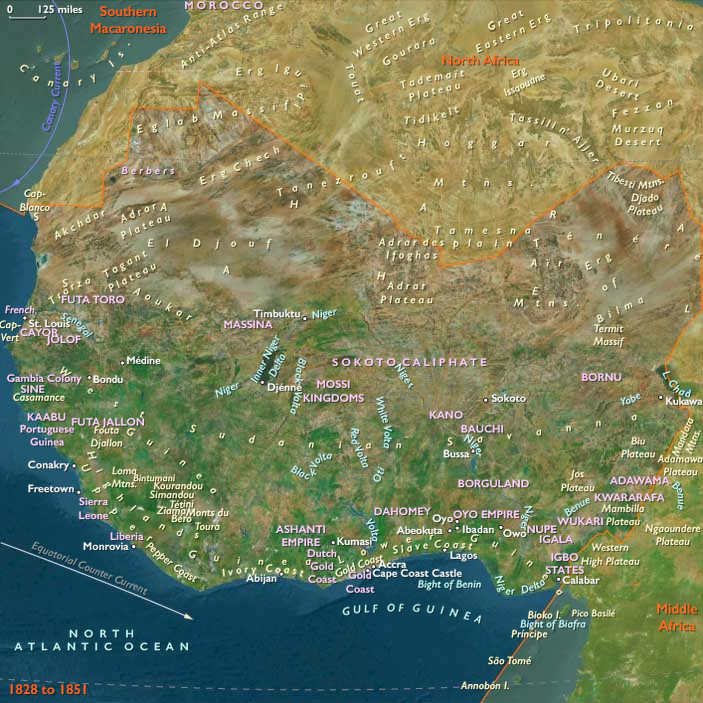
West Africa
View →Subregions