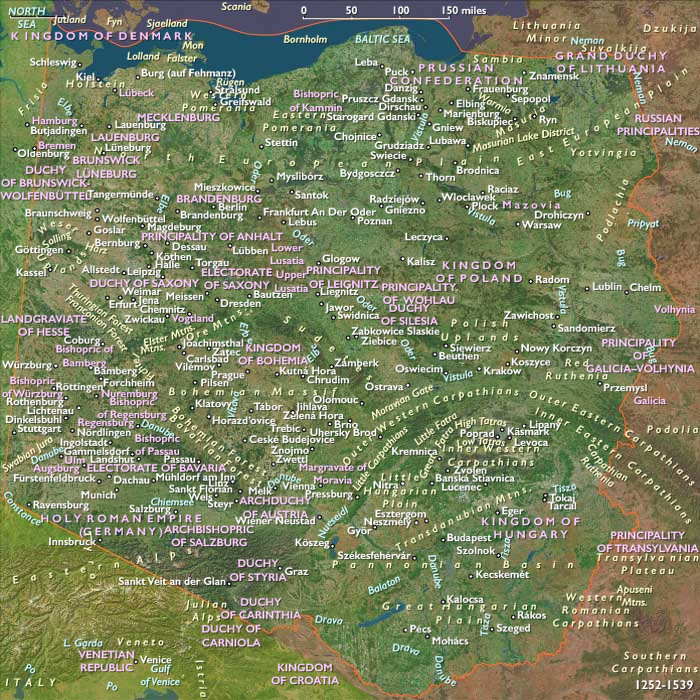
Hussitism begins during the long reign of…
1396 CE to 1539 CE
Hussitism begins during the long reign of Wenceslas IV (1378-1419), a period of papal schism and concomitant anarchy in the Holy Roman Empire, and is precipitated by a controversy at Charles University.
Jan Hus becomes rector of the university in 1403.
A reformist preacher, Hus espouses the antipapal and anti-hierarchical teachings of John Wyclif of England, often referred to as the "Morning Star of the Reformation."
Hussitism—as Hus's teaching becomes known—is distinguished by its rejection of the wealth, corruption, and hierarchical tendencies of the Roman Catholic Church.
It advocates the Wycliffite doctrine of clerical purity and poverty and insists on communion under both kinds, bread and wine, for the laity. (The Roman Catholic Church reserves the cup—wine—for the clergy.)
The more moderate followers of Hus, the Utraquists, take their name from the Latin sub utraque specie, meaning "under each kind."
A more radical sect soon forms—the Taborite sect.
The Taborites, who take their name from the city of Tabor, their stronghold in southern Bohemia, reject church doctrine and uphold the Bible as the sole authority in all matters of belief.
Groups
Topics
Regions
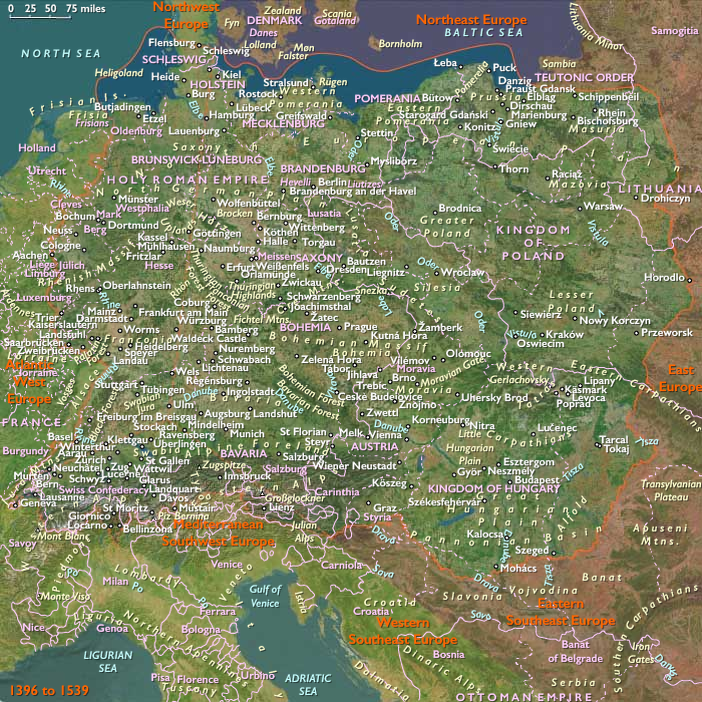
Central Europe
View →Subregions