
Tsarina Catherine, with the wars between Turkey…
1792 CE
Russia had viewed Poland as a de facto protectorate.
"The worst possible news have arrived from Warsaw: the Polish king has become almost sovereign" is the reaction of one of Russia's chief foreign policy authors, Alexander Bezborodko, when he learns of the new constitution.
The Kingdom of Prussia is also strongly opposed to the new Polish constitution, and Polish diplomats receive a note that the new constitution changes the Polish state so much that Prussia does not consider its obligations binding.
Just like Russia, Prussia is concerned that the newly strengthened Polish state could become a threat and the Prussian Foreign Minister, Friedrich Wilhelm von Schulenburg-Kehnert, clearly and with rare candor tells Poles that Prussia does not support the constitution and refuses to help the Commonwealth in any form, even as a mediator, as it is not in Prussia's interest to see the Commonwealth strengthened so that it could threaten Prussia in some future.
The Prussian statesman Ewald von Hertzberg expresses the fears of European conservatives: "The Poles have given the coup de grâce to the Prussian monarchy by voting a constitution", elaborating that a strong Commonwealth would likely demand the return of the lands Prussia acquired in the First Partition.
Locations
People
Groups
Subjects
Regions
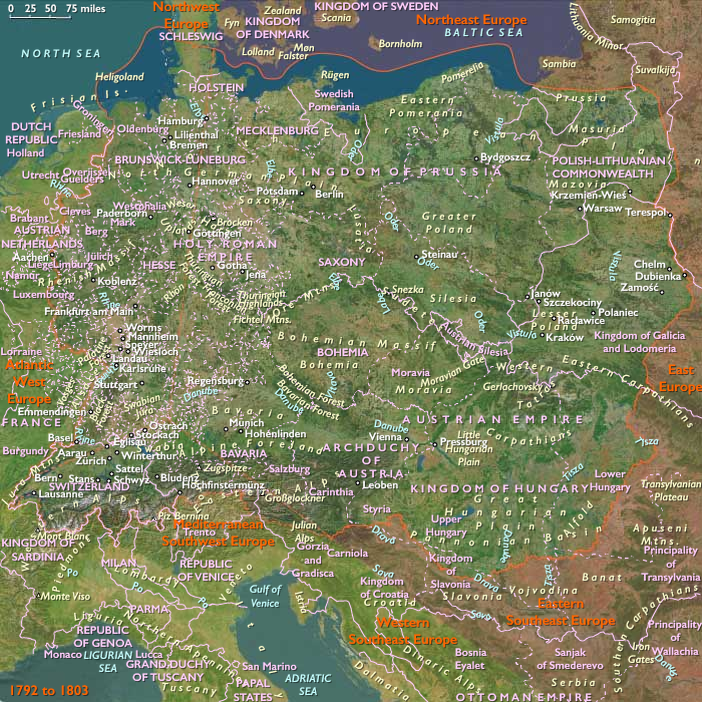
Central Europe
View →Subregions
