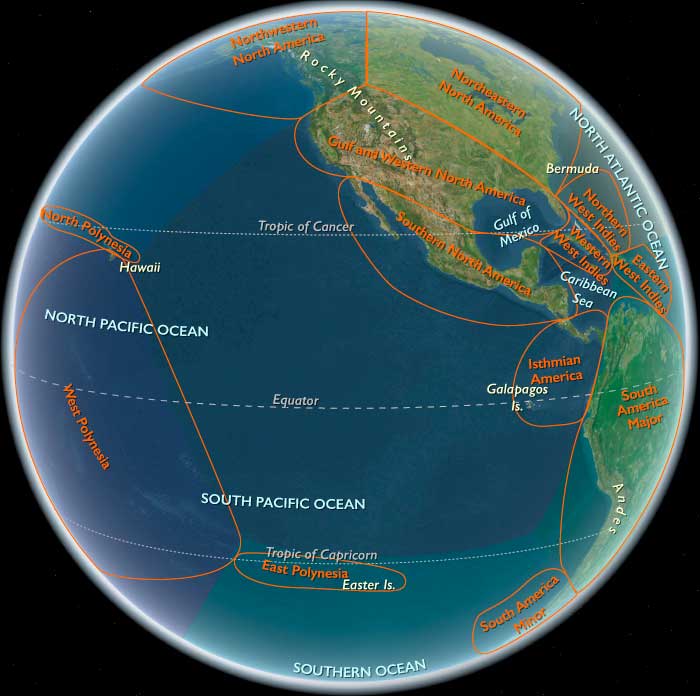
Event
European contacts with the indigenous population of…
European contacts with the indigenous population of Honduras begins with the final voyage of Christopher Columbus.
Columbus sails past the Islas de la Bahia (Bay Islands) in 1502 and reaches the mainland of Central America shortly thereafter.
While at one of the islands, Columbus discovers and seizes a large canoe loaded with a wide variety of trade goods.
Evidence seems to indicate that the canoe's occupants were Mayan traders and that their encounter with Columbus marked his first direct contact with the civilizations of Mexico and northern Central America.
Despite the fact that the canoe has been observed coming from the west, Columbus turns east and then south, sailing away from the civilizations and doing little exploring on the Honduran coast.
His only direct legacy is the assigning of a few place-names on the Caribbean coast, notably Guanaja for one of the Islas de la Bahia, Cabo Gracias a Dios for the eastern extremity of Honduras, and Honduras (depths in Spanish) for the overall region.
The latter name suggests the deep waters off the northern coast.
-
{# Image navigates to the detail page; the magnifying-glass chip is the only Fancybox lightbox trigger (kept a separate sibling — anchors can't nest). #}
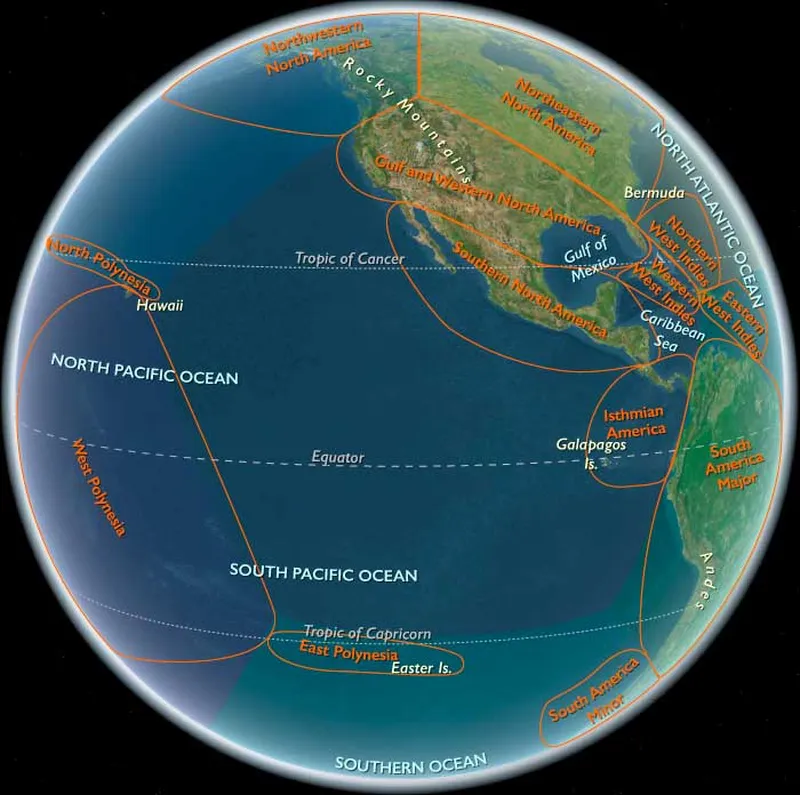 The Far West
World
-
{# Image navigates to the detail page; the magnifying-glass chip is the only Fancybox lightbox trigger (kept a separate sibling — anchors can't nest). #}
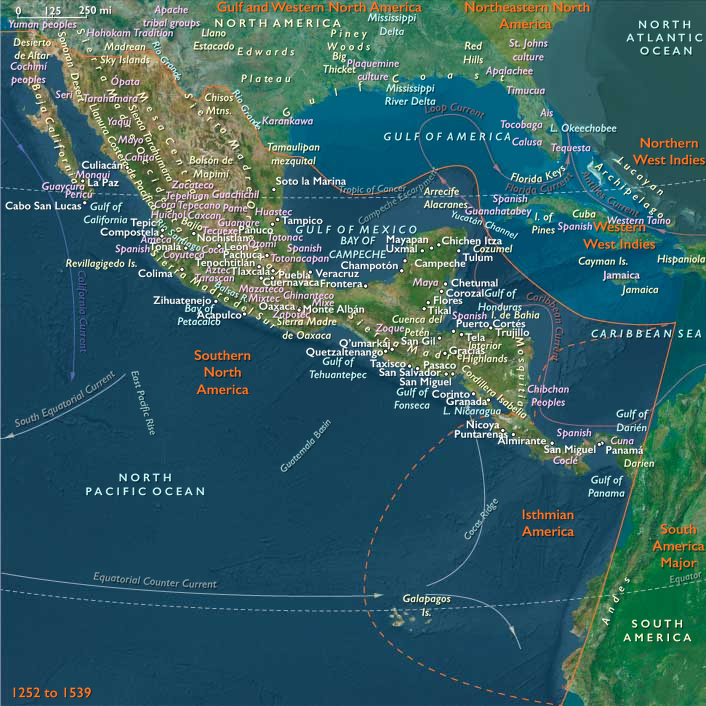 Middle America
Region
-
{# Image navigates to the detail page; the magnifying-glass chip is the only Fancybox lightbox trigger (kept a separate sibling — anchors can't nest). #}
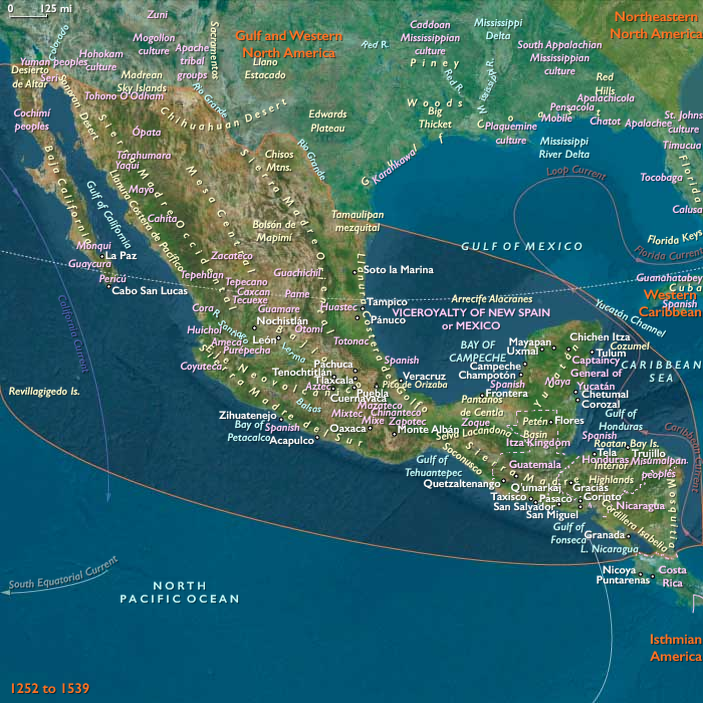 Southern North America
Subregion