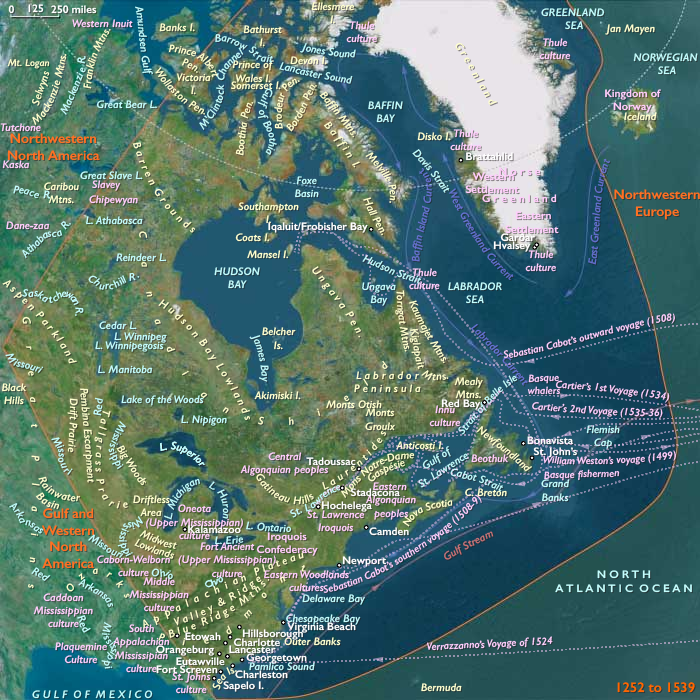
The first known attempt at European colonization…
1396 CE to 1539 CE
No further European exploration occurs until 1497, when Italian seafarer John Cabot explores and claims Canada's Atlantic coast in the name of King Henry VII of England.
Next, Basque and Portuguese mariners establish seasonal whaling and fishing outposts along the Atlantic coast in the early sixteenth century.
In 1534, French explorer Jacques Cartier explores the Gulf of Saint Lawrence where, on July 24, he plants a ten-meter (thirty-three foot) cross bearing the words "Long Live the King of France" and takes possession of the territory New France in the name of King Francis I.
In general the settlements appear to have been short-lived, possibly due to the similarity of outputs producible in Scandinavia and northern Canada and the problems of navigating trade routes at this time.
Groups
Topics
Subjects
Regions
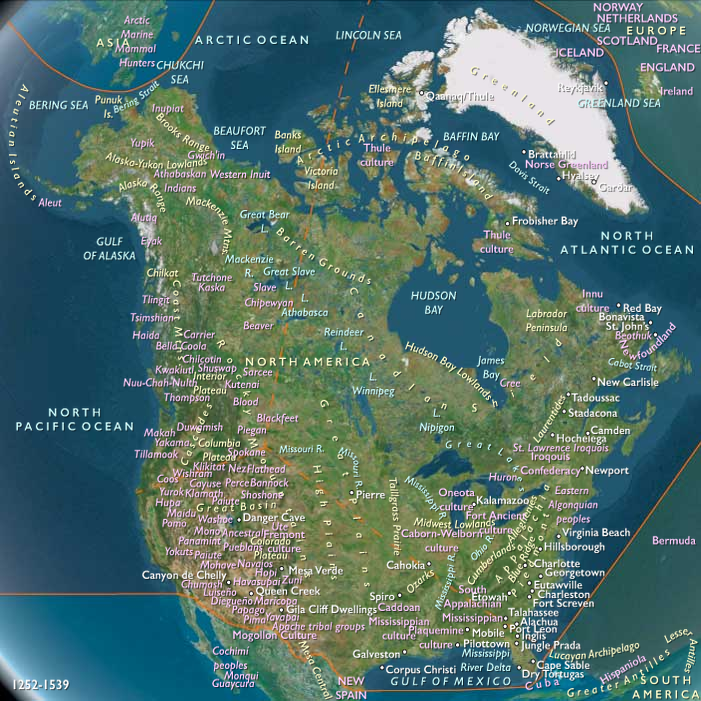
Northern North America
View →Subregions