
European-Americans in Kansas agitate for removal of…
June 1868 CE
However, amidst the gloom of a tribe that seems likely to disintegrate comes one colorful moment.
The Kaw and the Cheyenne have long been enemies.
On June 1, 1868, about one hundred Cheyenne warriors descend on the Kaw reservation.
Terrified white settlers take refuge in Council Grove.
The Kaw men paint their faces, don their finery, and sally forth on horseback to meet the Cheyenne.
The two Indian armies put on a military pageant featuring horsemanship, fearsome howls and curses, and volleys of bullets and arrows.
After four hours, the Cheyenne retire with a few stolen horses and a peace offering of coffee and sugar by the Council Grove merchants.
No one had been hurt on either side.
During the battle, the mixed-blood Kaw interpreter, Joseph James, Jr. (more commonly known as Jojim or Joe Jim) had galloped sixty miles to Topeka to request assistance from the Governor.
Riding along with Jojim was an eight-year-old, part-Indian boy named Charles Curtis or "Indian Charley".
Curtis will later become a jockey, a lawyer, a politician, and Vice President of the United States under Herbert Hoover.
People
Groups
Commodities
Subjects
Regions
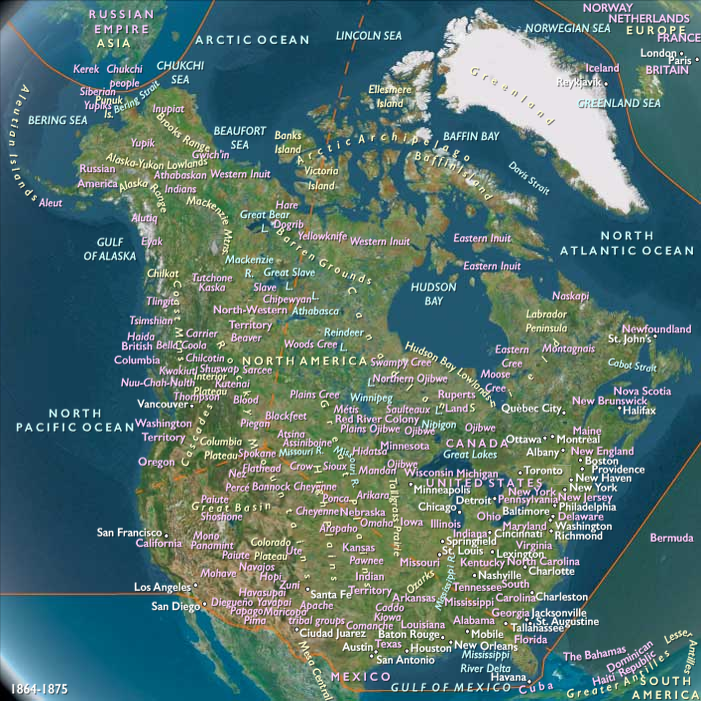
Northern North America
View →Subregions
